Operation Bagration: Revisiting 1944 Soviets for Flames of War
By Richard Steer
The next Late-War compilation for Flames of War is about to be released. Operation Bagration consolidates the previous Soviet, German, and Axis-Allies books for 1944 on the Eastern Front into a single volume.
It is now five years since the first of those books, Bagration: Soviet, was published. It’s fair to say that there haven’t been any earth-shattering updates to the Soviet lists. However, Battlefront has taken the opportunity to update the Soviets to include a few products that they have released in the intervening years, and it’s worth taking a closer look at those changes.
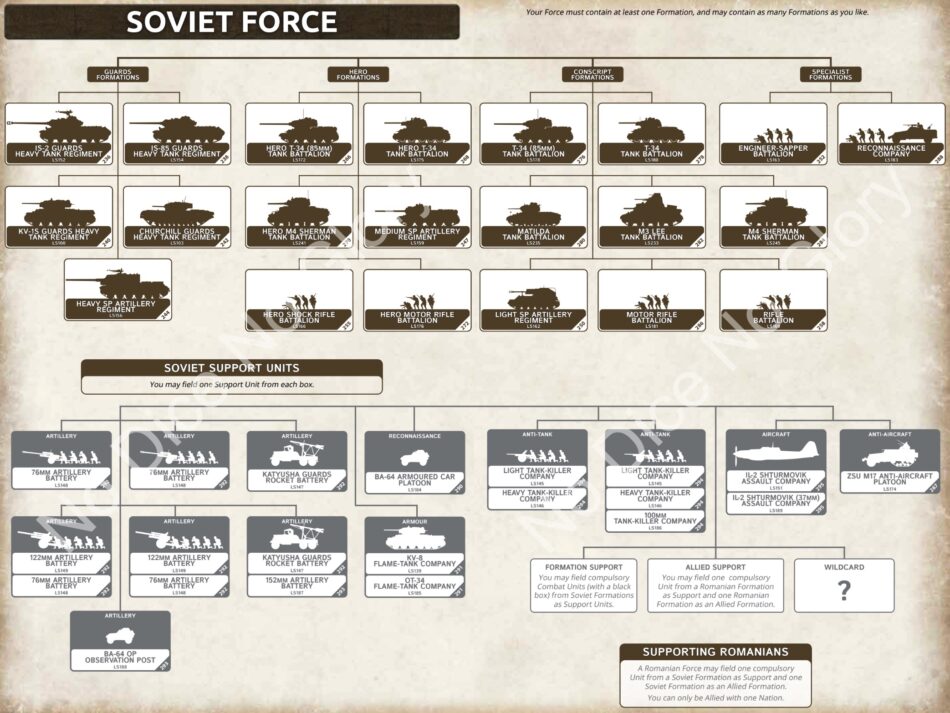
The Big Picture: The Soviet Force Chart
Looking at the updated Soviet Force chart, there are six Formations that were not in the original Bagration: Soviet. Five of these could already be fielded in a Bagration Force by using Formations from other Soviet Late-War books, but including these in Operation Bagration has tidied this up, making this book a one-stop-shop for all of your 1944 Soviet list building needs.
There are no changes to the Support Units tree, with the same units and box groupings as the original Bagration book. However, a small piece of housekeeping is the addition of Romanian Allied Support to the force diagram. This had been permitted by the Romanian lists in Bagration: Axis-Allies, but you wouldn’t have known that it was an option to support your Soviets with Romanians unless you had both books. The addition of the Romanians as Allies here tidies that up.
A Mystery Revealed: The Matilda finally arrives in V4
When the Bagration Compilation was first teased by Battlefront in Peter’s 2024 Christmas Update video, the Soviet Force Chart preview had one formation blurred out. This mystery formation has now been confirmed as being a Matilda Tank Battalion – marking the first time the British Matilda II tank has appeared in the 4th Edition of Flames of War.
The formation itself follows the standard structure for a Soviet tank battalion in the game, with two or three companies of tanks that can be a mix of Matildas, T-34s, and Valentines. You also have the option of adding infantry, mortars, anti-tank, and AA units.
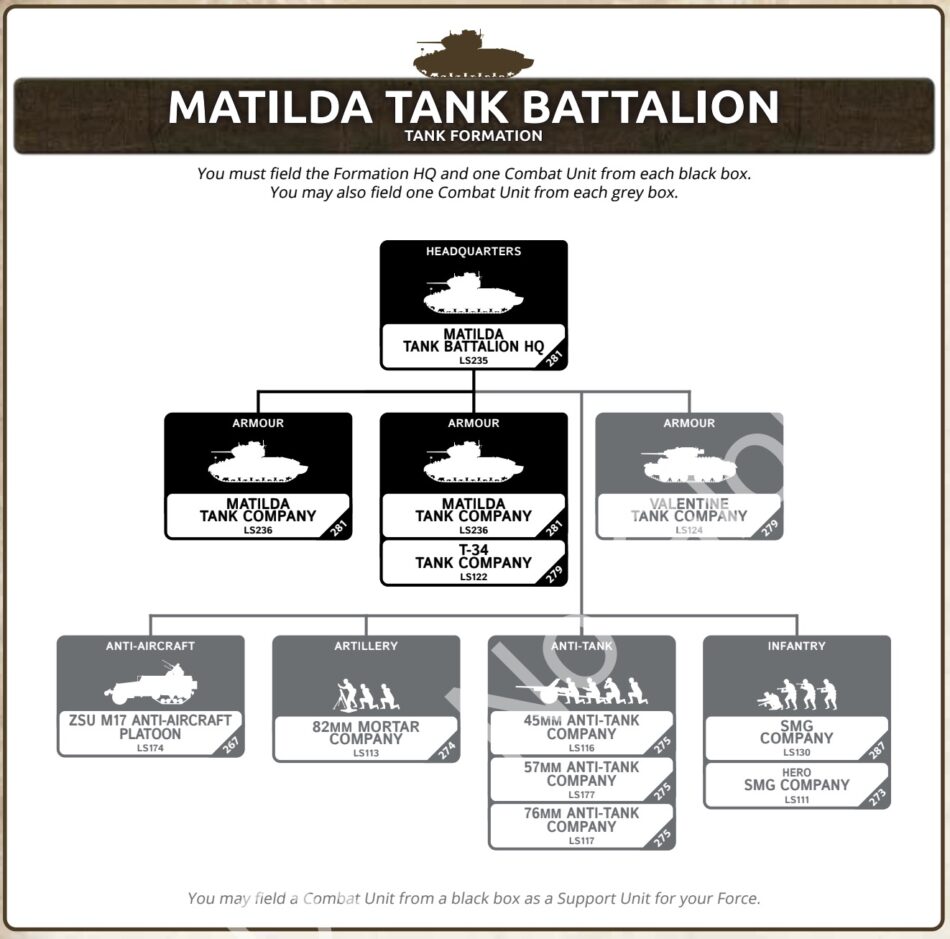
Costing slightly less than 2-points per tank, each company can have up to seven Matildas. These are primarily the 2-pdr armed version, with the option of replacing up to two with the Close Support version armed with a 3-inch howitzer to give the unit some punch against soft targets.
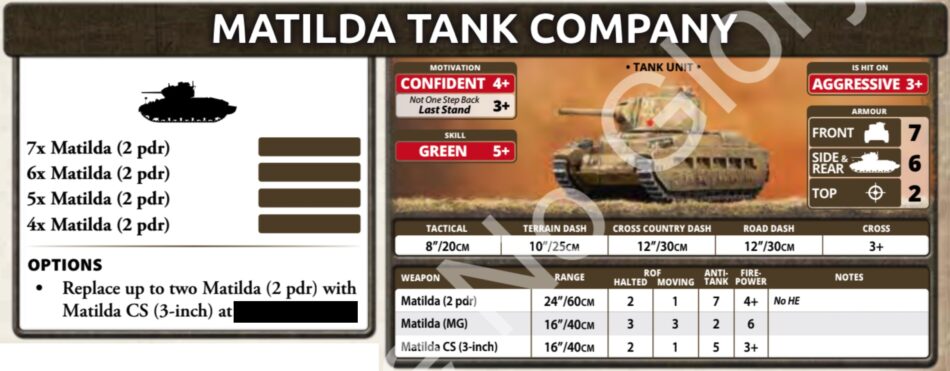
By 1944 the Matilda is very long in the tooth. Slow and limited to Anti-tank 7, its Front 7 is no longer a huge problem for the anti-tank weapons it’ll be facing. However, with the current meta seeming to favor large numbers of half-tracks, this combination of Anti-tank, Armor, and cost may have a place. A company of six might be an interesting direct swap for a Hero T-70 Company, giving a similar amount of light AT firepower with significantly better survivability at the cost of speed.
Whether or not the Matilda can find its niche in Late-War games, it is always good to be given more options. My hope is that now that the kit is being released, Battlefront will find a way to retrofit the Matilda into the Mid-War lists.
The Emcha: No great surprise but still welcome
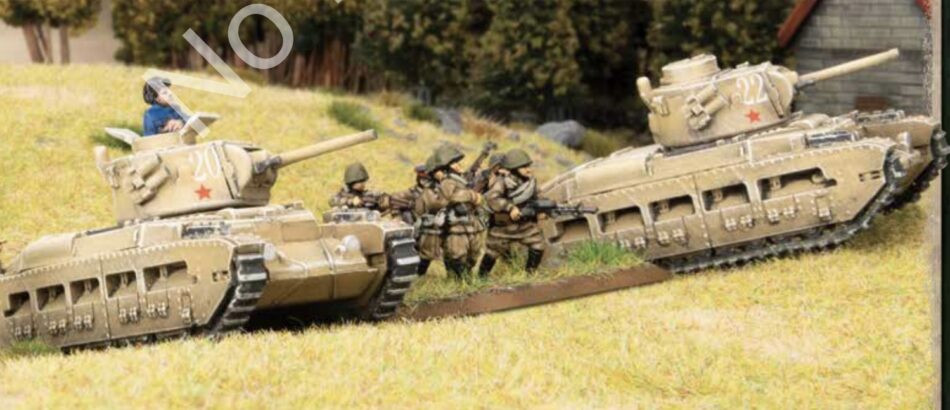
Previously introduced to Soviet forces in the Berlin: Soviet book, the M4 Sherman ‘Emcha’ has now been added into the Bagration lists, in both Hero and regular flavors. The Formation structures are similar to those in Berlin, however the 75mm and 76mm versions are combined into a single formation, with those units able to be mixed and matched as the player chooses. Unlike the Berlin lists, the Valentine units have moved across to become ‘Black Box’ units, although I can’t see any meaningful list-building impacts from this.

I had hoped that this book would see the release of an early pattern M4A2 Sherman kit, however these Formations use the existing “M4 Sherman (late)” model with Front 7 from Berlin.

So Long Fortress Europe
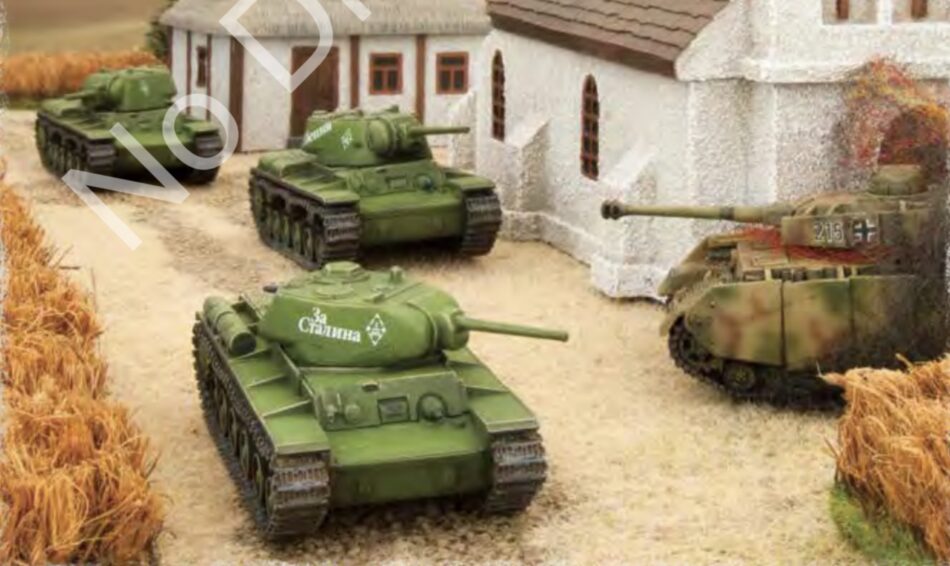
The remaining additions to the Force chart are the inclusion of the KV-1s Regiment, the Churchill Regiment, and the M3 Lee Battalion from Fortress Europe (2019). There are no changes to the points or structure of these formations – just a merging of the existing lists into this one book and effectively making Fortress Europe redundant from a Soviet perspective.
What’s Missing?
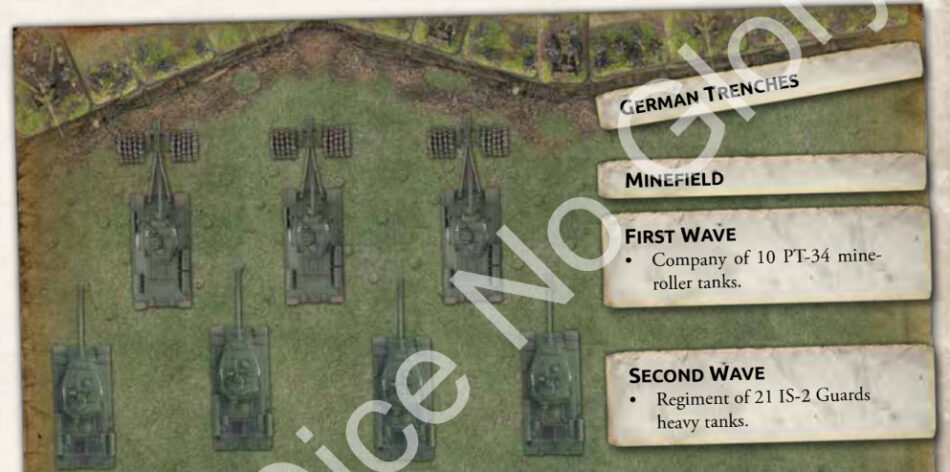
The gaps that I can see relate to the Command Cards, which are not being updated by this release. There is no Sherman variant of the Forward Detachment command card, there is no SU-57 tank destroyer option, the RPG-6/Panzerfaust combination with the Engineer-Sapper Company isn’t fixed, and despite being mentioned in the book, I can’t see any way to take the PT-34 mine roller. I think these are all niche issues, rather than fundamental flaws, but it would have been nice if they could have been addressed.
That said, we’ve previously seen command cards adjusted through Lessons from the Front, and there have been new command cards created through digital updates (for example, the Czech Armoured Brigade for D-Day: British), so I hope Battlefront will follow up this release with some additional digital content to close these last gaps.
Reflections
Let’s be clear: if you are an existing Soviet player that prefers to focus on the competitive side of the hobby, Operation Bagration will have little to offer you. With no points changes or significant new units, the book does nothing to address the perceived underperformance of Late-War Soviets in tournament settings.
On the other hand, if you are looking at getting into Late-War Soviets, the book is exactly what you need. It brings all of the material for the Soviets in 1944 into a single source. Our fingers are crossed that it will also include a free code like the D-Day compilation did, to unlock all of the Bagration lists on the Forces list-building website.
More broadly, I think the consolidation of the Soviet Fortress Europe lists into Bagration is a significant step from Battlefront. This makes it possible to build historical lists from a single book, without having to combine units across multiple books as has been required up until this point. With everything in one place, the only reason to source units from a different book would be in an attempt to find some broken combination to gain a competitive advantage.
Cross-book list building is still explicitly permitted, but this compilation could mark the beginning of the end for it: it was useful to help reduce the amount of duplication between books, but complicated and a source of confusion among players about whether particular combinations of units were legal.
The Soviet part of Operation Bagration has done exactly what I think it needed to do. It’s a comprehensive source for anyone wanting to play 1944 Soviets in Flames of War that simplifies historical list building. It hasn’t attempted to any balance issues related to using Soviets on the competitive scene, but the flipside of that is that players can continue to get use out of their existing book instead of being compelled to buy this new one. And overall, I think that’s a good outcome.
that’s painful. I so much wish they had made the list a bit more competitive. Give me just 3 points and I can have a fighting chance taking most Soviet list to a competition.
I see that some tournaments are now doing just that – the Polish Championship in November is a 90pt tournament, with lists containing some types of German formations being limited to 85pts, and forces that are entirely Soviets or Axis-Allies getting 100pts. It’s great to see tournament organizers shaking things up and trying different things.
Do we know anything about why soviets cannot bring Poles as Allied Nation, but Poles can bring Soviets? Doesn’t seem fair. Soviets could really use some of that very cheap Polish infantry.
I haven’t seen anything official on this, but if I had to guess, Soviet allies would have been added to the Polish list to give them the tools they need to be workable in open format games while keeping the core list historical. It’s a much better option than adding fantasy units to the list.
I don’t think basic Soviet infantry has ever really worked in V4, but they do have other infantry options so it might have been felt that it wasn’t necessary to give them access to Polish allies. In addition, there are the three Partisan command cards that already gave them different ways of representing irregular troops, plus command cards for regular Polish troops.
So no shtrafniki (punishment) Battalion, no Cossacks or Cavalry either.
No Partisans either.
All the ‘colourful’ units are missing-:(
Yes they are apart from the shtrafniki on command cards, however it would have been good to have added them.
I also see the artillery observer is still using an armoured car instead of a tank.
The book just seems to be a minimal tidying up exercise, rather than offering much that is new.