Fate Be Changed: New Units for Fate of a Nation

By Richard Steer

Over the last few months, Battlefront has released a series of free updates for a number of its games. Fate of a Nation, set in the Middle East in the 1960s and 70s, has now had its turn with a free expansion to the Egyptian and Jordanian lists.

This expansion, available as a PDF download and in the Forces of War list-building tool, is the first update to FOAN since its second edition was published in 2018. It brings in a number of the miniatures from Battlefront’s other games that were historically present in the theatre.

List-building with ‘Liberation of Italy’: Gebirgsjäger

By Richard Steer

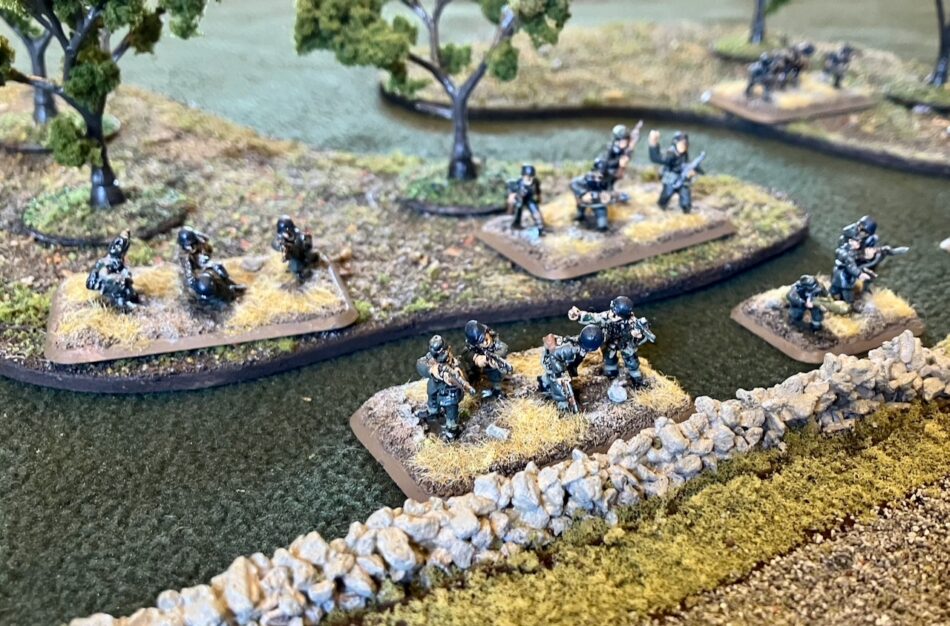
Once upon a time, back in the days of Flames of War 3rd Edition, I started the process of collecting a Late-War Italian campaign German force. My starting point was Battlefront’s range of ‘HG’ metal figures, and eventually I had built and painted up couple of infantry platoons and a few support weapons. I am, however, terrible at completing projects, and before I had finished the collection, the FOW world had left Italy behind and moved on to V4.

My units did end up seeing some action over the years, playing as “Generic German” infantry, but I have always wanted to eventually finish the project. The re-release of Battlefront’s Italian Campaign range with Liberation of Italy has made the miniatures available again for me to finally do this.

So, given all of the options in the new book, what am I going to build as a list? Let’s work through the process.

Operation Husky – Flames of War Returns to the Med

By Richard Steer

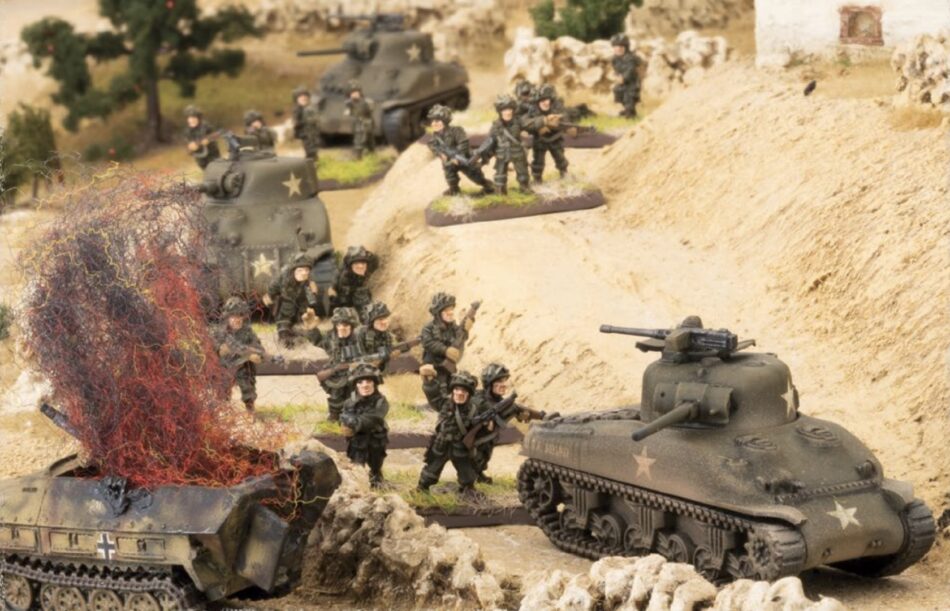
Before the liberation of Italy, there was the liberation of Sicily – Operation Husky. Sneaking in just ahead of the new Late-War Italian Campaign book for Flames of War, Battlefront has published a set of army lists that cover this campaign in Flames of War.

The release is a set of free PDFs published on their website, so this article won’t tell you anything you can’t already see for yourself. But I’m super excited about it, so I want to talk about it anyway.

Photo credit: Battlefront Miniatures “US Forces in Operation Husky” (2026)

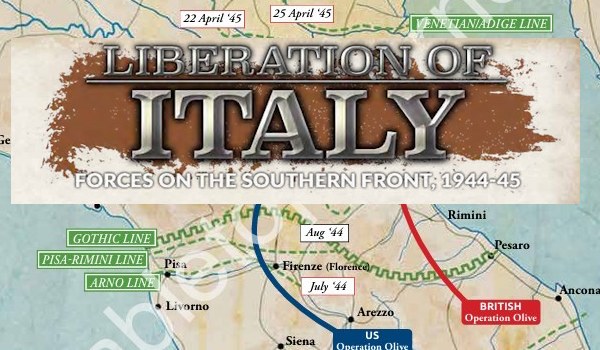
O Bella Ciao! Liberation of Italy – Flames of War Late War Book

By Paolo Paglianti

It’s time to liberate the peninsula from the Germans! We have been waiting for it for a very long time, but it has finally arrived. The virtual bridge between Mid and Late War in Flames of War, Liberation of Italy is set roughly between Fortress Europe and the D-Day operations, although the war in Italy continued well beyond the liberation of France.

Painting BEF Infantry for Flames of War

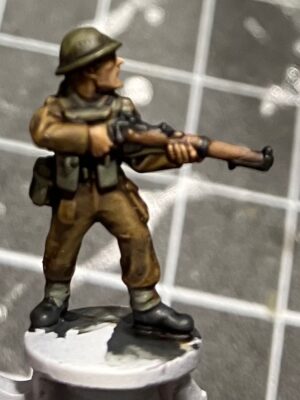
A miniature of a British Rifleman from the Flames of War Early War range.

By Richard Steer

I’ve jumped into the Early-War period of Flames of War, and am in the middle of building the British half of the Dunkirk two-player starter set. I recently took a look at what is in the box, and now I’m painting the infantry.

The purpose of this article is to step through my process for painting FOW infantry, in the hope that this may be of use to players who are just getting into FOW and looking to paint their first figures.

Infantry Attacks: Flames of War at Remember December 2025

By Richard Steer

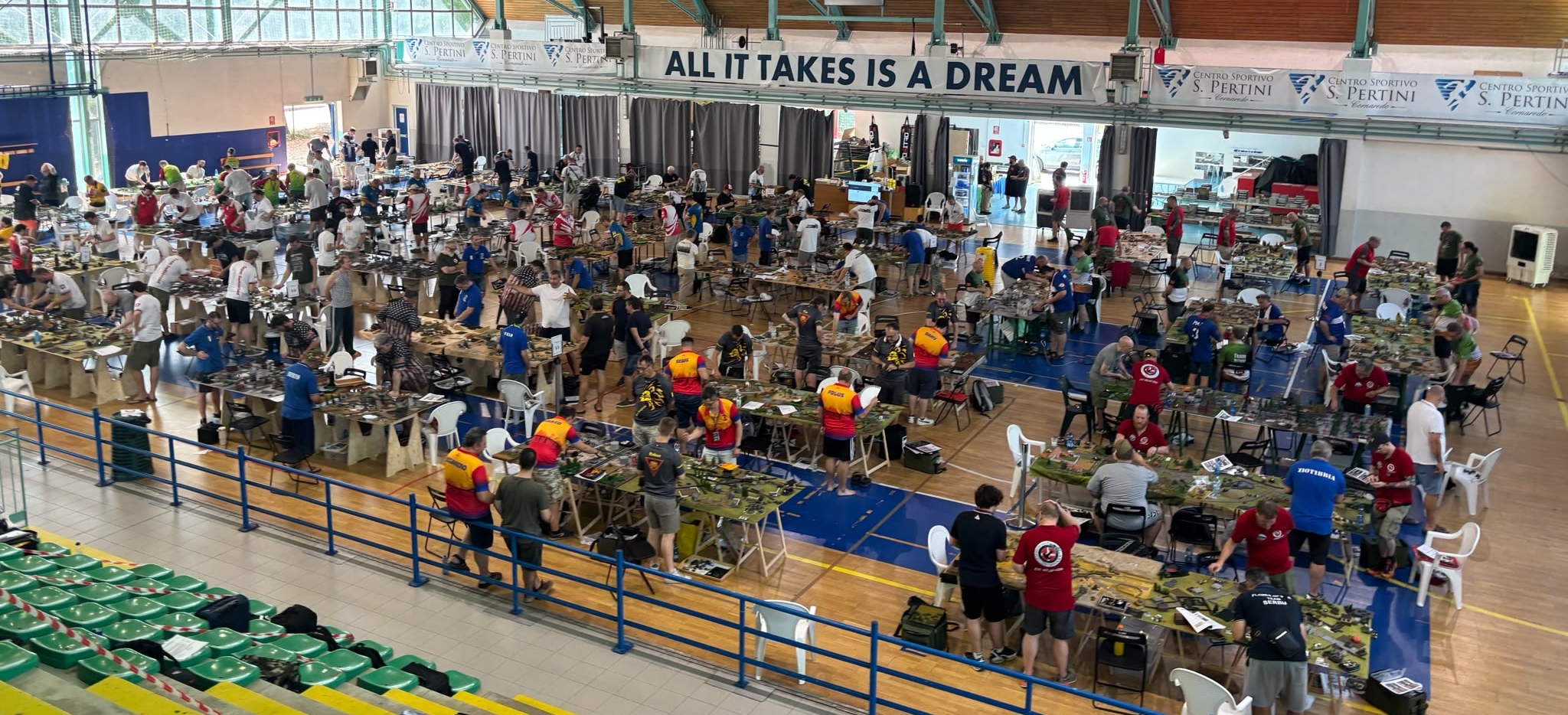
Every year, our wargaming club in Upper Hutt, New Zealand, runs a one-day tournament for club members at the final meeting of the year. Named Remember December, this event commemorates club member Nick Garden, who passed away in 2015. The 2025 edition of the event was held on 13 December, playing Flames of War.

Remember December often has a themed format or unusual list restrictions, and this year was no exception, The format used was 55-points Late War, with infantry formations only. In addition, your force could not include more than one tank unit, a maximum of four vehicles, and a maximum Front Armor of 7. Three 1.5-hour rounds were to be played using the Extended Battle Plans mission selector, and each player had to use each stance once during the event.

A close up shot of an Italian-themed wargaming table with Flames of War miniatures. Two German 7.5cm infantry guns are in the foreground, while in the background a platoon of infantry advances on a group of buildings.
German Infantry advance with close support from 7.5cm infantry guns

Ils Ne Passeront Pas – Early War French for Flames of War

By Tom Gall

We’ve all been patiently waiting for early war to make the return to Flames of War, time to feast your eyes on the French part of release for version 4.  Unfortunately when Germany turned their focus west in May of 1940, a brief few weeks and the French would be knocked out of the war, which as a result means this is a faction for early war only.

Why Play French?

I first started playing French during the earlier release of Blitzkrieg for Flames of War version 2 back in late 2010. What drew me was the desperate struggle of one of the largest militaries at the start of WWII, on the defensive against the German onslaught, putting up the good fight that would ultimately not go their way due to a whole host of tactical reasons. The French are plucky, unique and offer up unit selections that can work for offensive and defensive stances.

No matter if you’re an old hand or a new to Flames of War, the French as a faction in Early War brings good tanks, reasonable infantry, and good artillery that can win you games.  In this article we will crawl through just the French part of the release, note their strengths and point out their weaknesses too. They might be just the force for you.
Keep Calm – it’s Blitzkrieg-era British for Flames of War

Flames of War banner: "Blitzkrieg Invasion of France 1940"

By Richard Steer

The Early-War era has returned to Flames of War. 2026 and 2027 will see the release of three books covering the period from 1939 to 1941 for the 4th Edition of the rules. The first book in the series is Blitzkrieg, covering the French, German, and British forces involved in the German invasion of France in May and June 1940.

The British list in Blitzkreig represents the British Expeditionary Force (BEF) in France and Belgium. It covers those units present from the start of the invasion, through the evacuation from Dunkirk, and those still fighting after Dunkirk.