Painting Winter Armor

By Kreighton Long

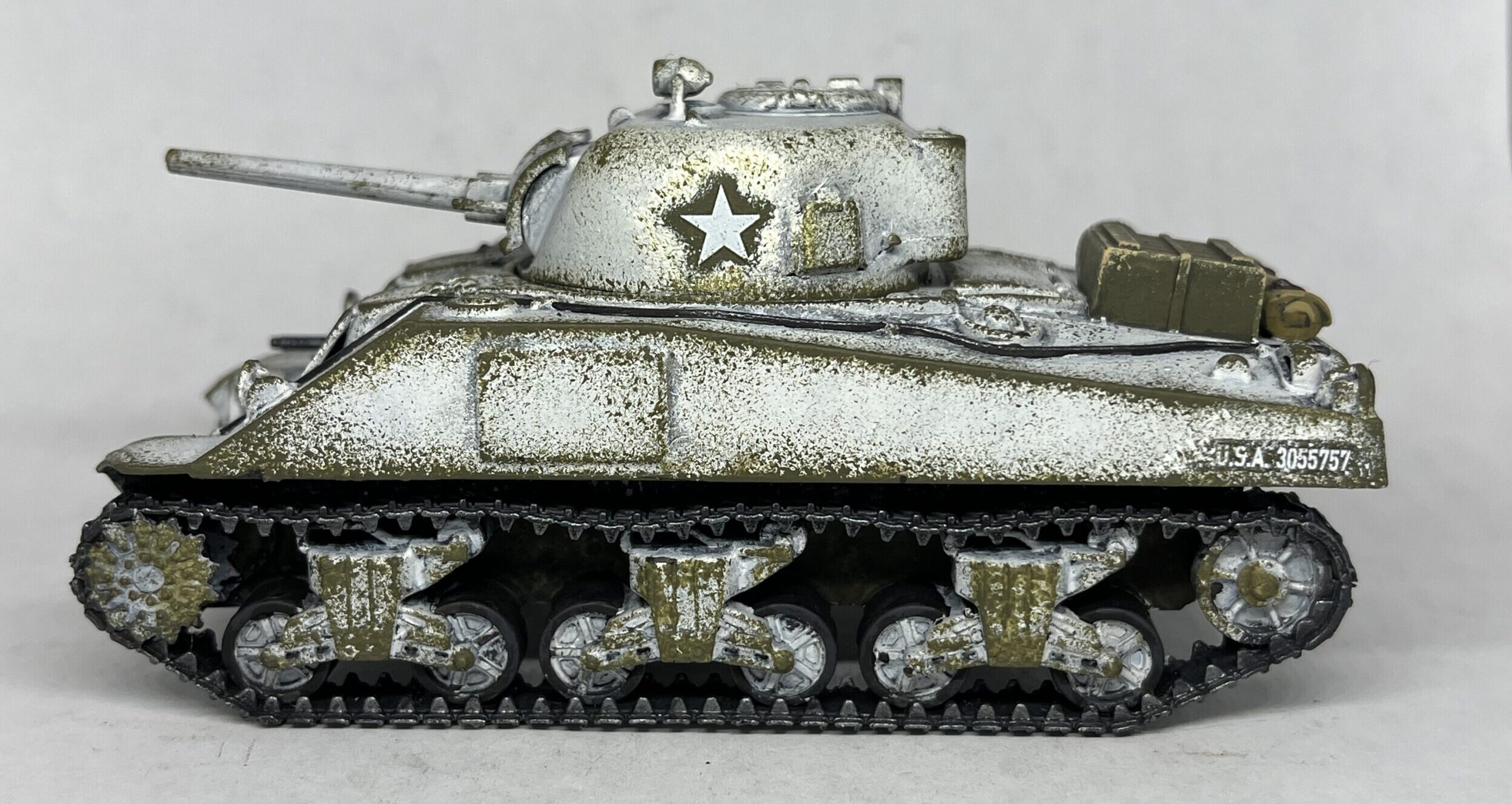
My Bolt Action army project of the year is a winter American army project.  While my infantry will advance through the snow on foot, they are in desperate need of armor support.  In order to fully commit to the theme I decided to paint the armor support in winter camouflage.  The general idea was to paint it white with the green undercoat showing through where the white paint rubbed off.

Painting BEF Infantry for Flames of War

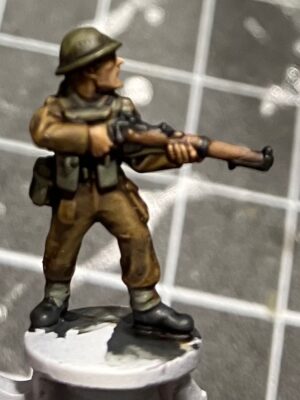
A miniature of a British Rifleman from the Flames of War Early War range.

By Richard Steer

I’ve jumped into the Early-War period of Flames of War, and am in the middle of building the British half of the Dunkirk two-player starter set. I recently took a look at what is in the box, and now I’m painting the infantry.

The purpose of this article is to step through my process for painting FOW infantry, in the hope that this may be of use to players who are just getting into FOW and looking to paint their first figures.

Painting My First Battletech Set

By Kreighton Long

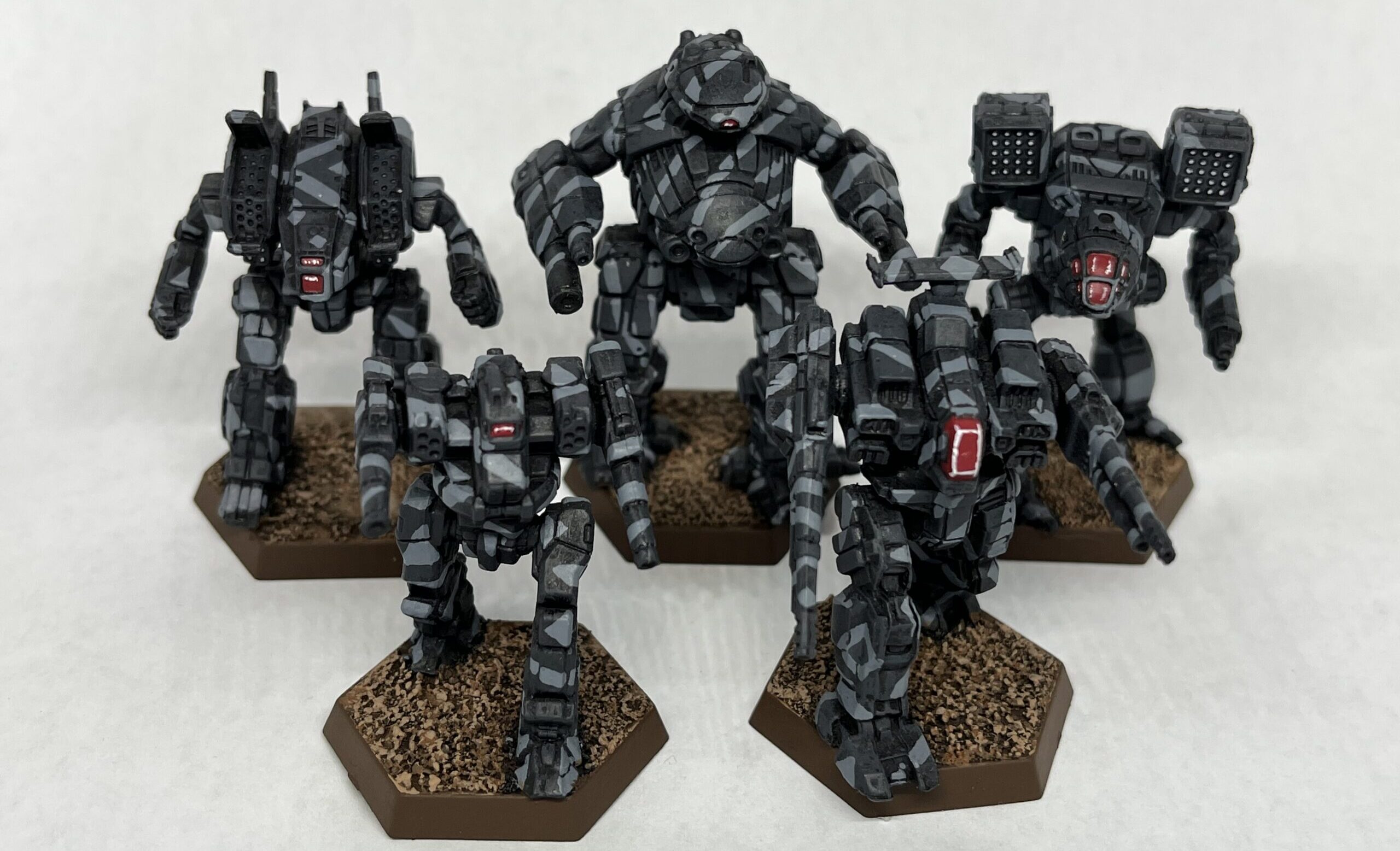
A former student of mine recently introduced me to Battletech.  We played a few games over the last year and it gradually grew on me.  At first, I was content to play with the models that my friend provided for our games, but that contentment did not last.

Perhaps it was rewatching Neon Genesis Evangelion over the summer, or older influences like Gundam or Pacific Rim, but either way I felt drawn to painting my own mech force.  As I have little experience with the lore, game play, or mechanics, I decided to prioritize which set I wanted to try my hand at by the rule-of-cool.

Building Urban Bases

By Kreighton Long

With my North African Italians finished it’s time to look forward to a new project.  After attempting desert bases with my Italians, I had the idea to challenge myself with new-to-me basing themes for my next few projects.

The next project will take me from the sands of North Africa to the ruined cityscape of Stalingrad.  If I said the German Veterans release from Warlord Games had nothing to do with this choice I would be lying.  Having never attempted urban bases before, I spent some of my prep time looking for different ways of creating urban bases and came up with three options to experiment with: Green Stuff, plastic mats, and sand.

Building My First Display Board


By Kreighton Long

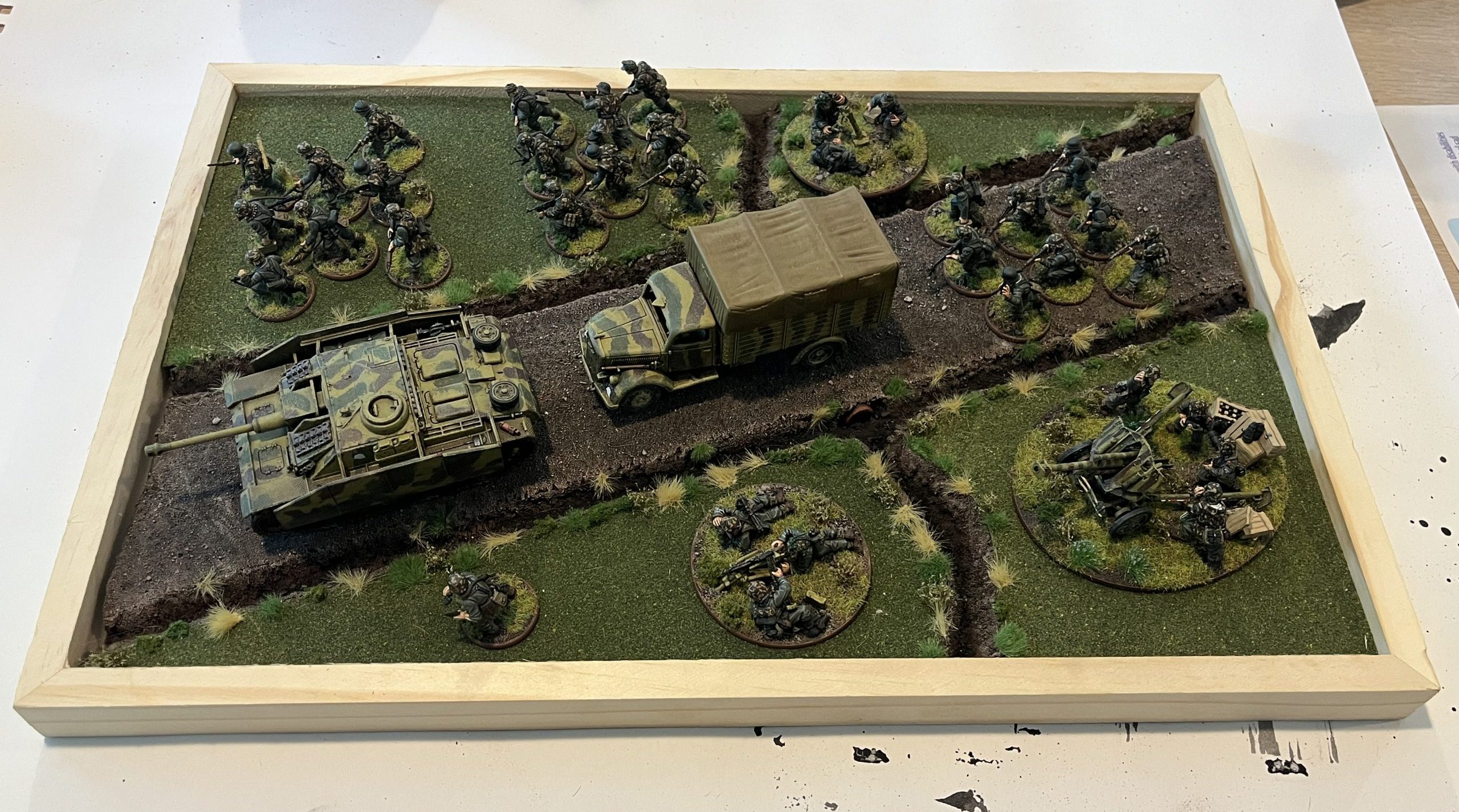
At this past April’s Operation Roundup Tournament I eagerly competed in the Best Painted Force finishing towards the top but not high enough to place.  The category that hurt my score the most was my lack of a display board.  Historically, I’ve avoided building a display board as I would rather invest the time, energy, and resources into painting miniatures and terrain.

Humbled, I decided that I can’t win unless I play the game and this game requires a display board.  Driven by spite I committed myself to investing some of my summer break into building my first display board. As this is my first attempt at a display board the unofficial motto from the start was “good enough”.

Building a Pigsty

By Kreighton Long

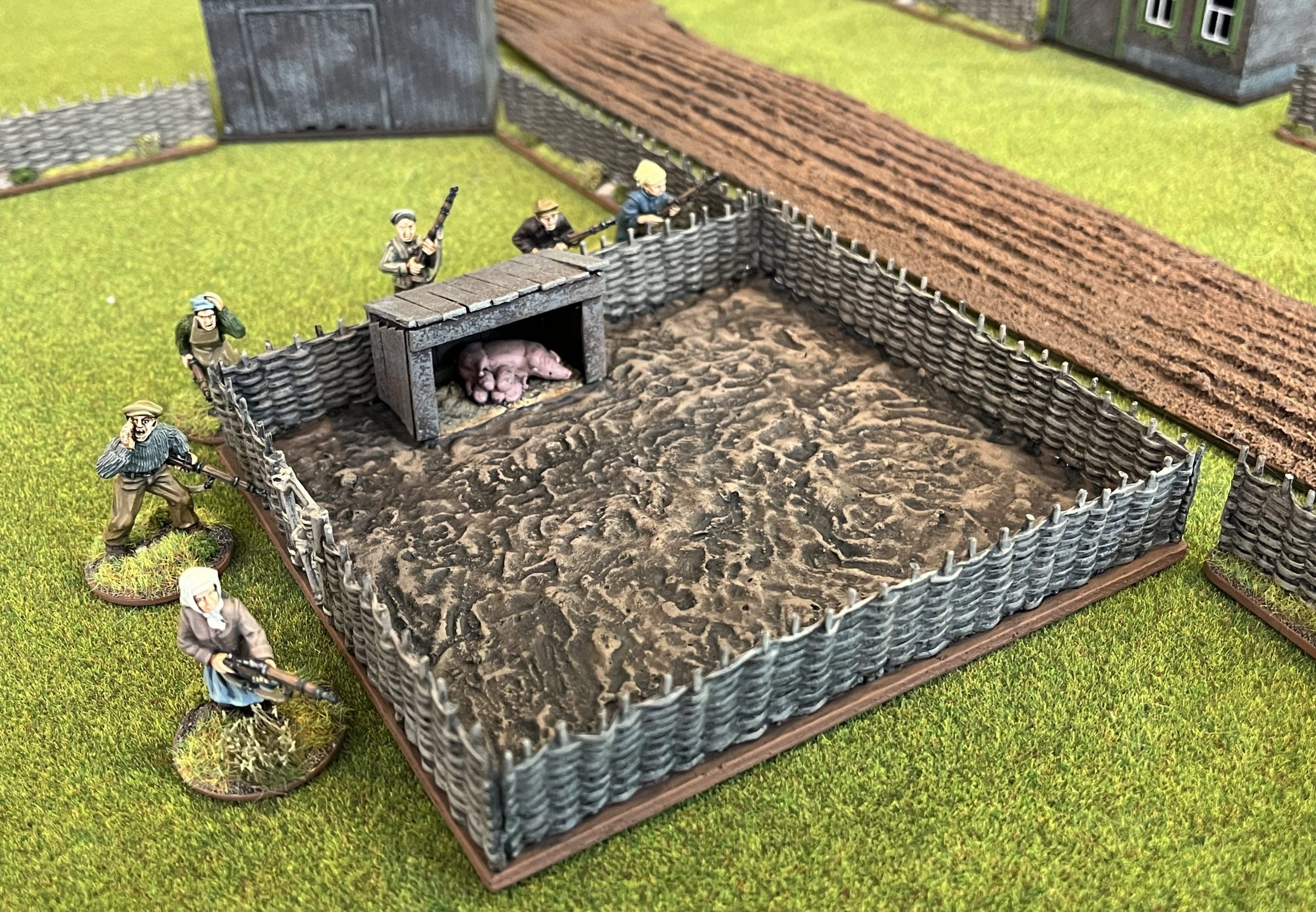
Feeling adventurous, I set out to build a pigsty for my rural Bolt Action terrain.  Most of the materials were easy enough to order online.  The wattle fences came from Renedra Ltd; the mother pig from Warlord Games; and the balsa wood, match sticks, coffee stirrers, and green stuff from my hobby cache.

Building Wattle Fence Stands

By Kreighton Long

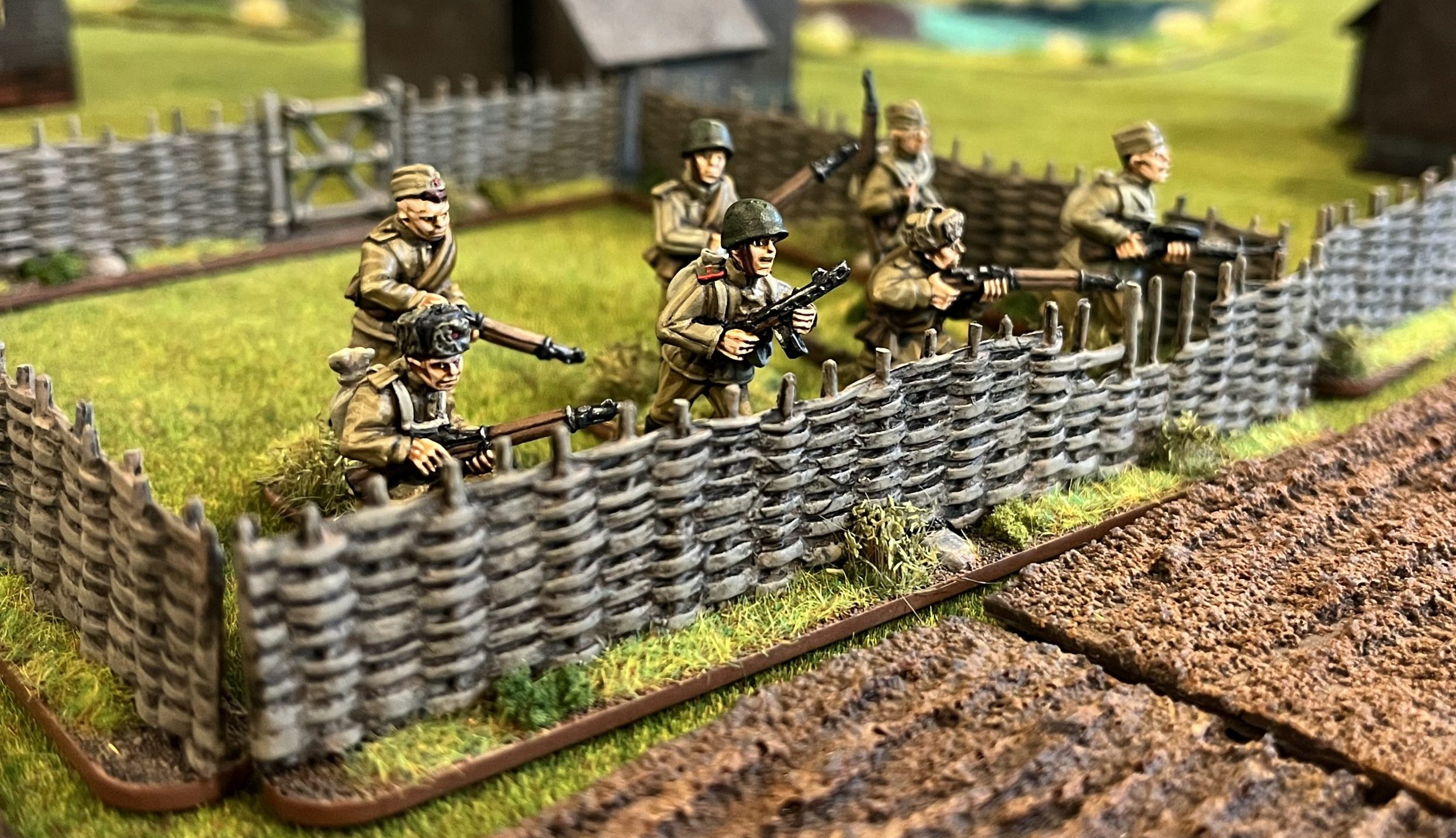
Slowly but surely I’ve been working on improving my terrain options with the focus on Bolt Action.  My primary army project for this year is overhauling my Soviet forces.  Accordingly, my terrain optics have been focused on the terrain pieces that will best fit the Eastern Front.

Painting Terrain Tree Stands

By Kreighton Long

I recently stumbled across Father and Son Gaming’s Organic Shapes MDF Terrain Base Set and thought about the improvement they could offer my current terrain set-ups.  For years I’ve collected trees, a couple at a time, from various conventions.

I’ve used those same trees on nearly every table I’ve thrown together.  From time to time I’ve had a minor hiccup where my opponent or I would need to reposition a tree or two to accommodate units moving through  the clusters of trees and in doing so would lose track of the intended outline of the trees.  For the most part these are friendly club games and we’ve been able to work through it for the spirit of the game.

Painting Horses

By Kreighton Long

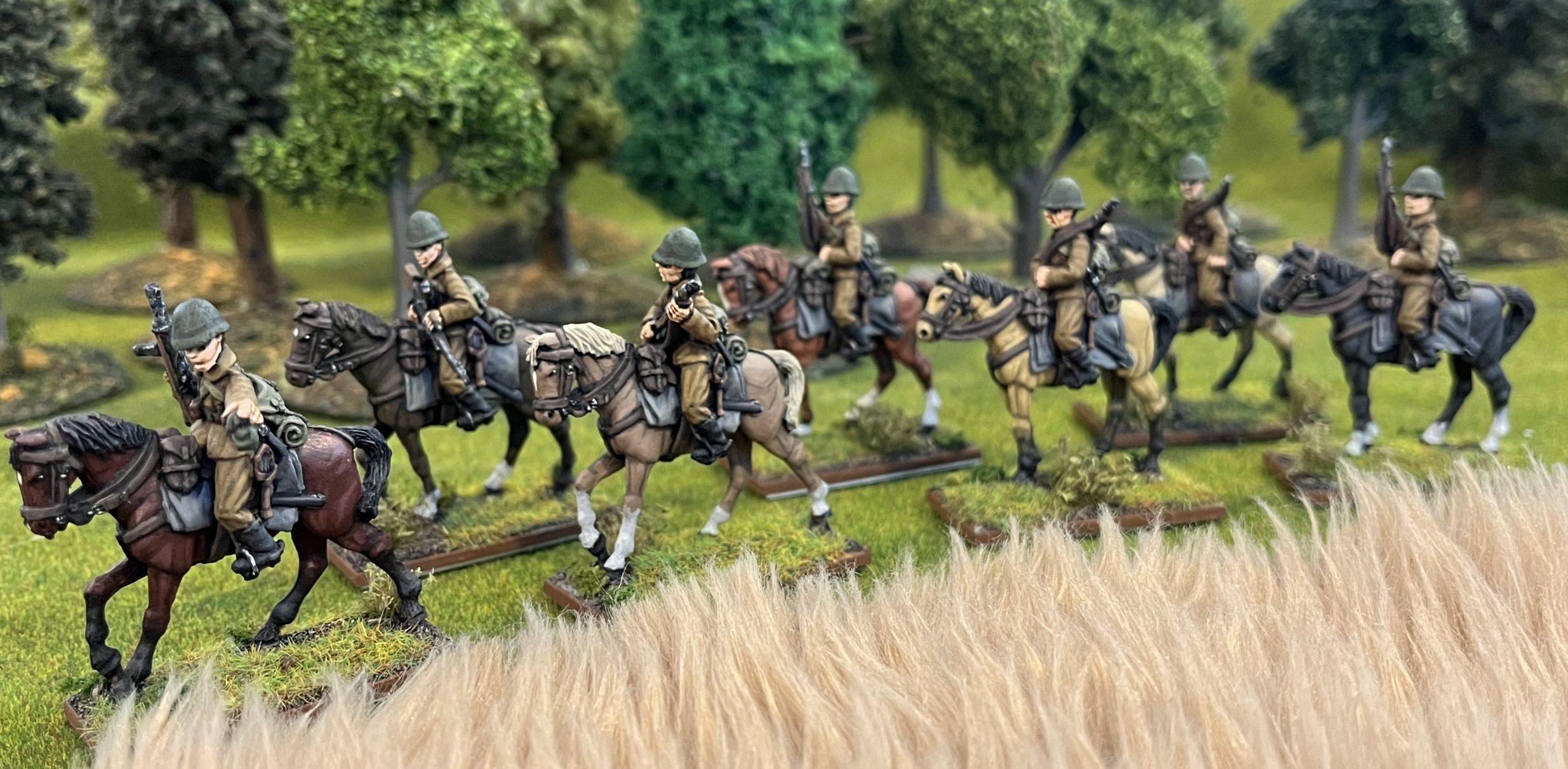
Thanks to Great Escape Games I finally worked up the courage to take a crack at painting horses with their Romanian cavalry.  Fortunately for me, I have a former equestrian a shout away to lend her expertise.  A goal I had for my mounted Romanians was to have an eye-catching amount of variety with the different mounts.

Of course with my partner passing my painting desk every so often to quality control my progress I was able to work with her to incorporate some authentic colorings.  Below are some of the different colorings I ended up with and the corresponding colors. All paints used below are from Vallejo.

Painting and Modelling Team Yankee Danish Infantry

By Morten

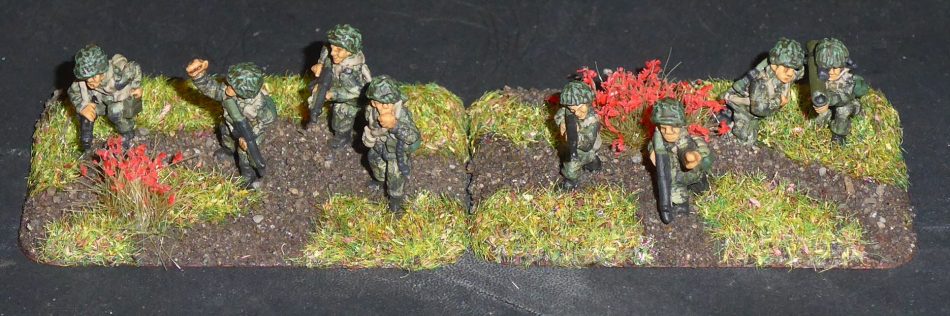
The Danish army got a new camo pattern for their uniforms, designated M/84 in 1984, to replace the older M/58 uniform. Although it was implemented into the Army in 84’ it didn’t reach the troops until years later. Even in the 90’s some troops had still not received the new uniform and especially reservists would still be issued the older M/58 uniform. 

The webbing used was of British making and had been donated to Denmark by the UK, after the Second World War. Denmark did not replace this webbing, until start to mid 90’s, although some bags and pouches on the webbing would be replaced with newer versions along the way (like new ammo pouches for the M/75(G3) rifle). Most of the webbing would be a tan/khaki color, although color variations did occur, and could range from a light green to dark khaki. 

Here is my take on how to paint a Danish Panserinfantri Deling (PNINF DEL), or Armored Infantry Platoon, for Team Yankee, in the M/84 uniform.