
Painting Winter Americans
By: Kreighton Long
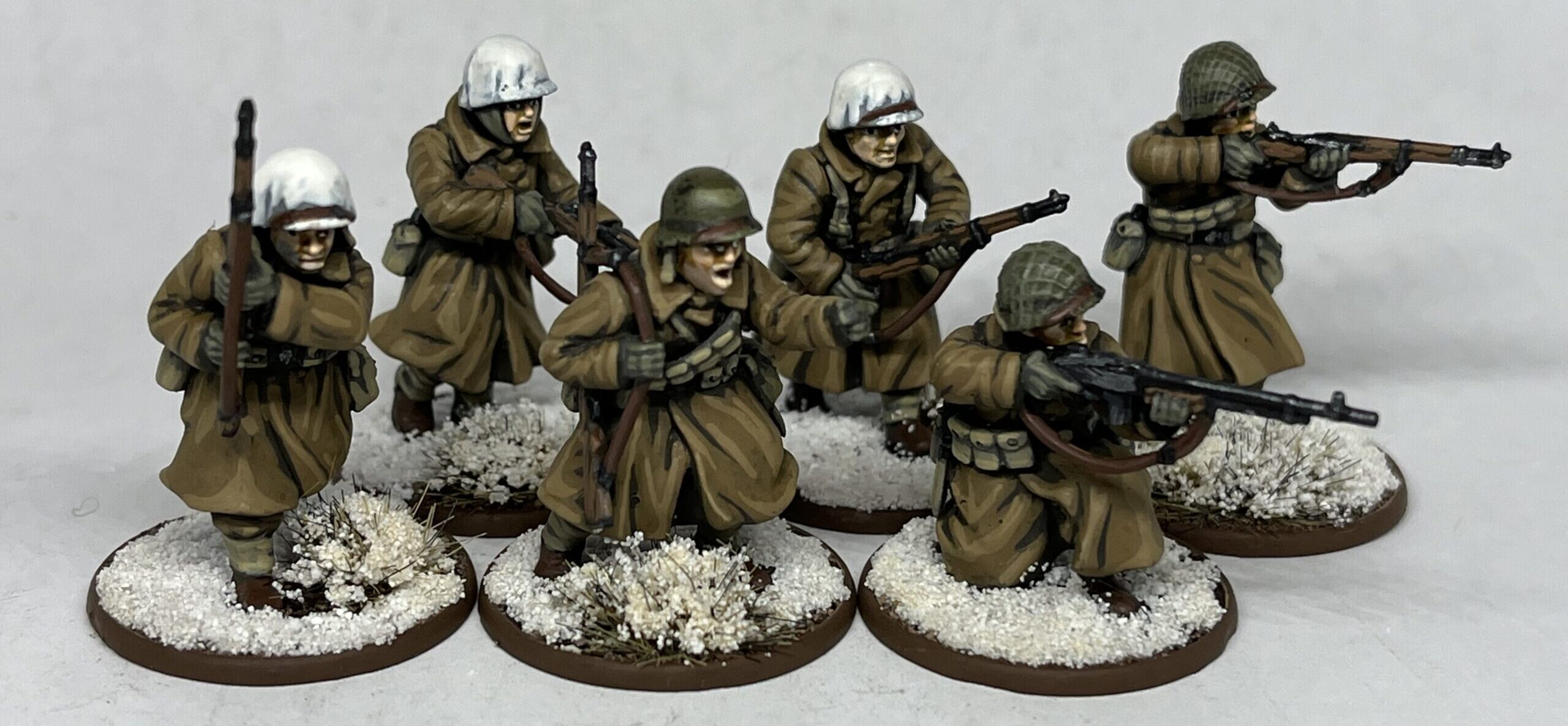
My recent Bolt Action projects have, in-part, been chosen to challenge myself with new basing techniques. I’ve played around with desert bases for my North African Italian army, stacked rubble with urban bases for my Stalingrad German army, and now plan on making snow angels with winter bases for my Battle of the Bulge US army. So let’s get into how this project came together on the painting table.
At the macro level, I knew what direction I wanted to go in: winter bases, US Army, and something other than the famous 101st at Bastogne. Beyond that I had my pick of plenty of units. As my last US army was themed around the Virginia National Guard 29th Infantry Division, I was drawn to another National Guard unit. In this context that was the Pennsylvania 28th Infantry Division.
As this is a winter army, most of the models are sculpted with trench coats. After scrolling through examples on Google Images, and experimenting with various colors in my inventory, I decided to go with the same point I use for the US Army trousers — US Field Drab.
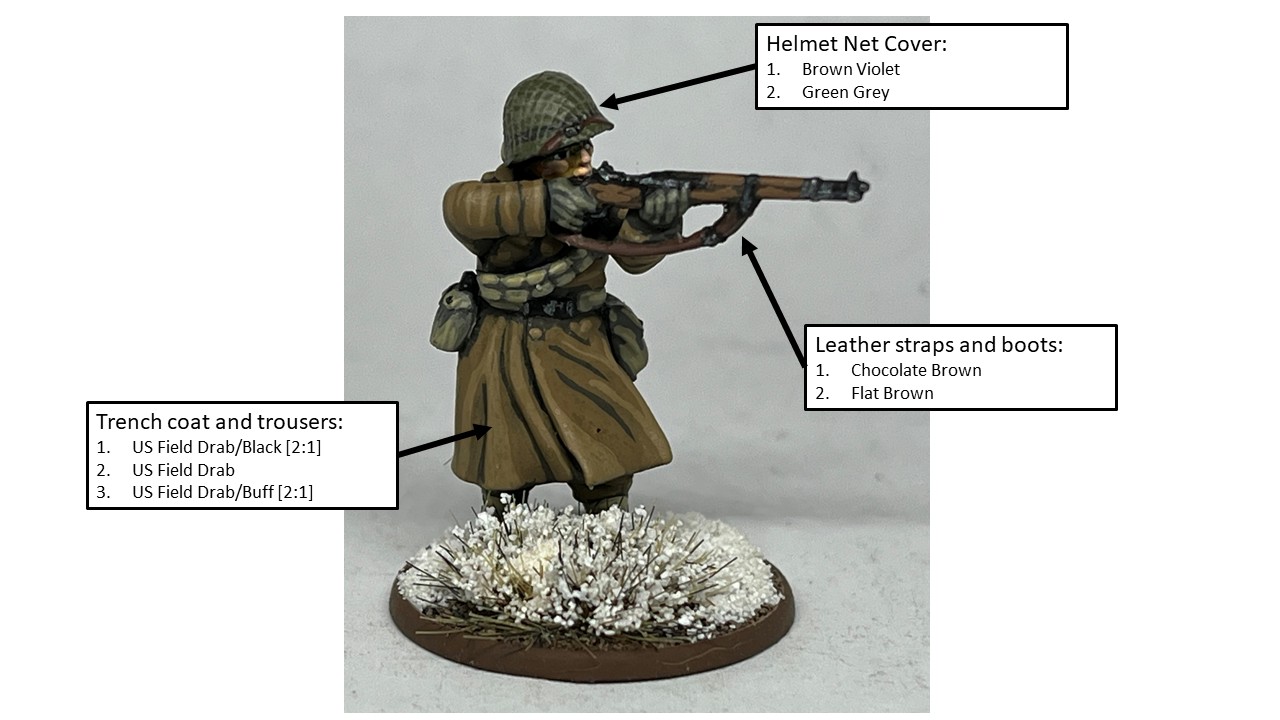
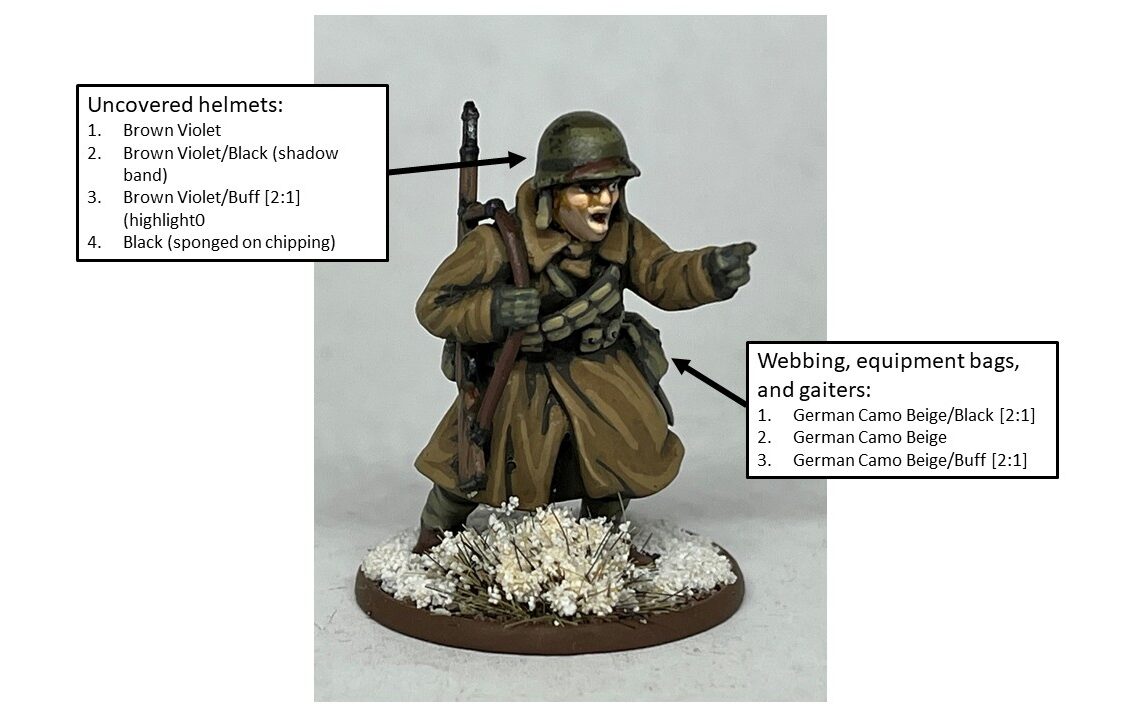
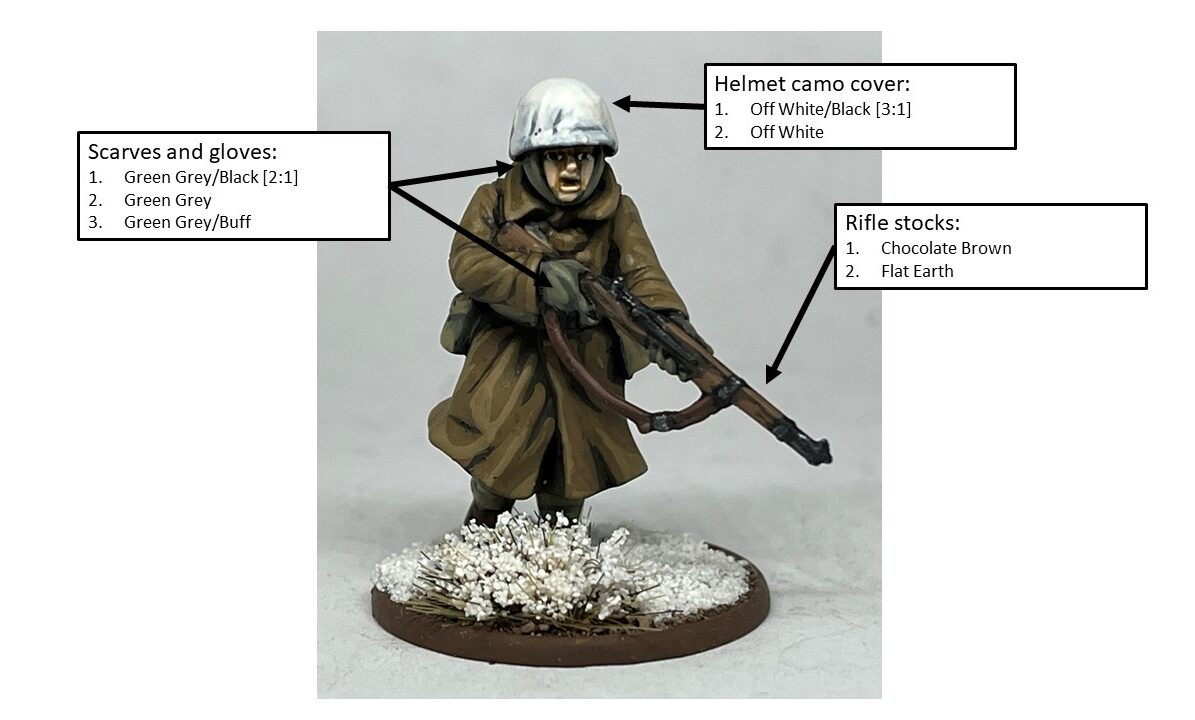
Looking through reference photos from the Battle of the Bulge, I noticed that the majority of soldiers wearing trench coats did not feature sewn on ranks. Therefore, I chose to avoid painting sewn on ranks for this project. My justification is a combination of veteran soldiers not wanting to stand out as leaders in the scope of enemy snipers paired with the rush to equip soldiers with winter weather gear to counter the German counterattack that became the Battle of the Bulge. If you would like to add chevrons to your own troopers you can find my directions for doing so here.
To help my NCOs and officers stand out, I chose to build them without helmet covers when possible. This way, I could paint horizontal white bars on the back of my NCOs’ helmets and vertical white bars for the officers. You can the steps I used to do so here.
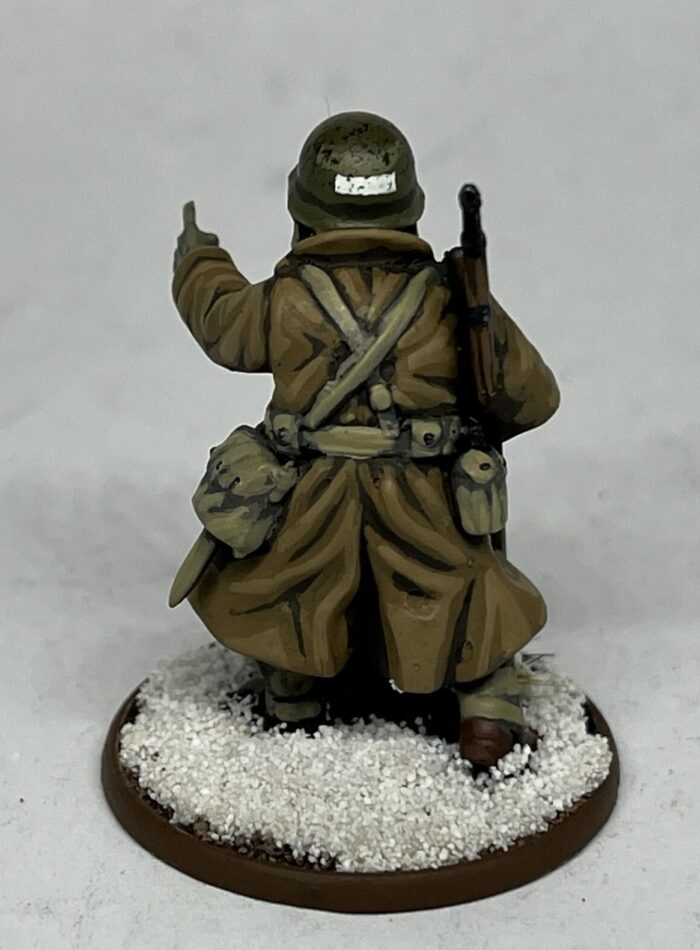
I decided to theme my American Battle of the Bulge army around the 28th Infantry Division. The unit patch is a red keystone and is also known as the “Bloody Buckets” due to the shape and color. The unit patch is fairly simple, especially compared to something more dynamic such as the 29th ID patch which I used for my Normandy campaign US Army.
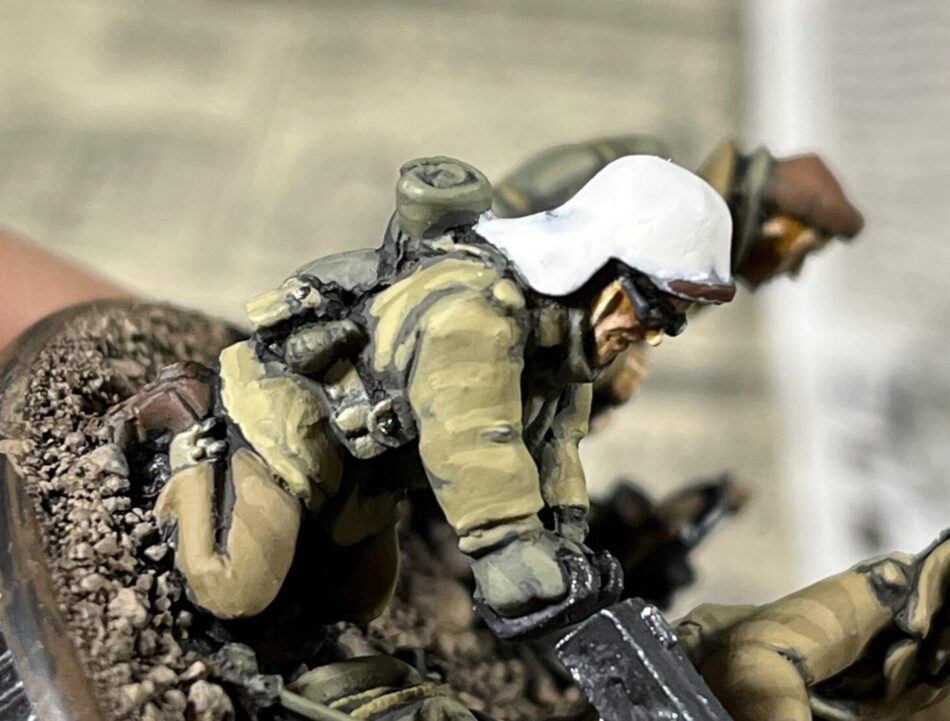
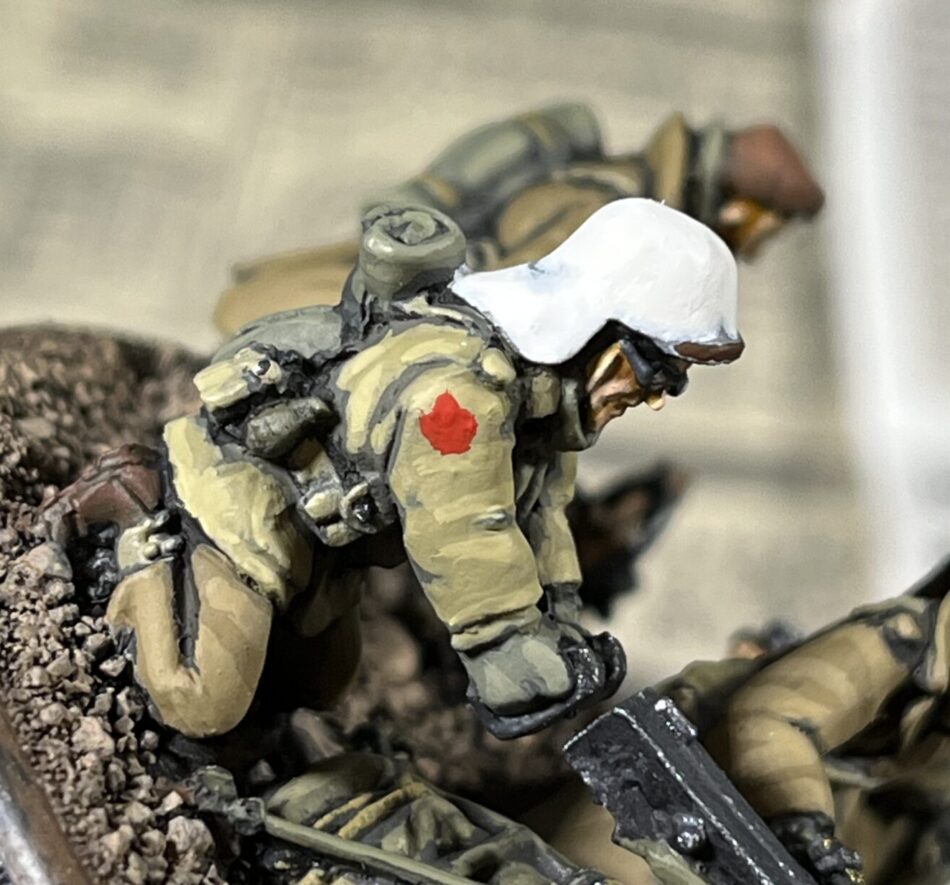
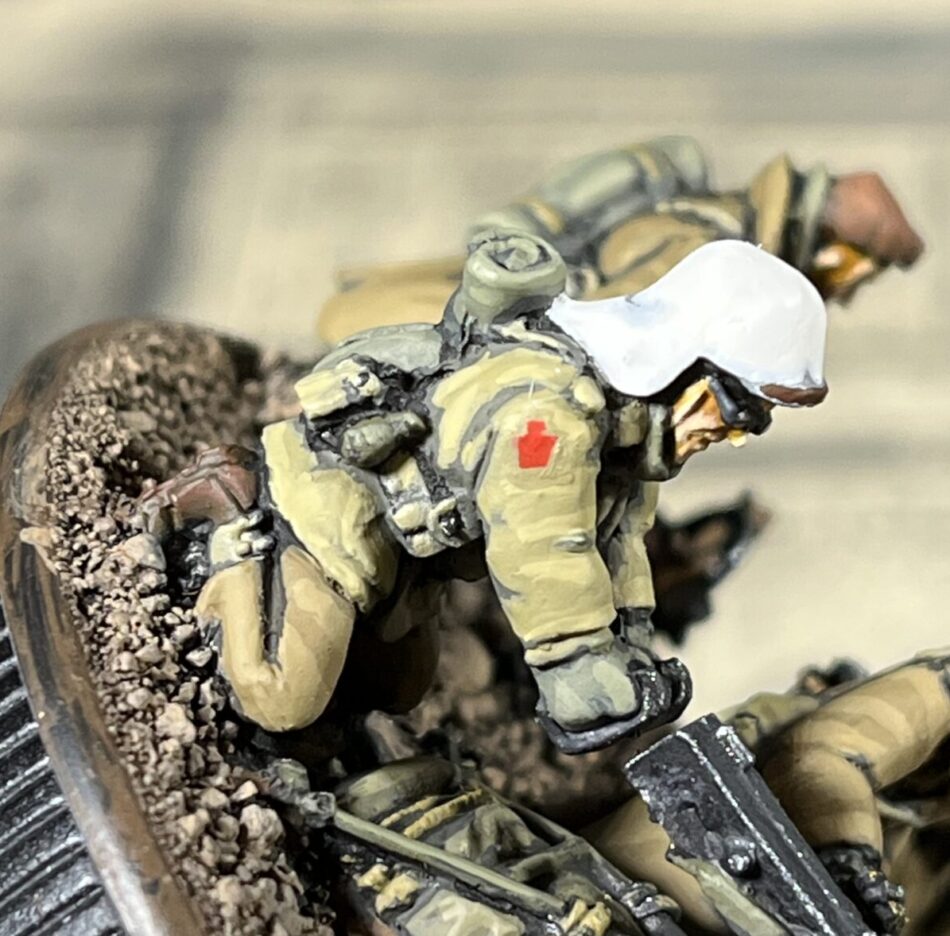
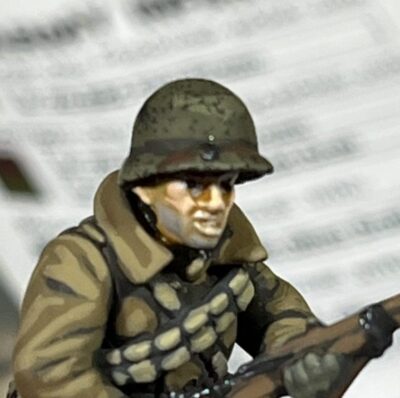
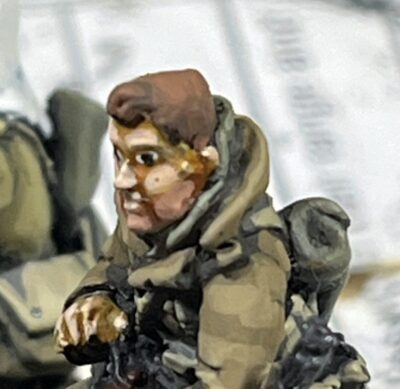
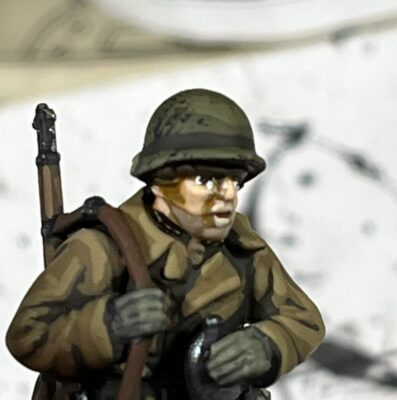
I used this army project as an opportunity to experiment with five o-clock shadows. Photos from the Battle of the Bulge show soldiers with relaxed grooming standards and I wanted to sprinkle in a few soldiers that reflect that. When choosing which soldiers deserved some fuzz I decided to go with my more experienced soldiers such as the NCOs and BAR gunners. A few riflemen also ended up showing their age. I incorporated four different hair colors into the scheme: grey, brown, and red. Blonde five o’clock shadows are relatively unnoticeable at a distance so I skipped that color entirely.
The steps I used to paint faces with some facial hair were as follows:
- Base coat the flesh with Medium Skintone.
- Highlight with Basic Skintone.
- Mix some of the hair color in with the remaining Basic Skintone and apply where needed.
- Apply a wash of Citadel Seraphim Sepia.
- Repeat steps 2 and 3 where needed.
Happy painting!