
Romanian Flames of War Nationals 2025 – My first wargame tournament in the land of Count Dracula!

By Paolo Paglianti
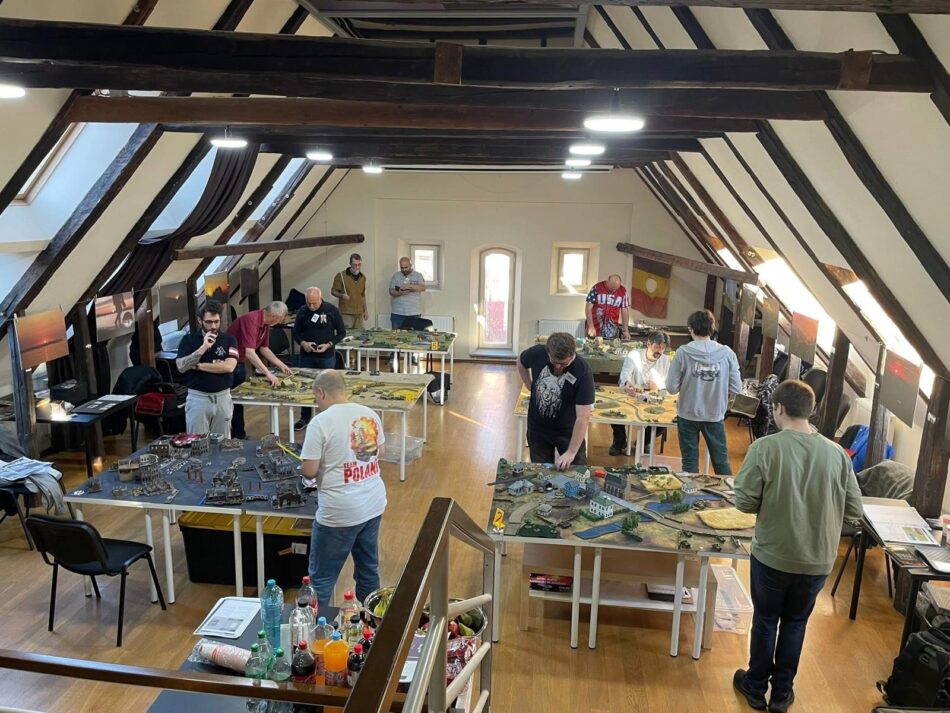
Even though I’ve been playing wargames since way back in 1992 and have travelled across half of Europe, I had never had the chance to visit Romania. When my friend Quentin Taylor — a Canadian but Romanian by adoption — told us he would be organizing the Nationals near Sibiu, we booked our flights almost immediately!
Moreover, the Romanian Nationals are part of the European Series, a circuit of National tournaments which this year — in its second edition — includes Belgium, Germany, the UK, Poland, and also Italy, where I will be organizing the event on March 14–15, 2025. Together with Rob and the others, we wanted to create a network that would encourage players to take part in tournaments across the Old Continent.
Each tournament in the Series has its own rules — the only requirement is that there must be five games and the scoring must follow Battlefront’s system. Quentin decided to exclude Berlin Germans, which many players consider to have unbalanced point values. In addition, the format allows only 10 units, no repeated formations, and “just” 90 points. A great opportunity to field some lists different from the usual 100-point builds. You can find all the lists here.
So I tried an Extra Small version of my US Sherman Veteran list, which you can find below. The list is designed so that, in case of reserves, I can leave the HQ and one Sherman platoon off-table while deploying everything else right away, including two Sherman platoons.
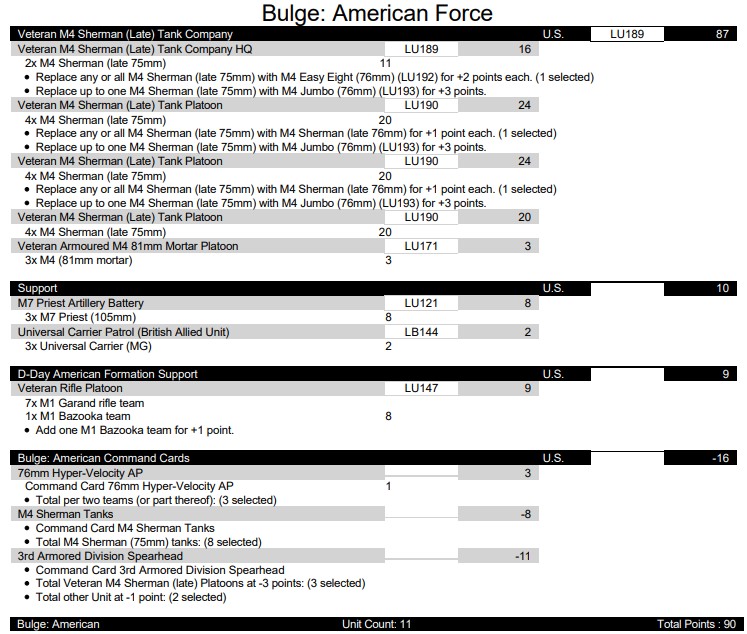
Compared to the list I usually play — which includes two Sherman formations (one veteran and one not, and no infantry) — I had to settle for a single Veteran Sherman formation, but I added a platoon of US D-Day infantry to have at least some chance of assaulting buildings and especially stubborn infantry units. The Achilles’ heel of the list is that, in order to fit everything in, I have to use the Spearhead card and its discounts, which unfortunately reduce the formation’s morale to a poor 5, meaning it’s very hard for me to launch tank assaults and hope to succeed.
First game: Mihai Popescu with Bagration Germans
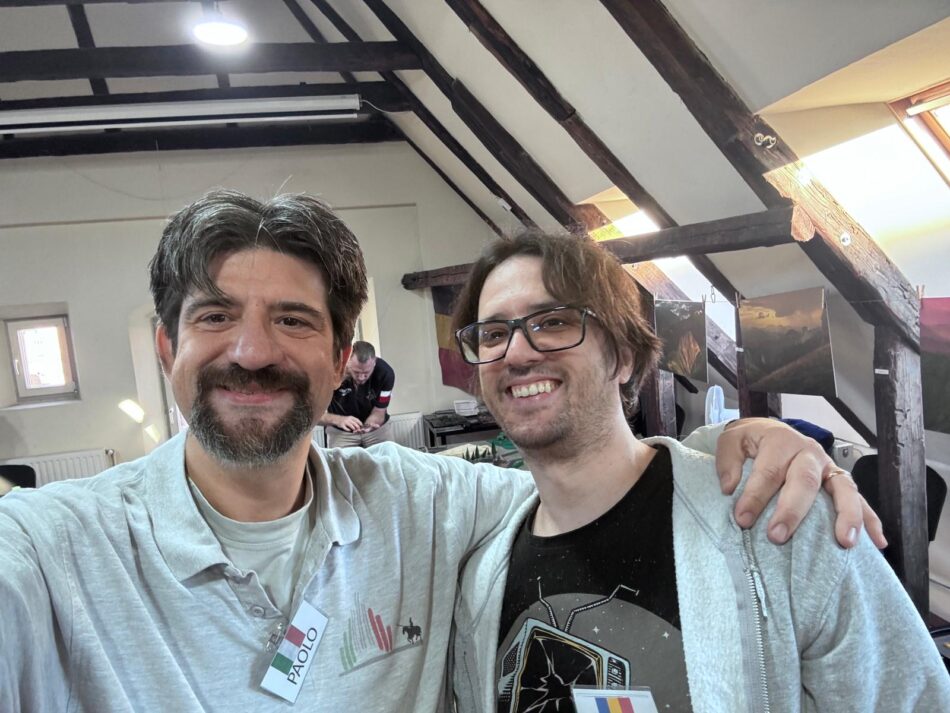
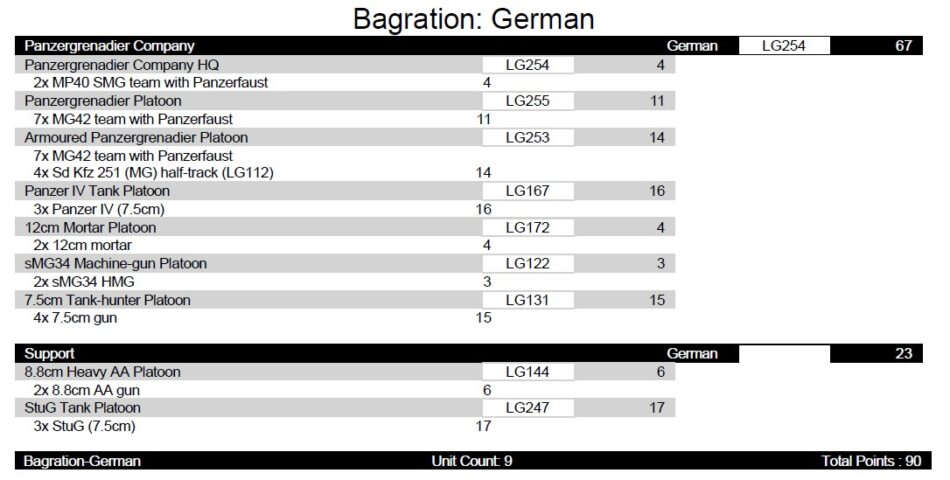
First game in the land of Dracula! Mihai is a promising new Romanian player, and he fielded this German list.
The table below is what Mihai and I faced off across. Unfortunately, my well-known and poor photography skills made me miss the Sherman unit in the bottom left. Since we both chose “Manoeuvre,” the mission was the meeting engagement Scouts Out, which is particularly tricky because one of the objectives to defend lies outside both players’ deployment zones—though only by a few inches.
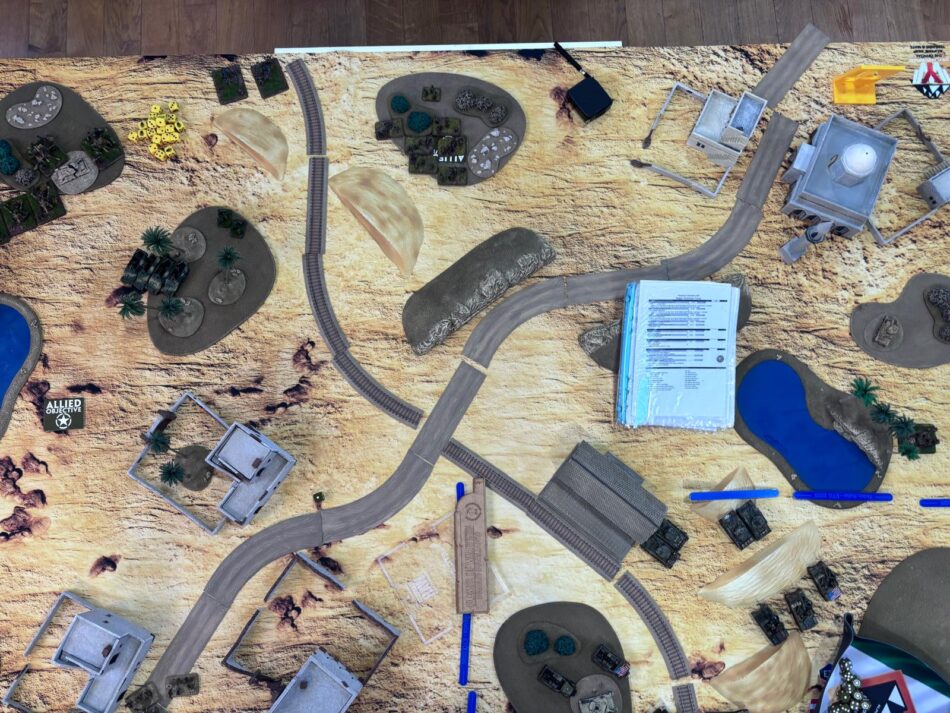
Mihai placed his infantry mounted in Sd Kfz in the palm grove near the exposed objective, along with a formidable battery of 88 guns and 7.5cm Pak. However, since he didn’t have any Scouts with Spearhead, he couldn’t threaten my exposed objective—at least not until his tanks would arrive from Delayed Reserves.
I positioned one Sherman platoon and my artillery to defend the two objectives, while using Spearhead to push the other Sherman platoon (the “light” one with four 75mm) and the D-Day infantry as close as possible to the enemy’s exposed objective.
Unable to advance under the fire of the Pak and the 88s, I spent the first turns ranging in mortars and Priests on the enemy guns, using the infantry commander (so needing a 5+) to actually range in. Eventually, patience paid off and after three turns the German anti-tank assets were in bad shape. At that point, as soon as my first Sherman platoon arrived from reserve, I advanced on the objective and drove off the German infantry, which on its own couldn’t defend it while still waiting for the Stugs to arrive.
8–1. After the game—which ended in under an hour—we replayed a second engagement, trying to adjust Mihai’s plan using “Defence,” which worked much better for his anti-tank-heavy list!
Second game: Graham Willmott with Bulge Germans
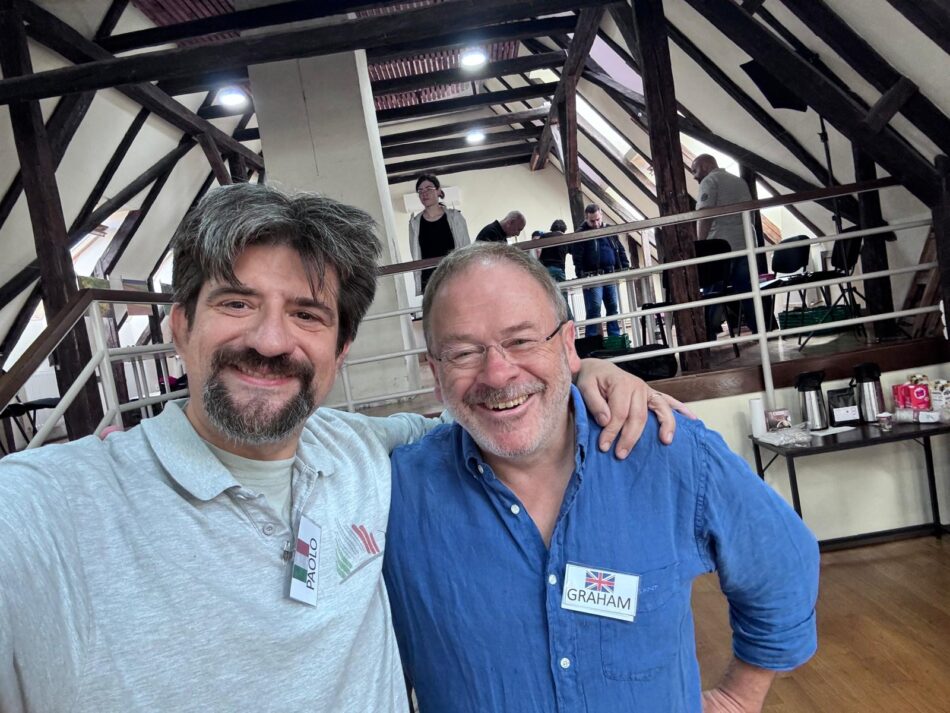
Graham is one of the strongest British players, but he’s also great fun to play against. At the Milan Nationals he even won the Best Sportsman award! His German list is, as usual, very tricky.
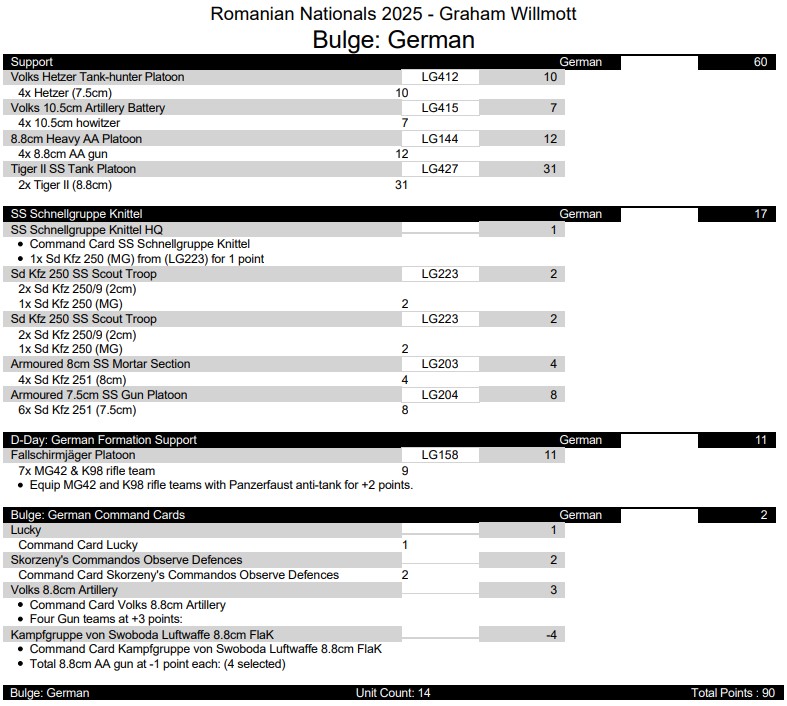
We played on a “city” table full of ruins and buildings, and naturally Graham chose “Defend,” while I went for “Attack.” My D-Day infantry would have to work overtime! Here’s the deployment, mission Dogfight.
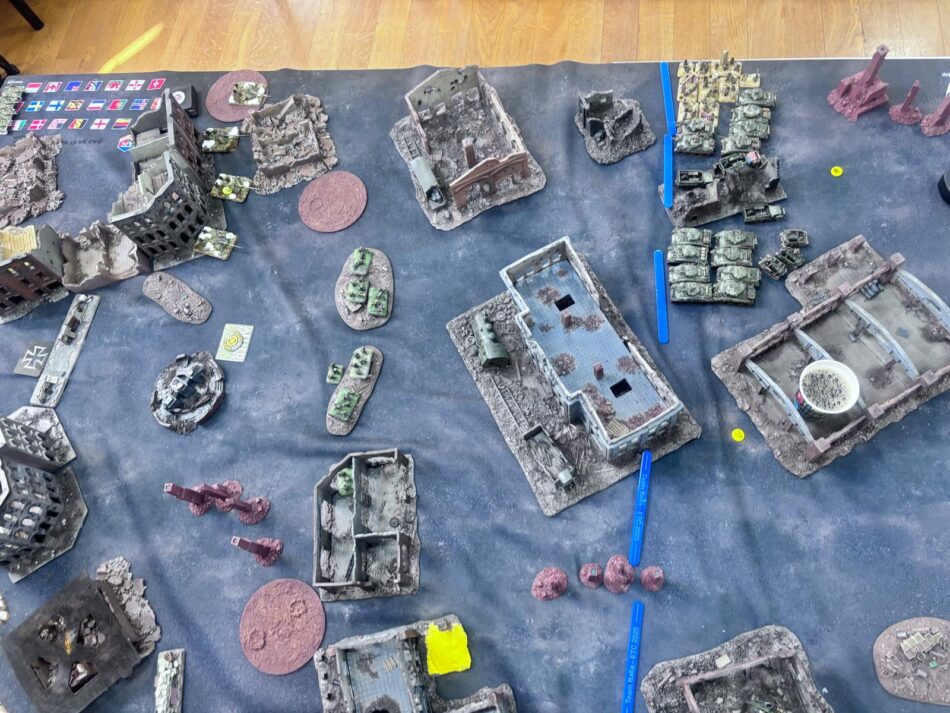
Graham dug in on the right side, deploying his two 88 platoons (one AT 14 and one AT 17) to protect the forward objective. To further reinforce the position, he placed his lone paratrooper infantry platoon in the ruins right in front of the objective, and hid his scouts from his small but slippery formation as best as he could. The King Tigers and some scouts remained in reserve with Hetzers in ambush.
The urban battlefield certainly didn’t favour me, but at least I could approach the objective with minimal risk by hiding behind the ruins and surviving buildings. I decided on a strong push on the “top” side of the table, and on turn two set up a line of Shermans that began firing at the nearest 88s and the infantry—either with main guns or .50 cals, depending on what was more convenient.
Meanwhile, the HQ directed the fire of the US mortars and Priests, and within a couple of turns the forward AT 17 88s were wiped off the table.
Unfortunately, Graham’s King Tiger platoon also entered from reserve at the same time, placed itself almost exactly in the same spot, and began hammering the Shermans alongside the other 88 battery, which was farther away and harder to bombard effectively. With the US infantry I managed to clear the second minefield from the top, opening a path toward the objective—but then I made a mistake: I didn’t drop a smoke barrage when it was time to assault the German paras.
Predictably, the American infantry was torn to pieces. I tried to save the situation with my tanks, but it turned into a race against time: my surviving Shermans couldn’t destroy the Hetzers and infantry before the King Tigers and AT 14 88s wiped them out.
3–6 for Graham, who once again proved to be an excellent opponent, capable of both defending and attacking at a high level.
Third game: Dominik Grabski with Waffen-SS
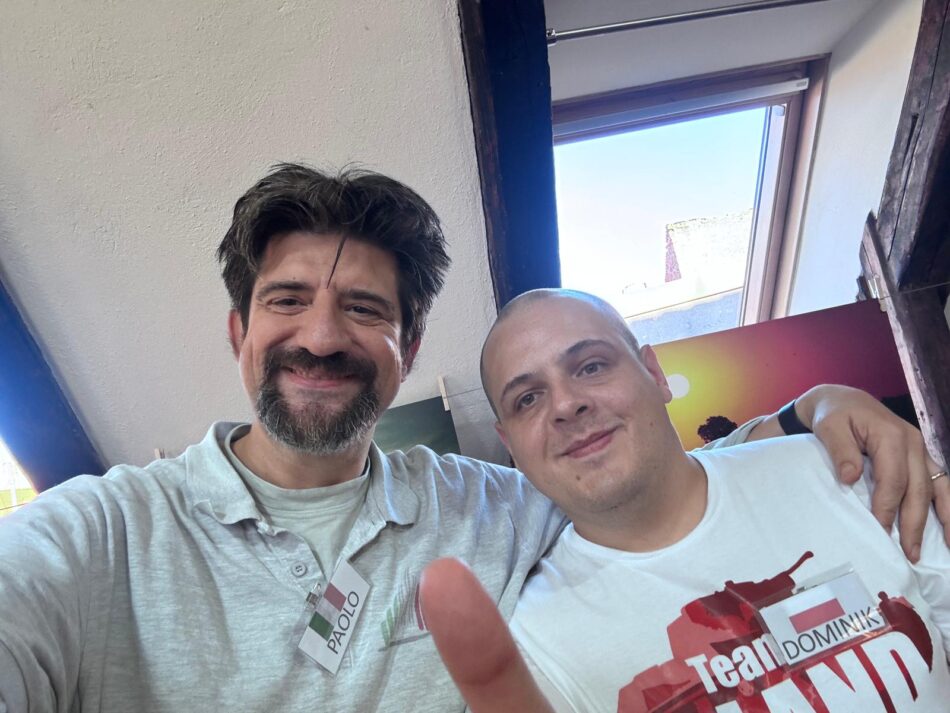
Another top-tier matchup: Dominik plays on the Polish ETC team—the reigning champions! He brought a Brigade Armoured Assault formation with a fearsome armoured force including two platoons of three Panzer IV/70 and two King Tigers. Here’s the list.
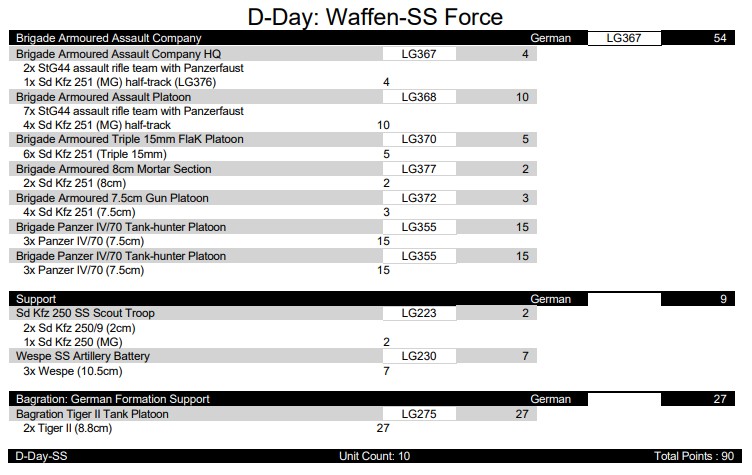
Dominik chose “Attack” and I chose “Manoeuvre,” and we played Breakthrough. See below for the table.
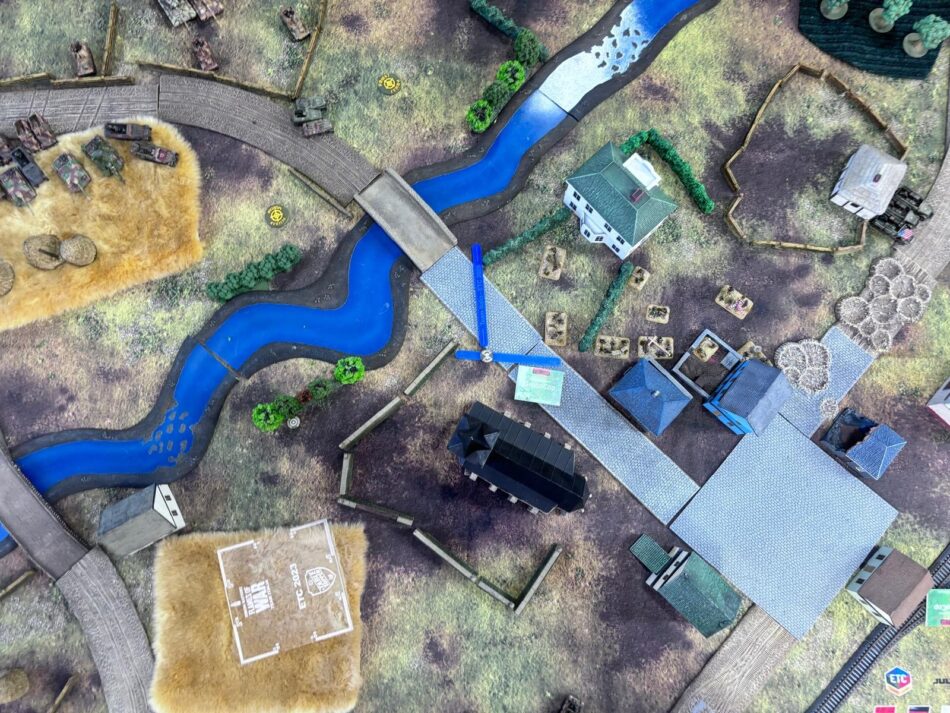
Dominik deployed his entire force in the upper-right quadrant, keeping an infantry platoon and the Triple 5.5cm battery in reserve. Since I only had one infantry platoon, I placed it near the central objective, planning to move it if needed once Dominik’s reserves arrived, supported by the “light” Sherman platoon with 75mm guns.
The other platoon, with the two 76mm Shermans, would try to stop the Panzer IV/70s. As for the King Tigers – let’s just say I had no clear idea who was supposed to stop them!
In the first turns, Dominik didn’t push hard toward the objectives; he was content to start sniping my tanks from afar, and with a lucky roll he knocked out one Sherman. Whoever says that 7s and 8s never come up is wrong!
Luckily, my reserves arrived quite early, and I had to decide what to do. I could move them toward the objectives and wait for Dominik to advance, or I could force the issue and swing around his deployment zone—effectively attacking the attacker. Since the best defence is a good offence, I chose the second reckless option.
My six Shermans—four with 76mm AT 13 and two Jumbos—started targeting the Panzer IV/70s, despite knowing there was no escaping the lethal fire of the King Tigers. After three turns, the Panzer IVs were all destroyed, as were several Sd Kfzs. I also managed to advance with the 76mm Sherman platoon on the field, hoping to get flank shots on the King Tigers. One did blow up, but the other kept knocking out Shermans.
In the final act, Dominik’s reserves arrived on the exposed objective, but it was too late to threaten it. Still, Dominik didn’t give up and managed—at the very end—to destroy three of my platoons, getting the maximum out of his loss.
6–3.
Fourth game: Davide Ranzani with Bulge Germans
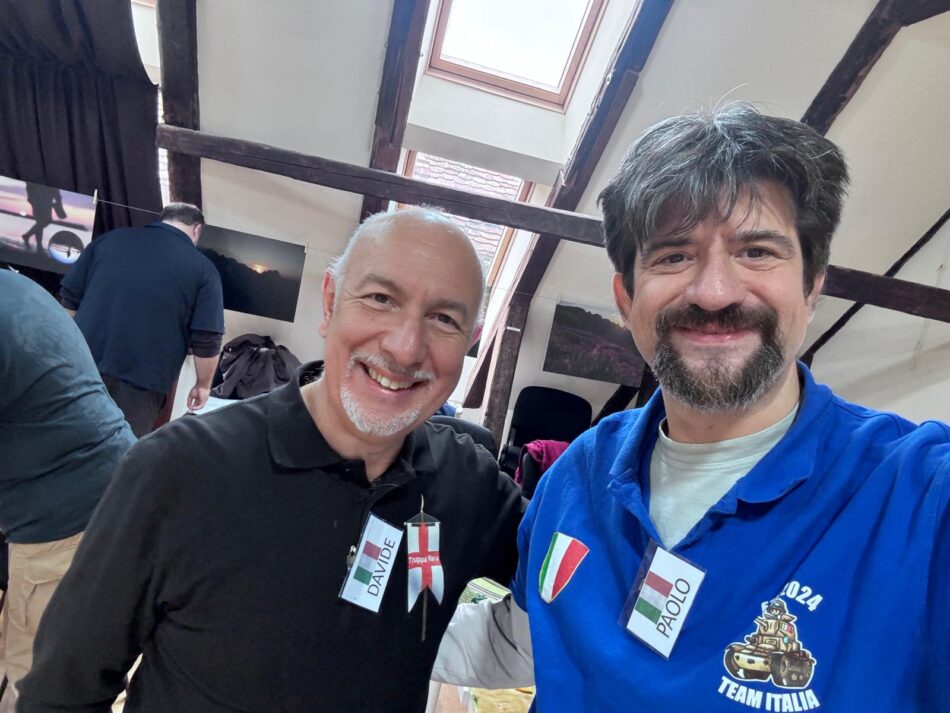
Davide is not only an excellent player, he’s also one of the Milan players I play with most often (the other is Giorgio Bendotti), and when we prepare for a tournament it’s not unusual for us to play twice a week! Unfortunately, the standings paired us close together going into round four so we had to face each other on Sunday morning.
Davide brought a very efficient Bulge German list: once again King Tigers — which at 90 points are practically the perfect reserve — Sd Kfz flamethrowers to threaten my infantry and Hetzers and Panzer IV/70 to take out my Shermans. Here’s the list; I recommend trying it if you want to play Late War Germans.
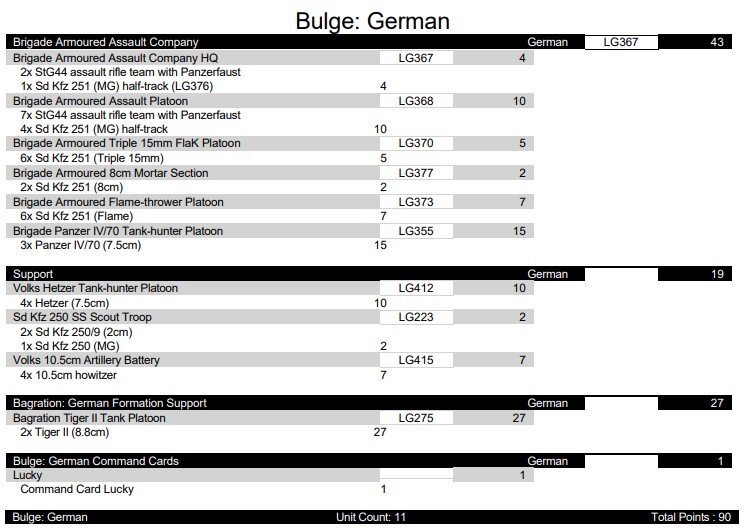
I chose “Attack” and Davide chose “Defend,” so the mission was Killing Ground. It’s a tricky mission for the attacker because the ambush can be placed on the flanks, meaning an overeager attacker might suddenly find Pak guns or tanks behind their own lines! At the same time, it’s not easy for the defender to protect two objectives so far apart, especially with lists this small and only 10 platoons. This is the table. Before choosing the mission, we agreed to treat the ponds as cross-check terrain, so attacks in those areas wouldn’t be impossible.
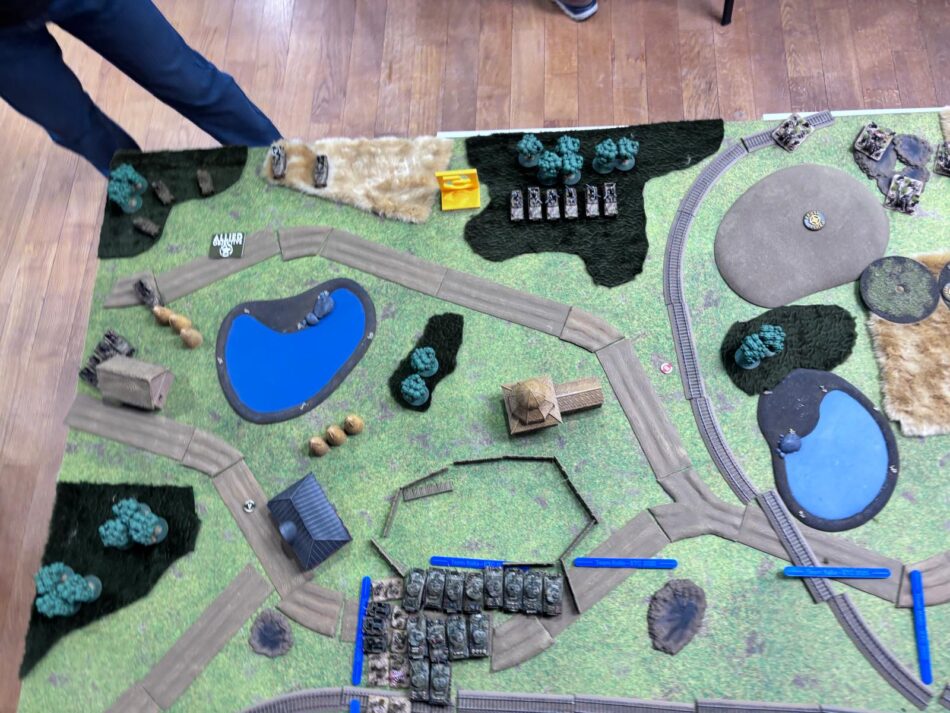
Davide deployed his scouts and infantry on the left, the flamethrowers in the centre so he could send them wherever needed, and the gun battery on the right, protected by a hill and minefields. The King Tigers were in reserve along with some scouts, while the Hetzers were in ambush.
I decided to attack on the left, which was more “populated” with German units but had no minefields. I sent the British scouts toward the left-hand woods and then crossed in. The goal was to prevent Davide from placing the ambush in that area in the following turns, which would have been disastrous — AT 11 on the side armour of the Shermans!
Meanwhile, I advanced with the tanks en masse toward the objective, and used my artillery to bombard the mounted infantry.
In the following turns, I focused fire on the flamethrowers, because they’re dangerous not only to infantry: with all those shots and the 5+ remount of the 75mm Shermans, they could have caused trouble for all my assault platoons. I reached the objective rather quickly, but then the King Tigers arrived and, of course, began taking a heavy toll on the Shermans.
Before things got critical, I managed to swing a pair of 76mm Shermans onto their flank, and with a couple of lucky shots turned them into wrecks.
8–1, thanks in large part to all the practice games with Davide!
Fifth game: Etienne Dufur with Poles
Etienne is, as I’ve already said several times, one of the best European players, and a real ace at defending with infantry-heavy lists. Waves of infantry! He’s also very good at putting together original lists: for the first time, I find myself facing a Polish force, released only a few weeks ago in the Bagration compilation.
His list combines a formation of Polish infantry with mortars and 10.5cm howitzers, plus a strong Russian component including a Sapper formation, a platoon of OT-34 flamethrowers, and Lend-Lease Churchills. Basically, a Russian force with the ability to throw down two smoke bombardments. Here’s the list.
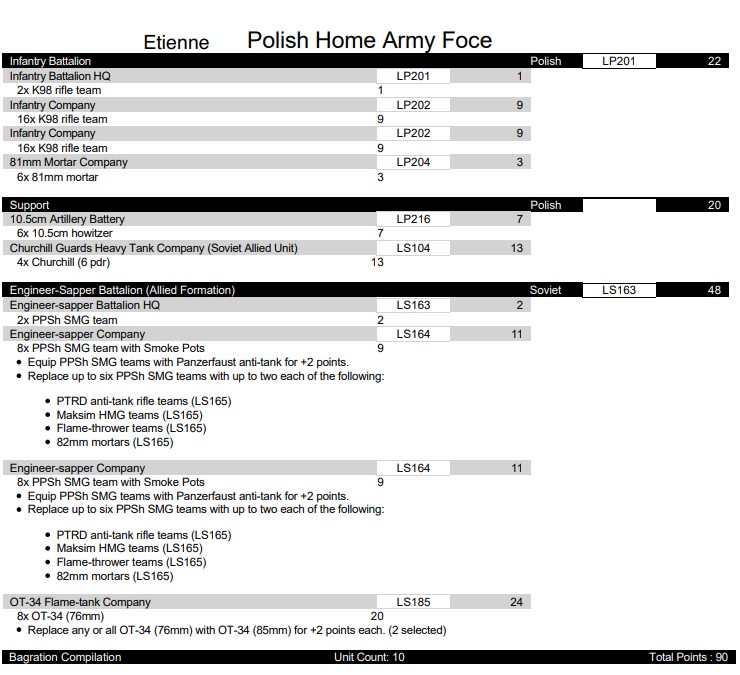
As expected, Etienne chooses “Defend” while I choose “Attack.” The mission rolled was Hold the Pocket, which gave me a big advantage: Etienne is forced to deploy 64 infantry, mortars, and guns within a 24” x 28” rectangle. In practical terms, with my two bombardments I hit at least half his army. In fact, Plan A is to attack the most exposed objective, the one farthest from the arrival point of his reserves (the OT-34s and Churchills). But as Plan B, I could also aim to wipe out the Polish formation. Here’s the deployment.
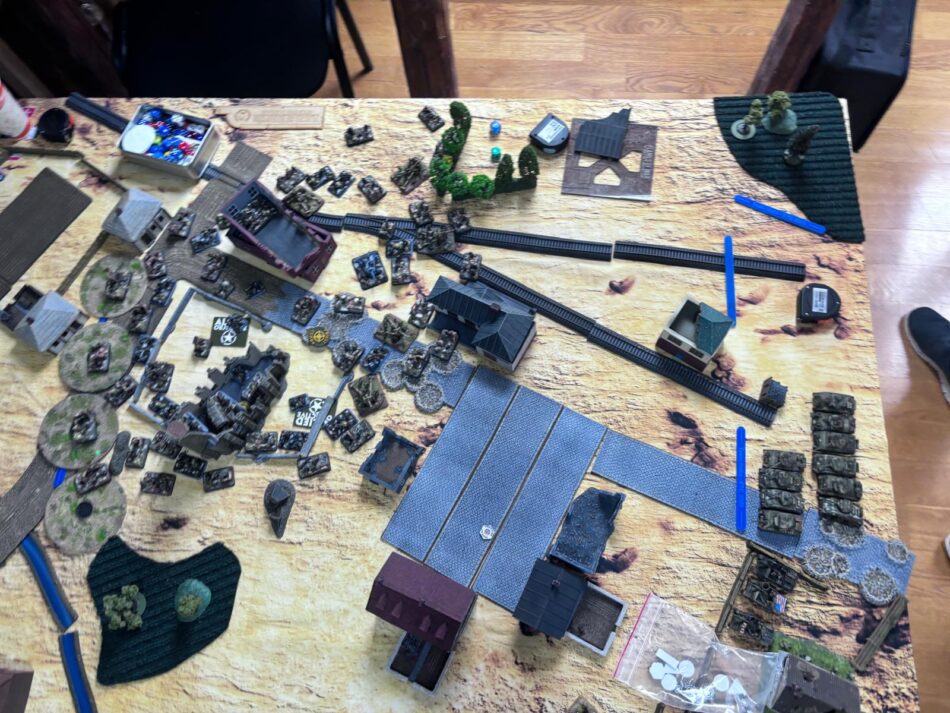
First of all, I make sure to move in mass toward the exposed objective. I absolutely need to avoid Etienne using the “trick” of advancing a couple of infantry stands in his turns just to keep my tanks at arm’s length. Since the exposed objective is basically in the middle of the table, I can manage that easily. I start hammering the Poles with the .50 cals, then with the 75mm guns, and then bombarding them with mortars and Priests. In the first three turns, Etienne starts taking a crazy amount of casualties that would generally break any army—except his, made up of 60-plus infantry!
Meanwhile, I maneuvered the D-Day infantry to prepare for a possible assault on the exposed objective, and I split the Sherman platoons to position the 76mm as a welcoming committee for the Churchills and OT-34s. The plan works, and despite smoke screens from both sides, I manage to knock out the enemy tanks—though not before Etienne wipes out almost a third of the platoon of infantry with flamethrowers.
In the final stages, the Polish casualties keep mounting, but the Americans feel it too, losing Shermans and Universal Carrier scouts left carelessly exposed. Seeing the situation collapsing, Etienne and I agreed for a score of 6-3, and we went to grab a beer. 6-3, hard-fought!
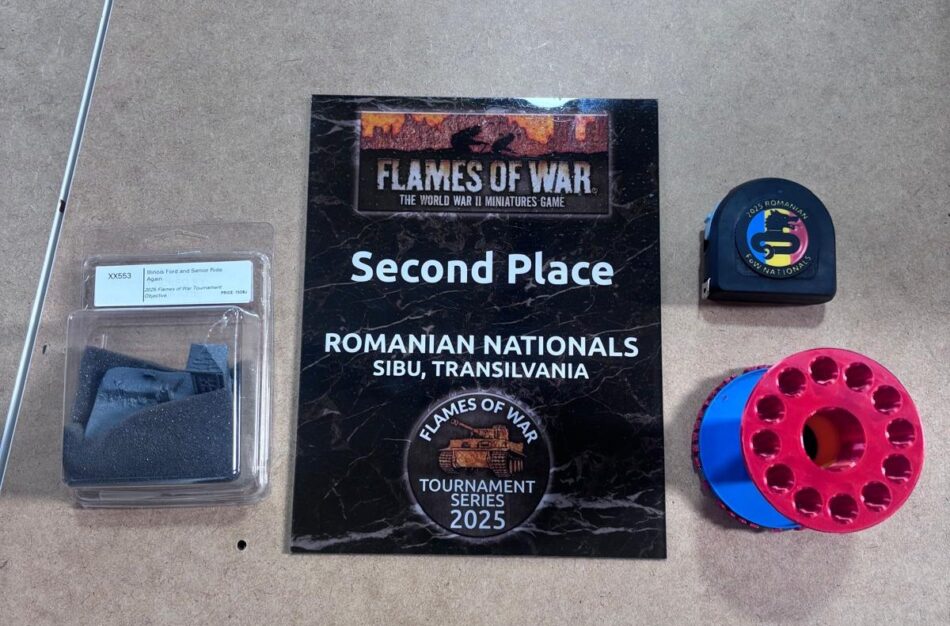
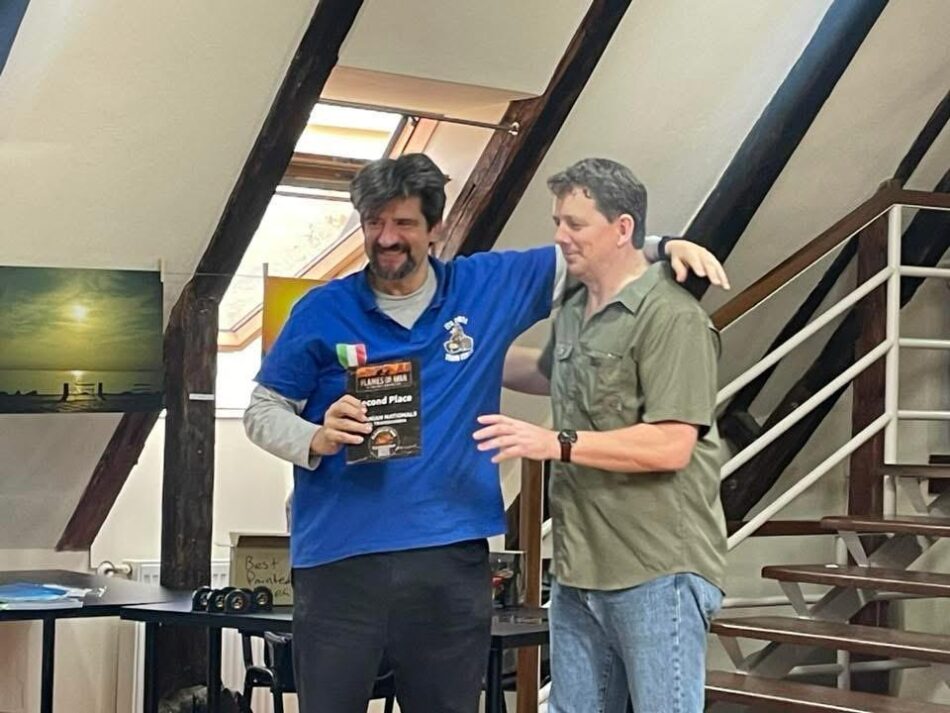
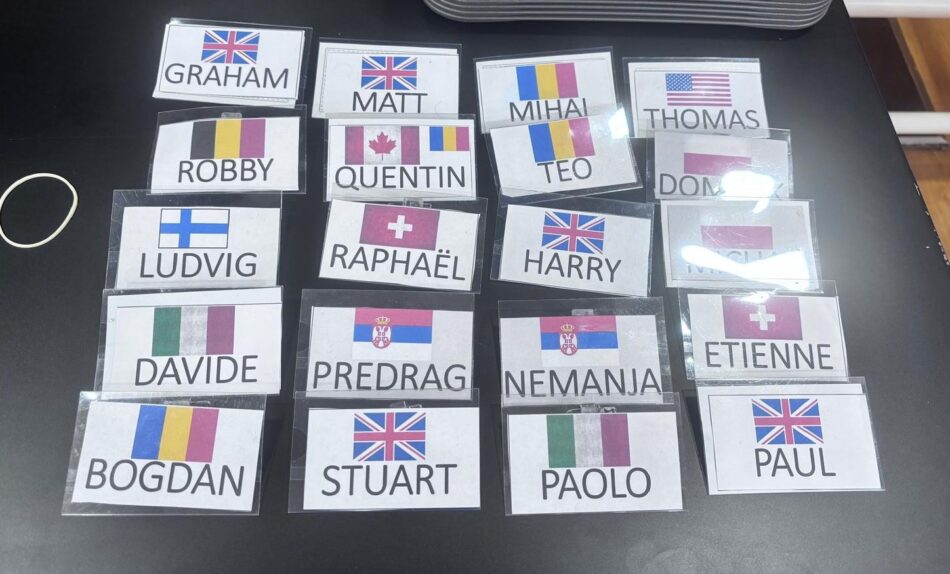
The Romanian Nationals was a very enjoyable tournament, where I caught up with many friends and also met several new players. Talking with Rob — who organizes the Series together with me (and Mark Goddard, Maciej, Tom, and Quentin himself) — we noticed how well this idea of a European “super championship” is really working: in Sibiu there were twenty players from seven different nations!
A shoutout also goes to Ian’s Combat Command Net website, which works brilliantly and allows players to keep a record of all their games — something the Flames of War community really needed!
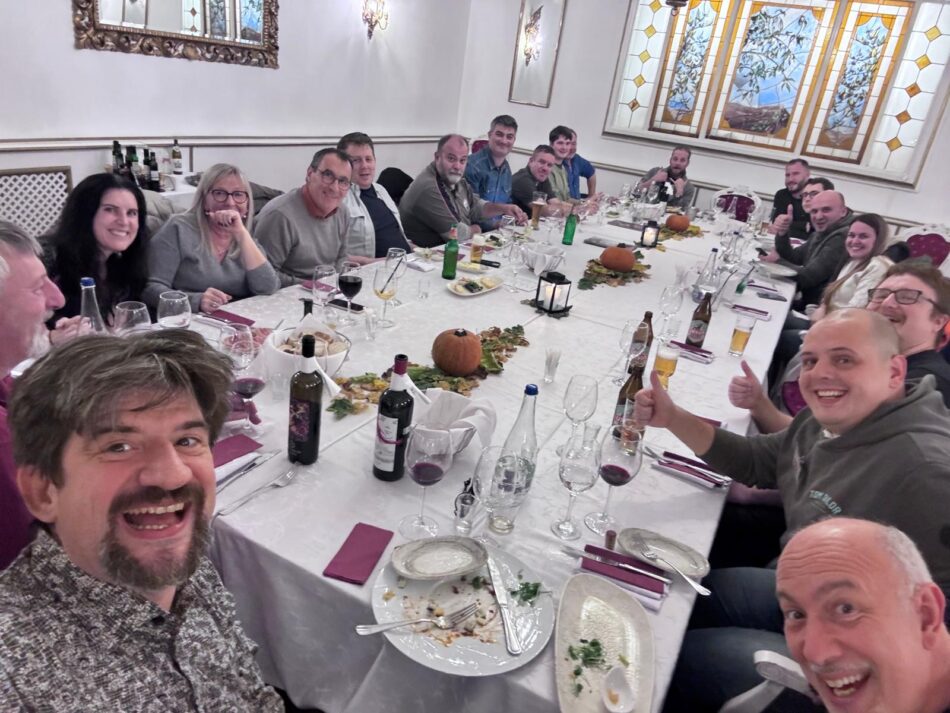
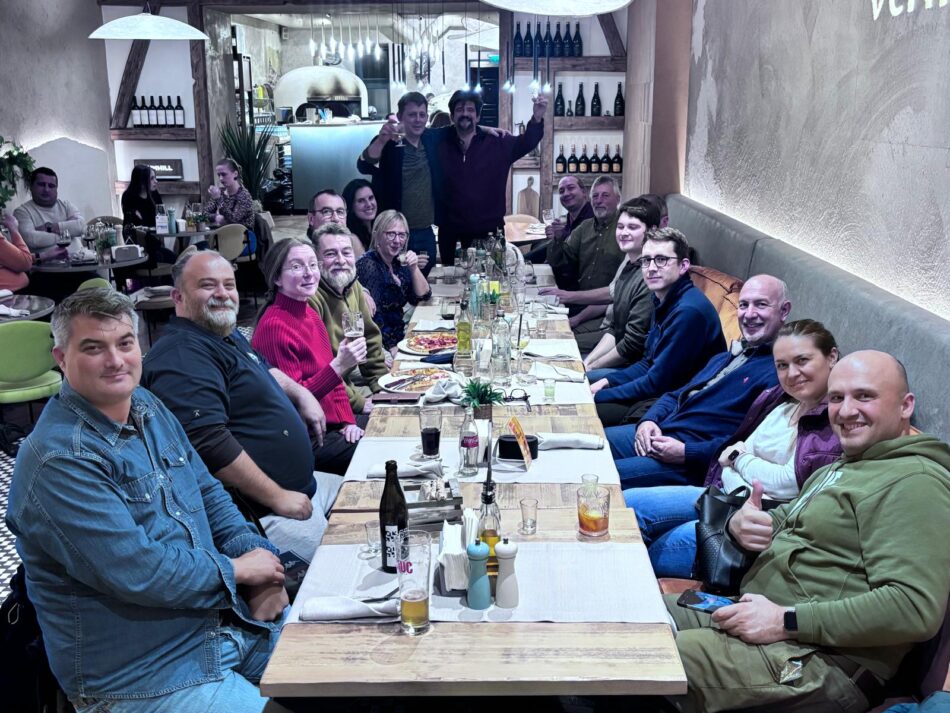
Apparently, a lot of top Romanian restaurants are run by Italians! I can order food in my language!
Nice! I always enjoy reading your battle reports.