
First Look: Starcraft Tabletop Miniatures Game – The Protoss
By Aaron Kamakawiwoole
En Taro Adun, Reader!
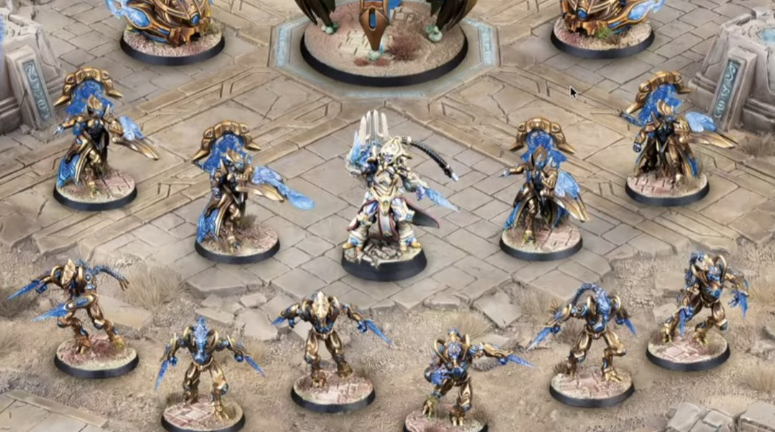
The Starcraft Tabletop Miniatures Game is available for preorder through April 15th (though they’ll still be in the online store following that time, albeit with some of the bundle options leaving circulation, so if you’re interested, check it out)! Last time we looked at the Zerg, and today we’re finishing our first look with their ancient foes: the Protoss, the firstborn of the gods, and a powerful psionic race.
I. Protoss Units
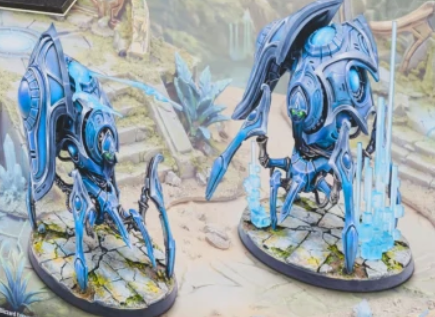
The Protoss start with four units: Zealots (powerful melee warriors with wrist-mounted blades), Adepts (skirmishers with the ability to send out a psionic shade of themselves, allowing them to teleport to another location swiftly), Stalkers (armored strider vehicles sporting particle disruptors to tear apart armored vehicles), and Sentries (mechanical defenders designed to create force fields to zone out enemy infantry while sporting a particle beam cannon).
The Protoss are an elite race: they don’t do anything halfway. Sporting technology including personal shielding, teleportation, and the ability to fry the minds of their enemies with psionic power, the powers of the Protoss are far above the other races in the Koprulu Sector.
The result is, pretty much no matter how you run them, you’re going to have fewer models than either the Terran or the Zerg. But you don’t need many models when you have enough firepower on every unit (other than the sentries) to eviscerate the competition. Every unit sports at least 3-4 attacks per model, all of them have ways to slip wounds past Armor Saves, and they have the mobility and shenanigan potential to evade your damage all the while.
Your Zealots are, and I say this fondly, a YOLO style unit: they would follow your commands to their dying breath, charging headlong into enemy units to tear them apart in close combat. Sporting a high volume of Impact Hits (hits you can deal when you charge into a unit, before you even begin performing close combat attacks), excellent melee damage, and enough shielding and wounds to (hopefully) insure that you reach close combat, the Zealot is one of the most iconic Protoss units, and fun to run.
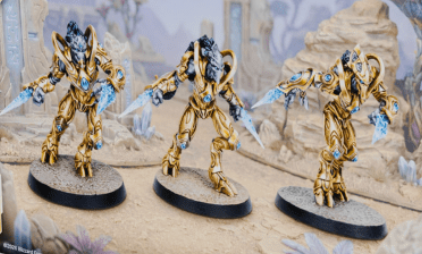
Adepts are the exact opposite in pretty much every way. While Zealots can just be thrown toward the enemy and they’ll do their job, Adepts are less resilient, and require tactical planning and finesse to use. They excel at close-range shooting, and offer a reliable base of damage, but they have to be protected, otherwise they tend to evaporate very quickly. But they offer far more utility options than the Zealot, so for people looking for more clever army builds, Adepts can be exceptional pieces for accomplishing that.
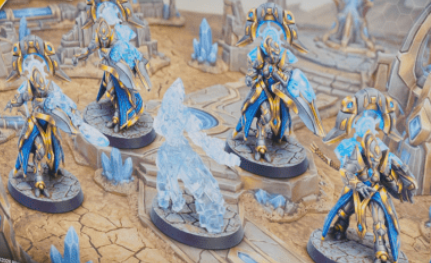
Sentries are unique in the game in that they provide support, but they don’t heal friendly units: typically support units like medics and queens can block wounds going toward a unit, but the Sentry works by far more subtle means (sometimes, admittedly, to the frustration of the player running them, because blocking wounds is really nice sometimes). Sentries come with several tricks built in: they throw force fields on the table that force enemies that are not massive to walk (and, most commonly, charge) around them, often pushing enemies out of position and saving softer units like Adepts from danger.
They can also create hallucinations, allowing friendly units near a Sentry to look like it’s ever-so-slightly not in that location (i.e., the unit gets an additional Evade Save against the damage, which is situationally useful). So while it’s not a damage dealer like the Zerg Queen, nor is it as strong in its healing/support abilities as the Medic, the Sentry does a bit of everything and carves out its own niche among supports.
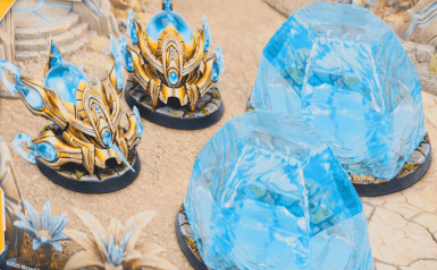
And finally, Stalkers are a crowd favorite from Starcraft 2, sporting a powerful ranged attack, much-needed fire support against armored targets, and a short-range teleport to help you claim objectives faster, or evade an ill-fated close combat engagement. They are relatively affordable for how durable they are, and if you like the tactical options of Adepts, you’re going to love Stalkers. Built for shenanigans (and one of the few Protoss units that can reliably heal if you play your Tactical Cards correctly), Stalkers offer a good baseline for holding objectives through strong damage and reasonable resilience.
II. Protoss Hero: Artanis, Leader of the Daelaam
While there are several powerful Protoss heroes that are very popular among the fan base, the one they chose to lead the Protoss is none other than Artanis, the leader of the Daelaam, and the Hierarch who sets out to reclaim their homeworld of Aiur at the start of the Legacy of the Void Campaign:
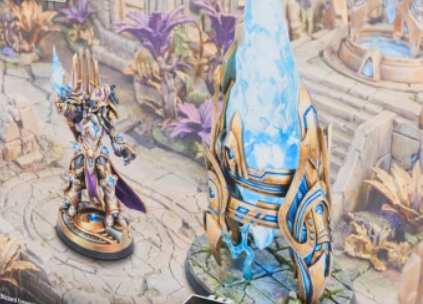
Accompanying him is a Pylon, a structure that allows you to warp in reinforcements near its location, which can be almost anywhere on the battlefield (even more freedom than the Nydus Worm gives). Combine this with a powerful melee attacker that excels at fighting both light and armored targets alike, Artanis may fall behind Kerrigan or Jim for raw damage output, but he fills a lot of useful niches for Protoss that can bring your forces victory.
III. What Is Coming?
So with a well-rounded start to your forces, what’s coming down the line for Protoss? 2026 is going to be an exciting year:
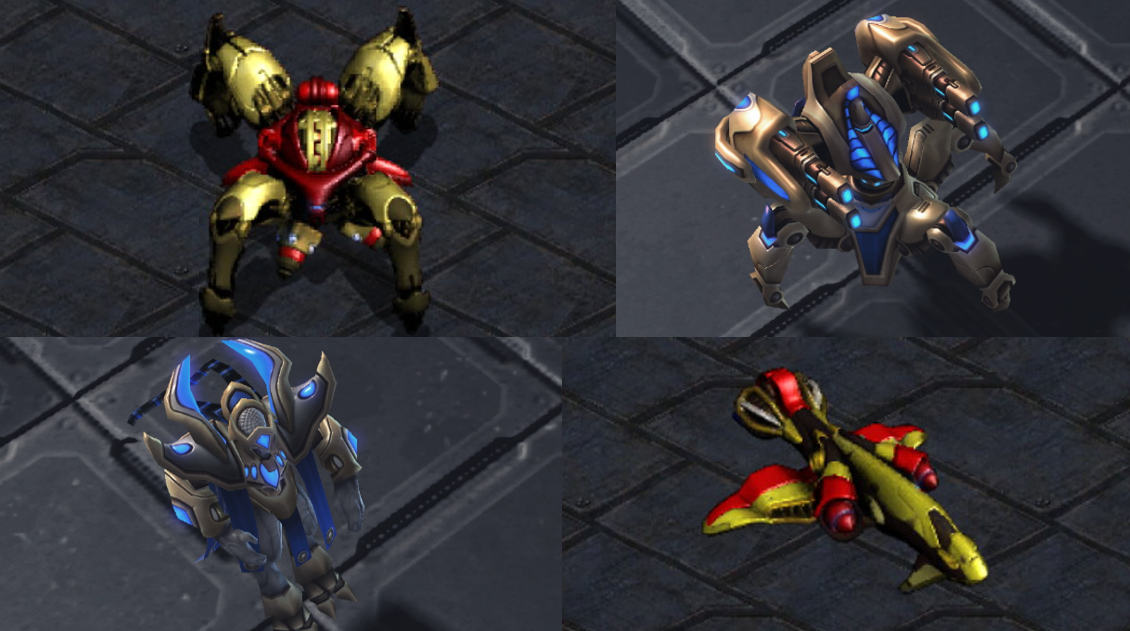
We’re seeing a lot of crowd favorites from Starcraft 1 and 2 in the coming year! Whether you love Immortals, Dragoons, Scouts, or High Templar, there’s something for everyone coming down the line! And we haven’t even seen the biggest of the boys yet!
You’ll also find unit reviews on the YouTube channel below; if you’re interested in seeing unit walkthroughs here (once my models arrive), let me know!
Until next time,
Centaur
YT: @CentaurGaming (Starcraft and more)
YT: @ZurnCentral (Bolt Action)