
Bolt Action Tournament Time Management
By Kreighton Long
I recently wrote an article about a Bolt Action tournament I attended in February. One of the commenters made me think about how different Tournament Organizers across the country approach the time management piece of running a tournament. So I set out to collect some answers.
I reached out to TOs from coast to coast, some I knew from attending their events and others via Facebook or recommendations from others, and started to compile some ideas. The conversations began with point/order dice limits, how long rounds lasted, scenarios chosen or avoided, and additional measures put in place to help ensure well timed events. Take a look below on comments made by eight TOs. At the end you’ll find my key take-aways from this experience.
Mike Kehs has run seven tournaments in the Maryland area. When asked about order dice limits Mike replied, “I am not a big fan of OD limits because they hamper some nations and eliminate some army builds.” Instead, Mike uses point limits to keep his players games moving.
Rather than the recommended 1,250 point maximums, Mike gives his players between 1,000-1,100 depending on the tournament. “I find that most experienced players can get a full game (at least 5 rounds) in that time.”
New players made need a little extra attention from the TO or Assistant TO to make time. Historically, Mike ran two hour games but will experiment with two and a half hours at the next event — Operation Amherst on 18 April in Westminster, Maryland.
Jesse Marcelo of Virginia has run four tournaments so far and runs his tournaments with two hour rounds and a point cap of 1,100. Jesse’s tournament time management begins before the day of the event stating, “I have also found that vetting out lists that may take too long is also important.” Anything that has a multi-step process to activate and can be used on multiple turns, such as multiple launchers and some forward observers, needs to be considered.
Mission setup is also key in the planning stage. “Some missions just take longer to complete, like missions that require you to move all the way into a contested deployment zone like demolition or games that score points at the very end like hold until relieved just take too long to satisfyingly complete in just two hours.
Also prepared deployment eats up a whole turn worth of time just for deployment and unless it really benefits the mission being played I would say think twice about using it.” The more work you invest before the event, the smoother the day should go.
Chiming in from Pennsylvania is Charles Sherrange, a veteran TO with roughly two dozen tournaments under his belt. Charles’ standard Bolt Action tournaments are three rounds of either two hour games for 1,000 points or two and half hour games for 1,100 points.
The first tip Charles shared to keep games running on time is to call out time checks every fifteen minutes. The constant verbal reminders helps to keep players on task and advancing their games. Don’t be afraid to ask players to work on their speed of play if you notice they do not consistently finish their games. Sometimes you may have to tell players that continue to fall behind that points will be docked if they don’t pick up their pace. Charles admitted that he has fortunately not needed to follow through as the threat has provided sufficient motivation in the past.
Another tip is to ensure players have their armies ready to deploy before each round begins. “Nothing is worse than someone grabbing ‘oh, here’s my officer, oh here’s my observer’ out of foam while the clock is ticking.”
You have to do your job as a TO. Don’t be late in putting out assignments or getting distracted chatting with the owner. Update your tracker as the games end and start pairing to reduce down time.
Speaking up on behalf of Ohio is Jeff Ashley who has ran four tournaments. Jeff starts his time management by publishing a schedule with the time table for the event with the player pack. Jeff’s standard tournament layout are three rounds of two and a half hours with players allowed to bring between 1,100 and 1,250 points worth of models.
When it comes to the scenarios, Jeff uses scenarios he designed himself with a preference for First Wave style setups. “When you do a Deployment mission, you’re adding a whole additional round to the game, and that’s going to eat up time.” I must confess I had not connected those things until reading Jeff’s comment.
As for point and order dice limits, there’s a lot of debate around this particular topic. “If you put your dice cap too low, you’re going to limit players from taking some units, and even some Nations.” One nation that would suffer from a low order dice cap is Early War France. In order to encourage players to bring the widest variety of armies TOs will need to give players the freedom to build lists as freely as possible. You can find Jeff at Origins on 20 June in Columbus, Ohio.
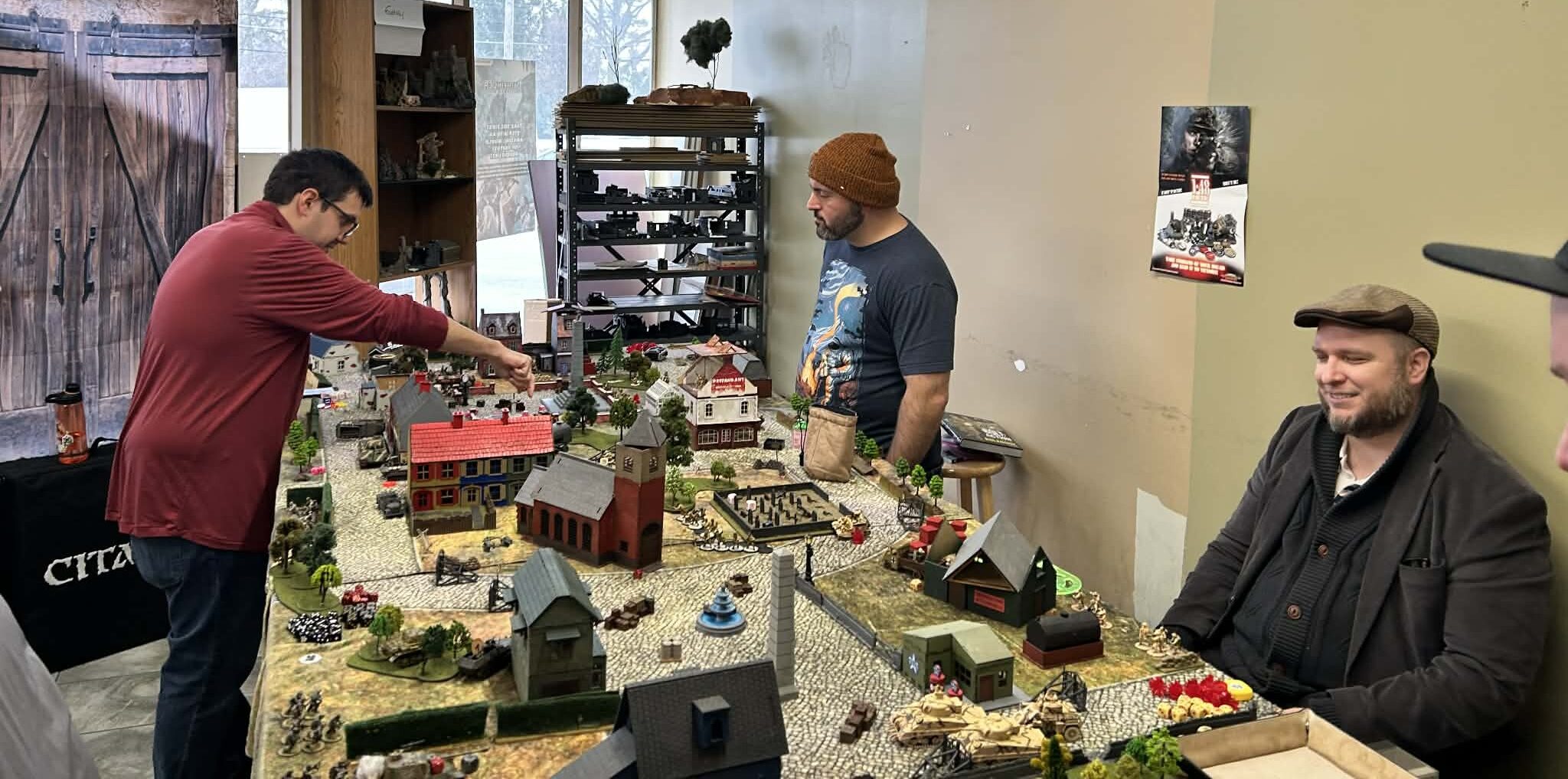
Covering Illinois and Wisconsin is Andrew Verticchio and the Chicago Dice Team. Chicago Dice has run many Bolt Action events over the years and has hosted four in Third Edition. For a more standard Bolt Action tournament, Andrew has increased the points from 1,000 in 2024 (2nd Edition), to 1,100 in 2025, and now 1,250 in 2026.
Each of the three games are capped at two hours and fifteen minutes. For this year’s tournament, Andrew will set the Order Dice cap at 18.
Andrew’s primary measures of ensuring smooth game play are to put a hard limit on the number of turns, not doing full deployment, and not putting the Order Dice for units in Reserve in the bag during Turn One. For more information on upcoming events, visit ChicagoDice.org.
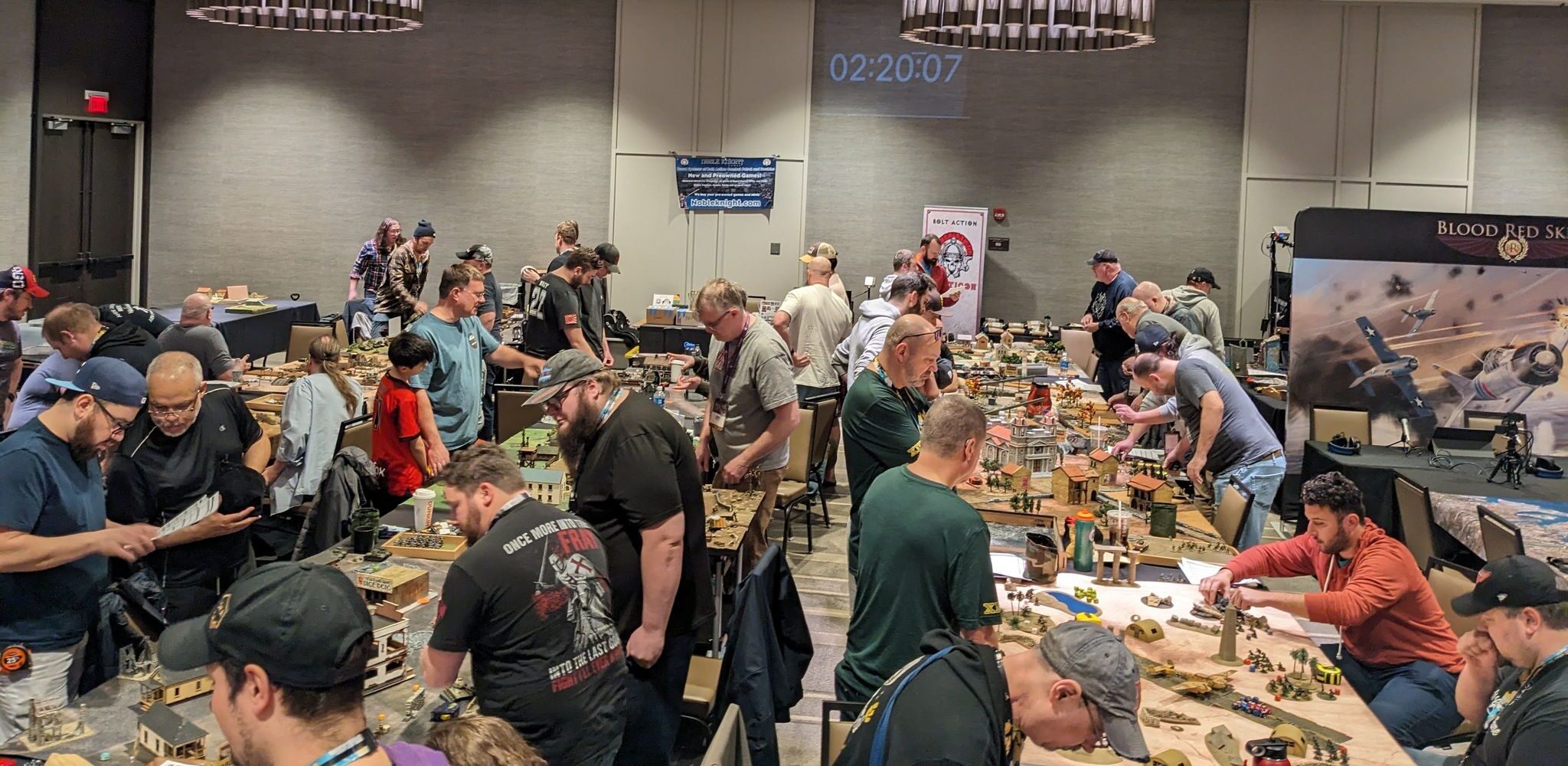
A second perspective from the Wisconsin/Illinois area comes from Chad Murry. Chad has run between ten and fifteen events made up of a mix of competitive and themed events. When running the Wisconsin Bolt Action State Championship, Chad ran the event with two and a half hour rounds.
Chad brought up a unique perspective of avoiding typical point maximums for some competitive events. “I prefer not to do the typical 1,250 point list only because it produces what I feel are ‘cookie cutter’ type army lists. I prefer to go with a different number and see who can construct something.” The example provided as a 1,155 point maximum at Evercon.
Chad opposes using chess clocks as he feels it removes the fun aspect of the game when they are introduced. Instead, Chad uses Order Dice Limits but only to the point that it limits the number of dice each player puts in the bag. That frees players to bring lists with, for example, twenty order dice but may only activate fourteen units per turn.
As for the competitive scenarios, Chad prefers to use missions not found in the book. “I always send out the missions to the players before the event (after the army lists have been submitted) so that they are able to familiarize themselves with the missions – which saves time at the event.” Another example of allowing players to see the missions ahead of time to cut down on setup time on game day.
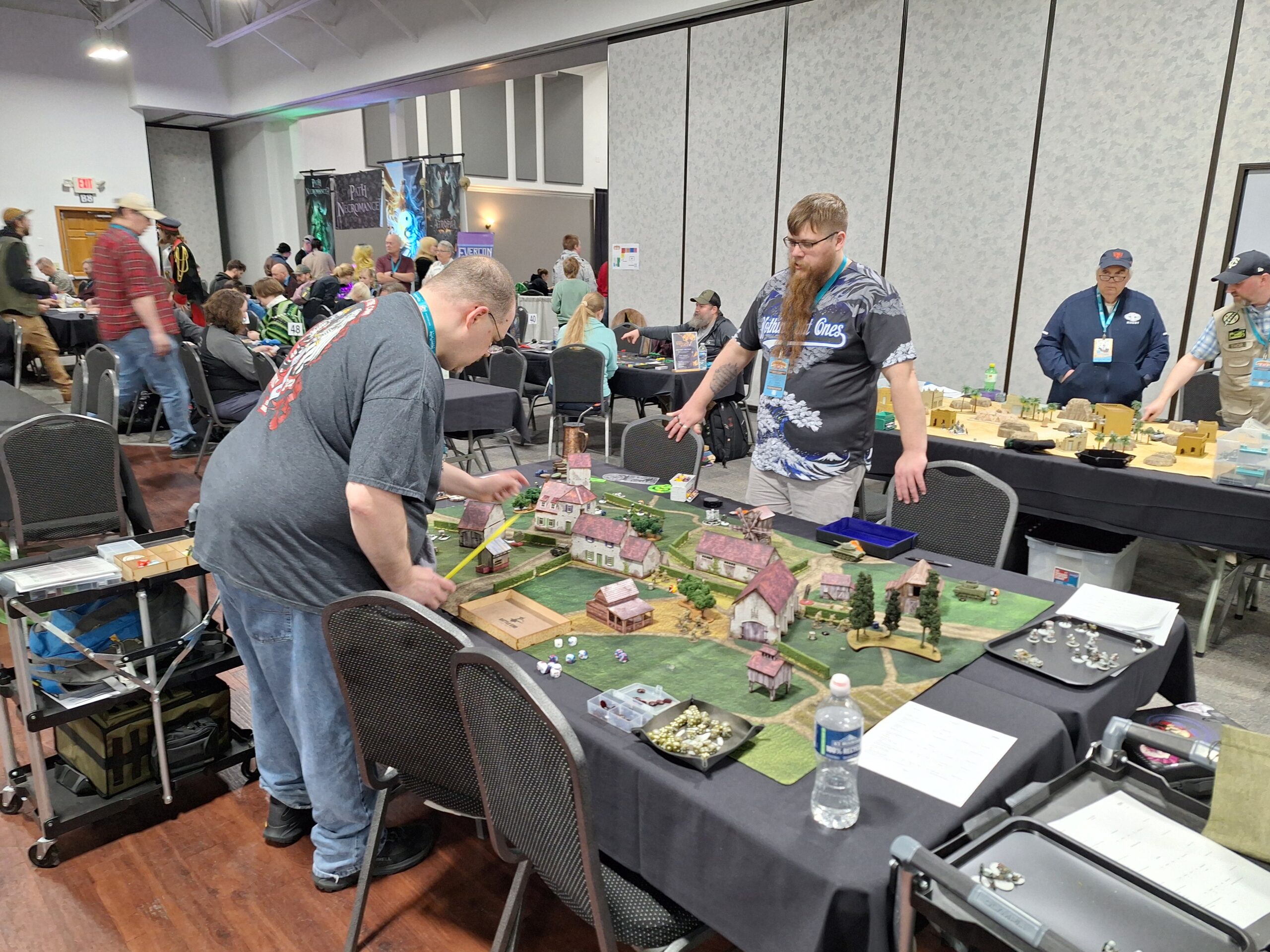
Hailing from Utah is Jordan Wiebe. Jordan has been running events in his area for five years accumulating experience from fifteen events and tournaments. Jordan typically runs his tournaments with two and a half hour rounds.
Players are permitted to bring lists with between 14 and 18 order dice and point caps fluctuate between 1,000 and 1,250 depending on the tournament. Jordan chooses to provide the exact scenarios players will encounter, and failing that, a list of potential scenarios that may be played. “This allows players to read them over before the event and know exactly what they are getting into.” Having a sense of what to expect certainly shaves time off the setup phase and will get games started sooner.
Jordan also makes an effort to avoid scenarios that can be on in the first three turns of the game — such as Top Secret and Breakthrough. This helps to keep the tournament balanced and upbeat for players. The former if there is an army mismatch with one opponent having lots of vehicles that can give them too easy of a win and the latter so players don’t find themselves cheapened out of a good game.
Finally, Jordan tries to make the majority of his games Meeting Engagement as Prepared Positions can eat into the total time players have for the actual game. “Limiting deployment forces to half rounding up is also a solve for this issue.” Jordan’s next event will be Gajograd in Utah.
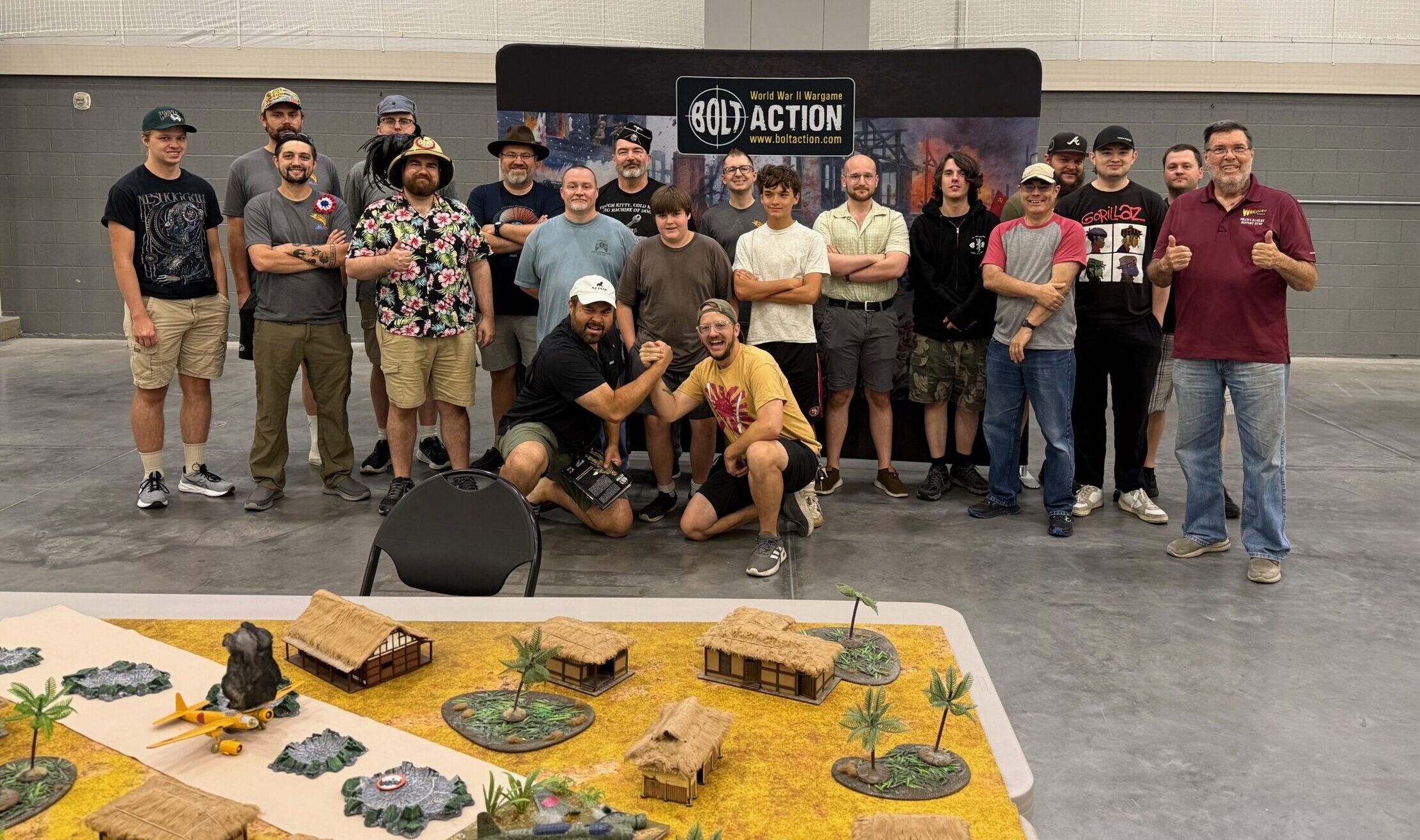
Representing the west coast is eleven tournament TO veteran Stephen Montgomery from California. Stephen typically runs his tournaments with three rounds of either two hours or two and a half hours depending on total time available.
His standard tournament is 1,250 points with a maximum of sixteen order dice and four platoon. “As TO I wander around a lot urging slower players to keep up and answer questions.” Proximity is a valuable tool. Stephen makes a point to call out the halfway mark as well as a ten minute warning towards the end of rounds.
Stephen has built a growing group of about thirty players who tend to prefer two hour rounds with an initial ten minutes for setup. Stephen shared a novel idea of allowing players to write and submit scenarios for consideration. “That not only makes things easier on me, but also brings more interaction with the group.” Gaining that extra level of buy is a great way to built an enthusiastic competitive community. Keep an eye out for Stephen’s next event at KublaCon.
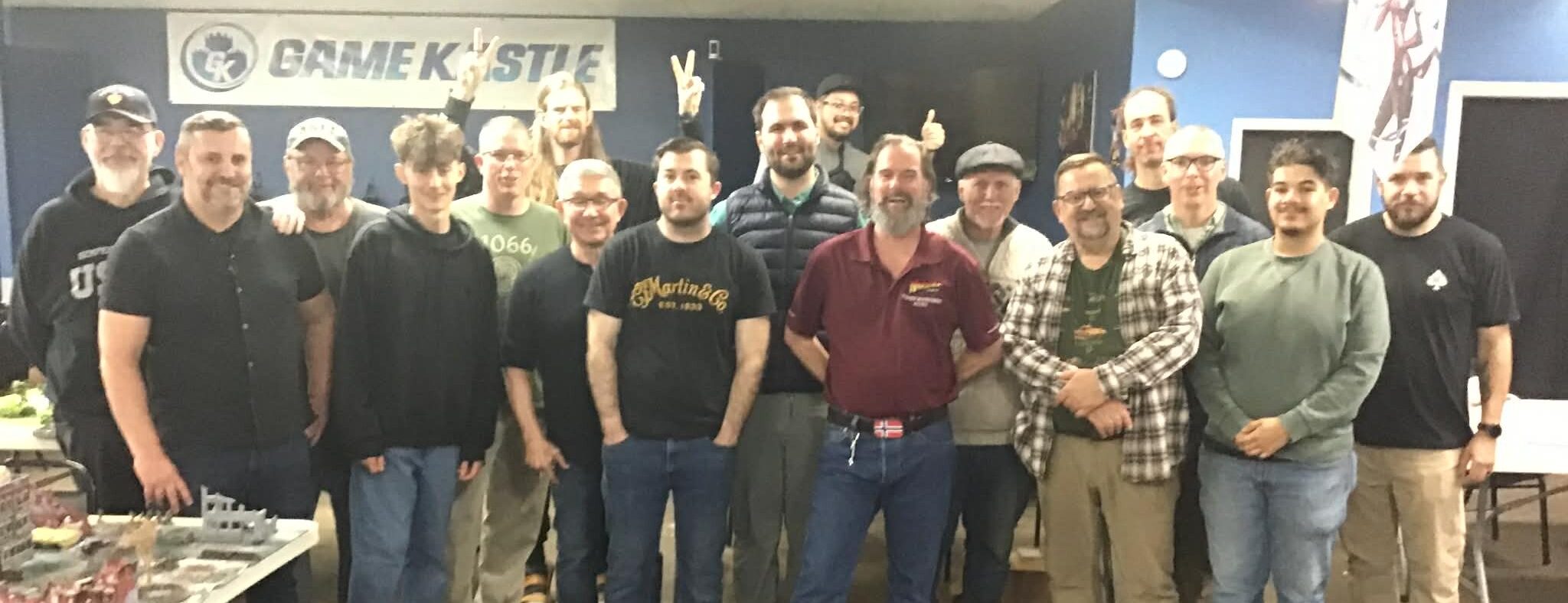
After discussing time management strategies with my helpful volunteers I compiled a list of my key take-aways.
Regarding point maximums, 1,100 points seems to be a happy medium between 1,000 and 1,250. I was especially intrigued with Chad’s idea of using atypical point maximums to mix things up for his players.
For order dice maximums, I observed three routes TOs take. The first is to put a limit on how many units players can bring as shared by Andrew, Jordan, and Stephen. The second is to put a maximum on how many order dice go into the bag each turn such as in Chad’s tournaments. The third is to avoid limits to enable players to build whatever list they come up with. I am curious about experimenting with the second option at a few club games to see how it plays.
Scenarios selection was a popular topic among the veteran TOs. The general advice is to avoid Deployment scenarios in favor or Meeting Engagement to eliminate Turn Zero and to get right into the fun stuff. Providing players with the scenarios in the player pack will also save time during setup as players should be more familiar with what they’re about to do.
Chess clocks were not used by any of the TOs and several stressed constant time checks with their players. Having a visible countdown timer is a good visual reminder for players to keep their games moving.
I’m grateful for Chris Meyer (the commenter in my most recent tournament write-up) for inspiring me to take on this piece. I had a great opportunity to exchange digital handshakes with valuable people in various Bolt Action communities around the nation and ask them to share their wisdom and experiences.
That being said, I want to acknowledge gaps in my coverage. The east coast was predominantly represented due to this being the region I compete in so I had three TOs that I’ve personally competed under in my contacts. Moving westward, I had three perspectives from the Midwest: two connected via Chris plus a third from Ohio I found through Facebook.
Continuing west we had Jordan from Utah and Stephen from California. In retrospect, I had a notable gap in coverage from the south and southeast. Perhaps I can tap into those regions with a sequel to this article down the road.
Until next time…
Happy gaming!
You’ve written an excellent and informative article. Even as a veteran TO its given me some great ideas and I appreciate the nationwide coverage.