The first Barbarossa Tournament – Testing the Soviet Horde
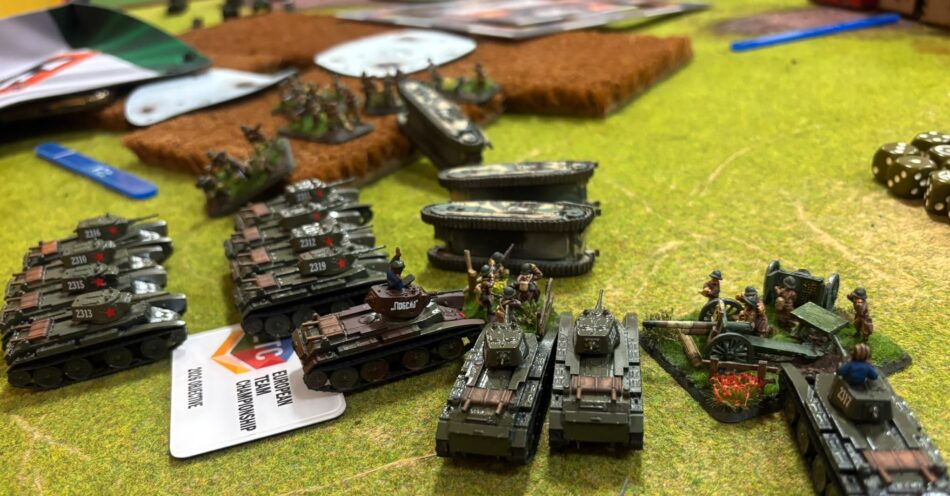
By Paolo Paglianti
Can Massed BT-7s Play in Early War? After Tom Gall’s and my articles on the Early War Barbarossa book, the question we were asked most frequently was whether the Soviet army could actually be a competitive force despite its obvious drawbacks – specifically, being hit on a 2+ (Reckless) and having to Remount on a 5+ for its tanks. On the one hand, the idea of fielding almost 30 tanks in a 100-point Early War list is pretty devastating. On the other, the risk of seeing your entire army reduced to a pile of smoking wrecks after just two turns of enemy fire is certainly a legitimate concern.
The opportunity to put this to the test came along unexpectedly. Andrea Paco Gaddi, owner of the wonderful Tempus Fugit hobby store in beautiful Padua, organised an Early War tournament in early November. Technically, the event was supposed to be limited to the Blitzkrieg book, but in a move worthy of Rommel himself, Battlefront released the Barbarossa lists on Forces at the very last minute (and our friends at Fowlist did the same). Paco therefore decided to allow Barbarossa armies as well. So I decided to fast-paint my already-planned Early Russian army and take my chances with a list I had never tested before. What better opportunity to find out whether sheer numbers can prevail despite inexperience and enemy fire?
The list: BT-7s, and lots of them!
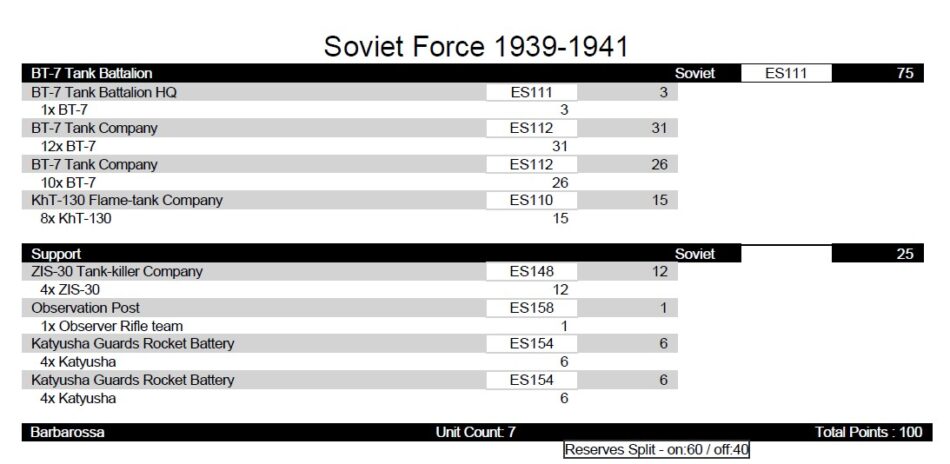
Here is my list. The idea is to use massed Soviet light tanks, leaving out pretty much everything else. The choice is between T-26s, with a Cross rating of 4+, and BT-7s, which are faster but have a terrible 5+ Cross rating. However, they are considerably quicker. Since this army is designed to attack, I need to get around minefields, making speed essential. That’s why I went for the BT-7s. The list includes the HQ, of course, plus two platoons as large as possible: one with 10 tanks and the other with 12. The third platoon consists of a single KhT-130, to deal with dug-in infantry. For support, I have four ZIS-30s, which should keep tanks too heavily armoured for the BT-7’s 45mm guns at bay, thanks to their excellent AT 11. They are pretty much the elite of the army, being hit on a 3+. I’ve left out infantry, aircraft, anti-aircraft guns, proper artillery and scouts. Instead, I’ve included two Katyusha platoons. They are the only artillery units in the list with a Skill rating of 4+, and, more importantly, they have the rather ambitious Salvo artillery template.
With two Salvo templates, I can potentially bring half the enemy deployment area under fire! Since Katyushas are rather fragile, I used the single point I had left before reaching the 100-point limit to add a modest observer. His job isn’t really to provide a ranging-in roll at 5+, but rather to keep an eye on the enemy’s pre-ranged artillery bombardment, or on a ranging-in marker placed directly by the Katyushas. I’ll then try to move it using Shoot and Scoot, being careful to move only the marker that is exposed. A simple, straightforward plan.
Now, let’s see if it works!
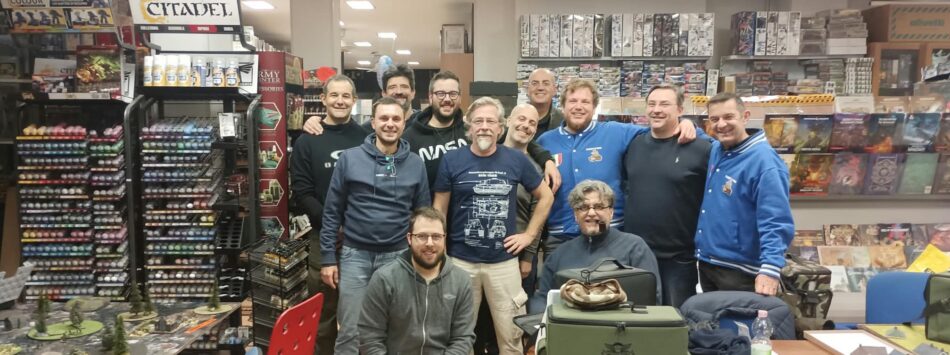
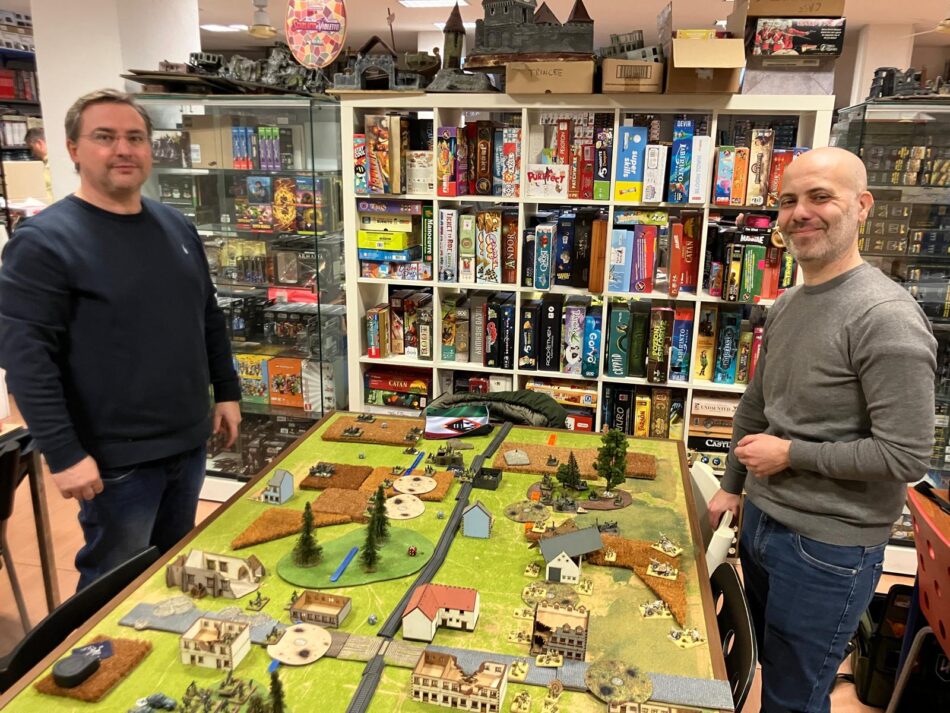
(some of) the players at the world first ever Barbarossa tournament! You can see how appealing is Paco’s shop. It’s very difficult to keep money in the pocket!
Padova is a very nice medieval city. You should visit it, at next Paco Tournament!
Game 1: Marco Renaldini and his British
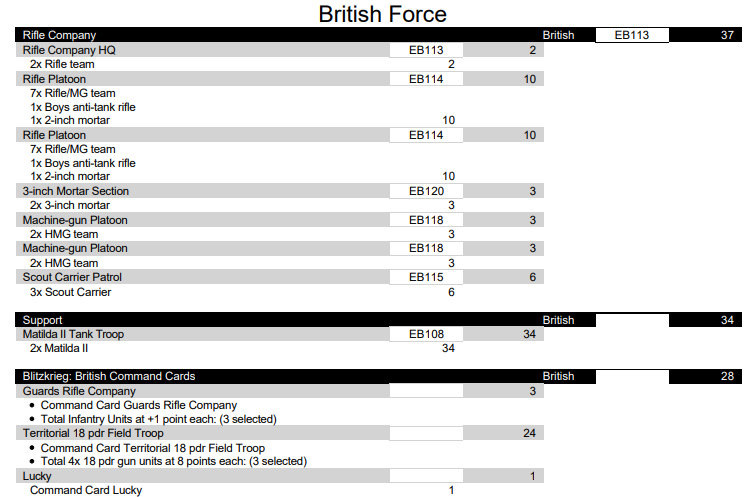
Marco’s list is a classic defensive force, relying heavily on British artillery made cheaper by the Territorially cards, the British infantry’s ability to hold the line, and the massive, almost indestructible Matilda II tanks.
Attack versus Defence gives us Killing Ground. Here’s the table after deployment.
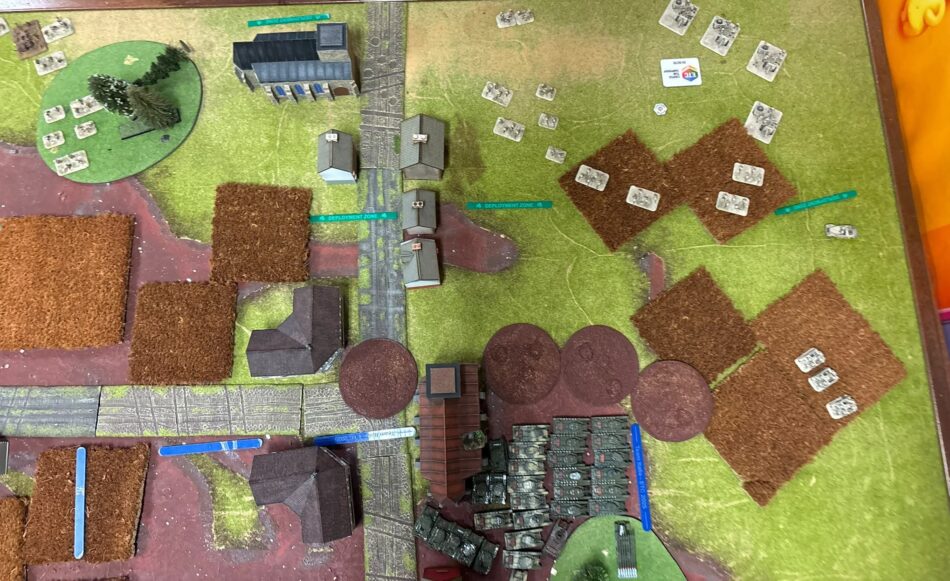
Marco blocks the centre of the battlefield with minefields that are virtually impassable for the Soviet army. He protects each objective with an artillery platoon and an infantry platoon, while keeping his Matilda IIs and MGs in reserve. Somewhere hidden away is another platoon of four 25-pdr guns. I concentrate everything on the right flank. The four minefields in the centre worry me less than the woods on the left, so I deploy my 23 BT-7s and eight KhT-130s as close as possible to the edge of my deployment area. On turn one, I put the pedal to the metal (I doubt Soviet tanks had automatic transmissions, let alone a fifth gear!) and race around the wheat fields, making the most of their 20″ Country Dash. Then, with a Follow Me! roll of 3+, I move into the fields, just in case some unexpected visitors show up on my flank.
After that, I launch a couple of Katyusha bombardments. The first fails to range in properly, while the second lands on the more distant gun battery but doesn’t cause much damage. Fortunately, Marco’s reserves don’t show up, but he reveals his ambush, placing the 25-pdrs right in front of my tanks. They fire eight shots, hitting on 3+ or 4+ depending on concealment and long range, and knock out four tanks. His scouts also manage to machine-gun the most exposed Katyusha platoon, destroying it. On turn two, I advance another 10″ and start shooting at the guns. Between the BT-7s (23 shots!) and the artillery, I destroy four guns, cutting Marco’s anti-tank firepower in half. Marco’s two Matilda II tanks arrive from reserve on the right flank, exactly where I feared they would, and start heading towards the objective, taking a few potshots at my BT-7s along the way.
On turn three, I send the KhT-130s forward to start roasting the British infantry, while the BT-7s move closer to the objective and around the Matilda IIs’ flank, finishing off the surviving guns. The ZIS-30s open fire on the Matildas, bailing out both of them. With the BT-7s, I assault the nearby infantry and, after a couple of rounds of assaults and counterassaults, win the fight. The Matilda IIs are captured as a result of the assault victory, and Marco concedes the game, having virtually nothing left to defend the objective. Result: 8–1.
Game 2: Flaviano Maggioni and his French
Flaviano has been the new Team Italy captain since September. He’s a great friend of mine and has been for years, but he’s also always a tough opponent across the table. For this tournament, he chose a French manoeuvre and defence list. Here it is.
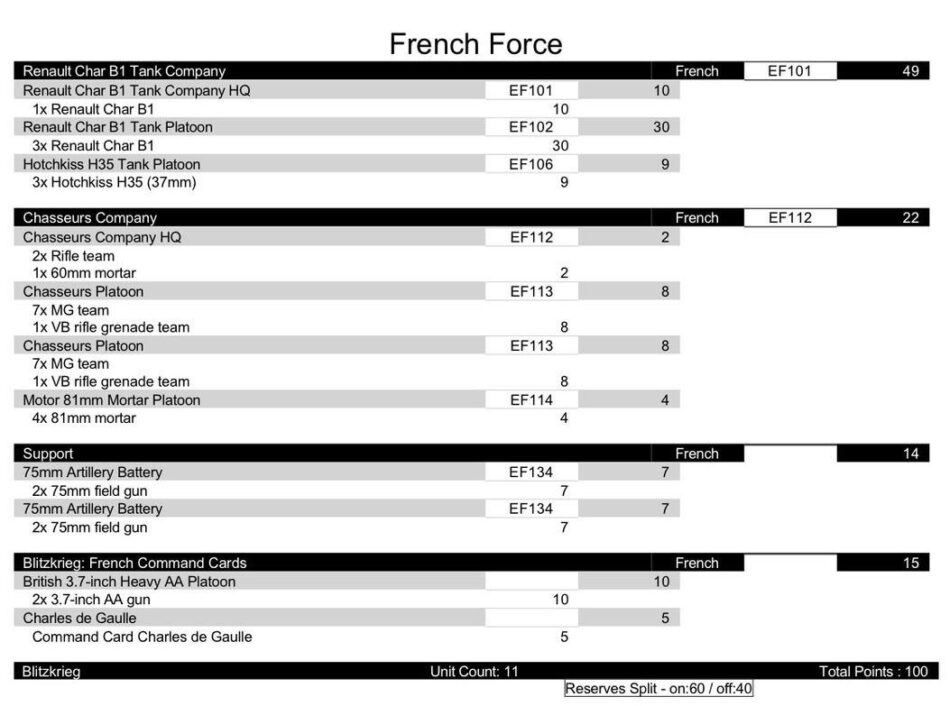
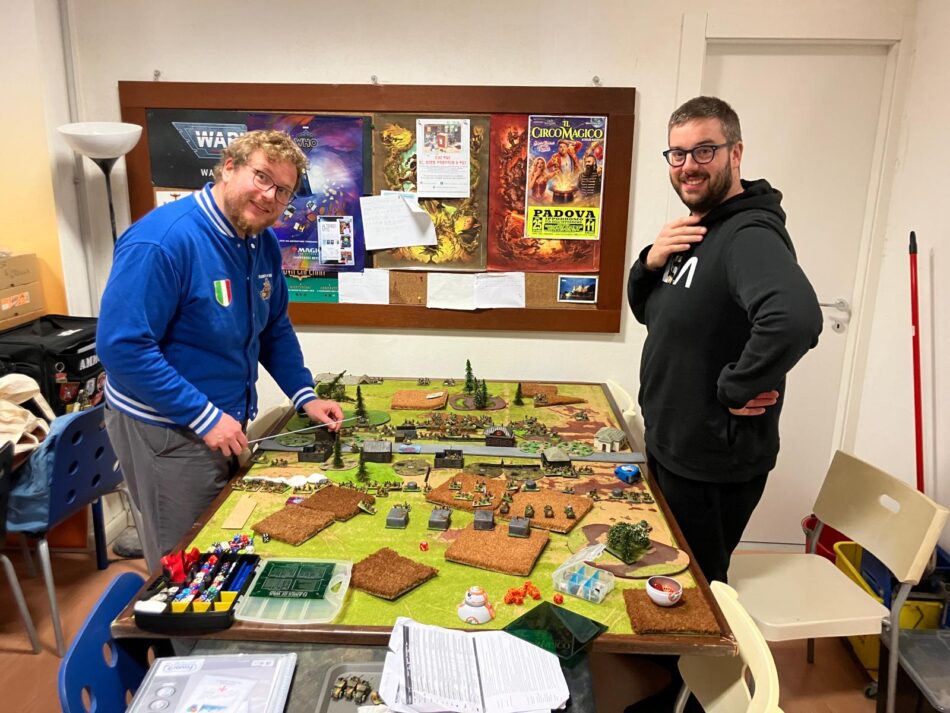
He decides to play in Manoeuvre, and the resulting mission is Breakthrough. Here’s the table after deployment (the same as game 1).
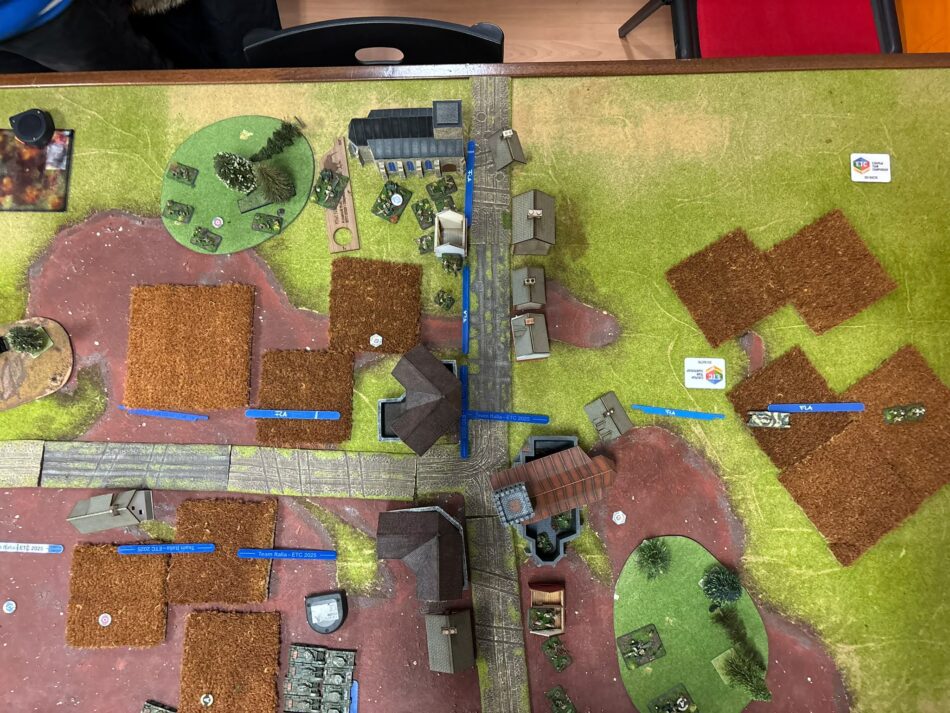
I decide to put only the observer in reserve and concentrate the entire BT-7 horde in one place. I also want to find out whether 30 tanks can physically fit on the table! My preferred attack route is along the lower edge, towards my side of the battlefield. The plan is to skirt around the woods and then head straight for the objective, reaching it by turn six at the latest. For the first two turns, Flaviano manages to slow me down around the edge of the woods by exposing his infantry. However, the BT-7s eventually destroy the platoon and the two 75mm guns in the woods.
At that point, the road is open. I push forward with one of the two BT-7 platoons, the KhT-130s and the ZIS-30s, while the second BT-7 platoon crosses the field and attacks the guns near the church at the top of the table. Naturally, the Somuas arrive from reserve. As soon as they enter the battlefield, they knock out four BT-7s, but on the following turn they are decimated by the ZIS-30s, which I have positioned to cover the entire sector with their line of fire.
From then on, it’s only a matter of time. Flaviano moves his second infantry platoon and HQ to protect the central objective, but the 60 machine guns mounted on my Soviet tanks make short work of them. Result: 8–1.
Game 3: Antonio Soncini and his Germans
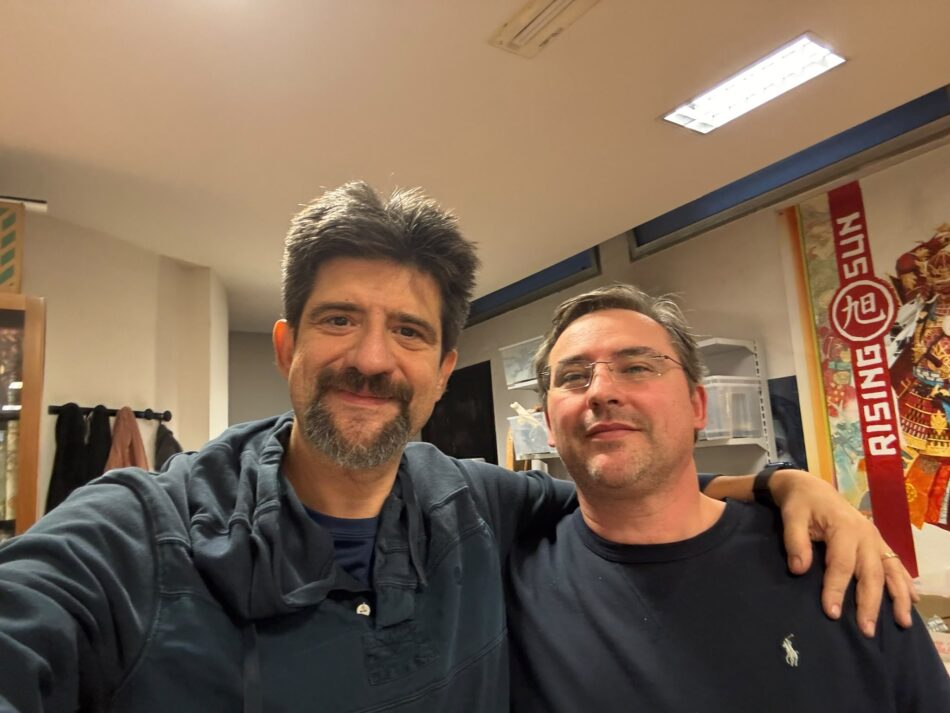
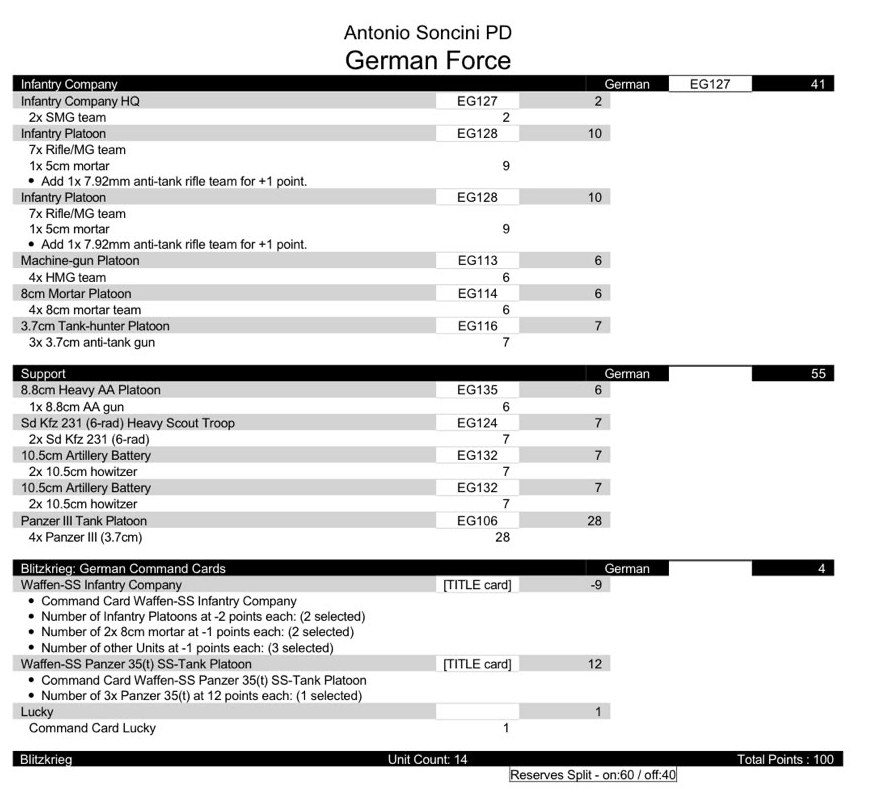
Another Team Italy member! Antonio plays a well-rounded German list capable of dealing with pretty much anything. Here it is.
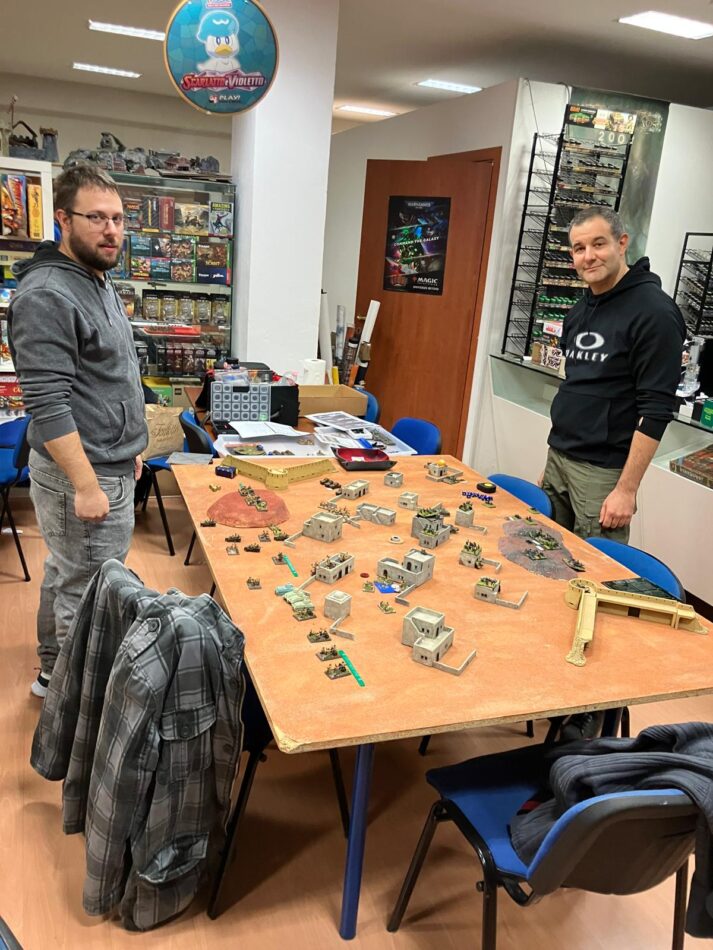
He decides to face me in Attack, with a Meeting Engagement. It’s actually a very good choice, because we end up playing Knife Fight, which forces me to split my forces to protect two widely separated objectives.
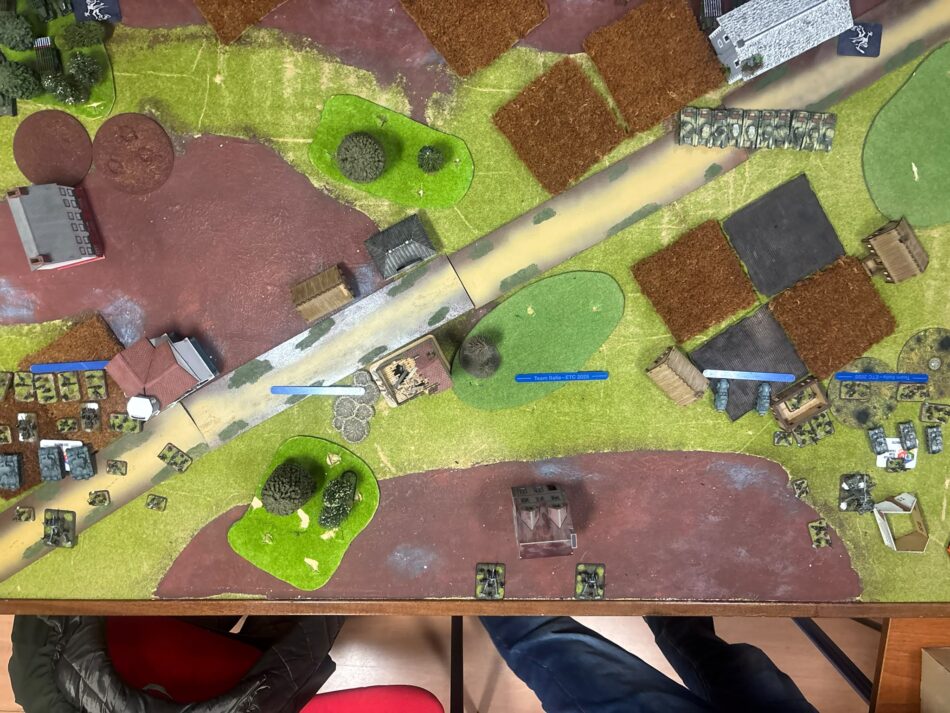
I therefore deploy one BT-7 platoon on the left, supported by the ZIS-30s and one Katyusha platoon. On the right, I place the larger BT-7 platoon, the KhT-130s and HQ, along with the second Katyusha platoon.
Antonio deploys an infantry platoon on each objective, together with an MG platoon. On the left, he adds his single 88mm gun, scouts and Panzer 35(t)s. On the right, he deploys a pair of 10.5cm guns, the 3.7cm anti-tank guns and his Panzer IIIs. On my first turn, I advance along the entire line, taking a few rather unconvincing potshots at the scouts. On Antonio’s first turn, he fires everything he has at me, knocking out three BT-7s. Despite the distance and concealment, I’m still hit on a 4+.
From turn two onwards, the duel begins in earnest. My BT-7s pour fire into the Panzer IIIs, with little success, but on the left flank they destroy both the scouts and the Panzer 35(t)s. Meanwhile, I realise that the KhT-130s physically cannot fit through the gap between the table edge and the houses, which is already occupied by my BT-7s. I therefore send them on a long detour to attack from the centre. The duel between the Panzer IIIs and BT-7s continues for the next two turns. I lose half a platoon and the Katyushas, but eventually, after a lucky turn, I manage to knock out the Panzer IIIs and two of the 3.7cm guns.
At that point, it’s time to go all in! I push forward with the surviving BT-7s and the KhT-130s, closing in on the objective while shooting at the infantry. The same thing happens on the left: with the guns and tanks eliminated, Antonio can do little more than passively endure my tank fire. Realising how things are going, he focuses on destroying my remaining Katyusha platoon and the ZIS-30s, which I had moved towards the centre of the table. Result: 6–3.
Final thoughts: The Soviet horde works!
Well, it went pretty well! Despite never having tested the list before, a little luck and some favourable match-ups in terms of opposing armies helped me get the job done. I finished joint first in the tournament with Stefano Regazzoni, captain of the Swiss ETC team, with the tie-break decided by just six more destroyed platoons than my Swiss friend. The BT-7s have passed the first test! This is definitely an extreme army, and I suspect it will have serious problems against solid, infantry-only lists, such as the Polish army played by Etienne-Livio. It could also struggle against lighter forces, such as the Panhard list I used in the previous tournament. But there’s no denying one thing: it’s an absolute fun and blast to play!
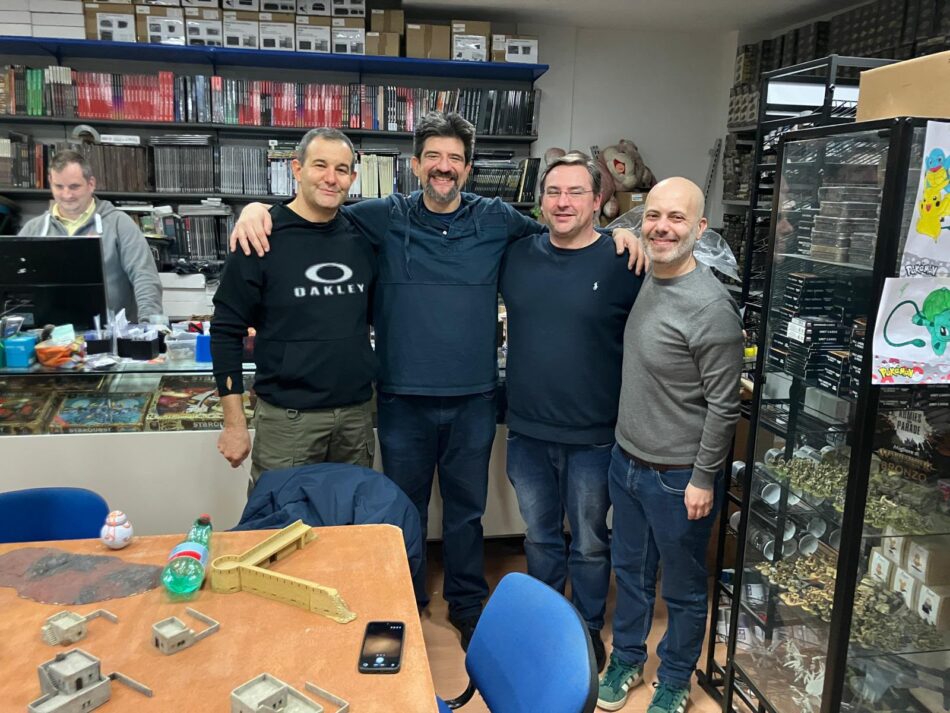
The photo shows the podium featuring the top three finishers, and Gianluca Selvaggio winning the best painted army prize. On the foreground, Andrea Paco, the shop owner and organiser.
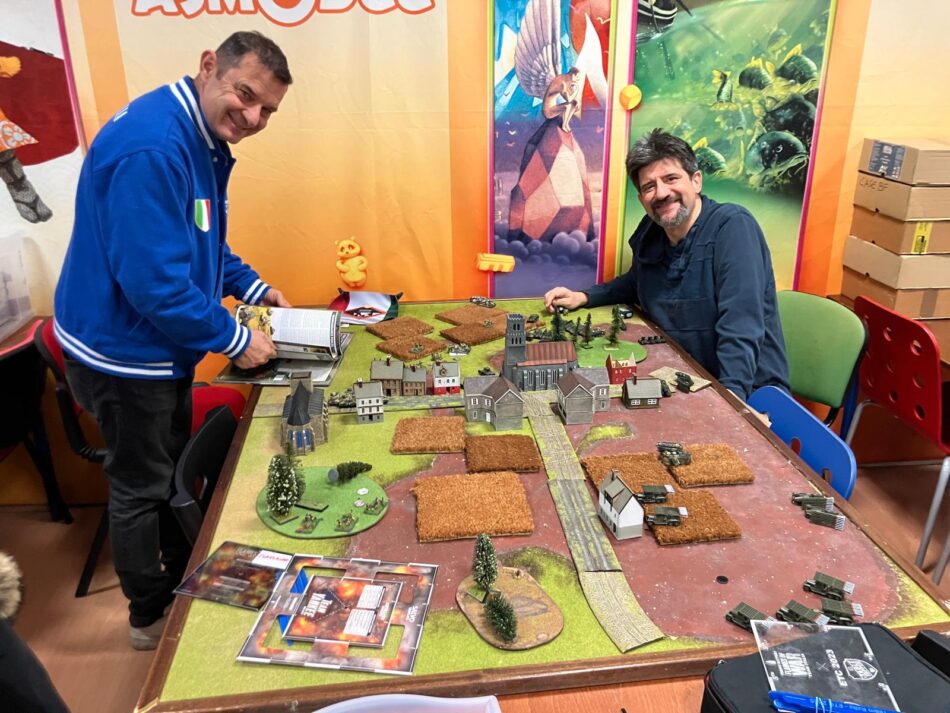
“Let me check if I find some rules to ban your BT-7 horde”. Flaviano smiles in face of the Russian advance.