Four Things I LOVE about Starcraft TMG Gameplay
By Aaron Kamakawiwoole
Hey Reader!
Now that our gaming group has their miniatures and we’re not using proxy miniatures anymore (though I’ll take a moment to thank all of the Rohan horsemen who served as Protoss warriors for us – thank you for answering the call!), we’re putting up battle reports, and as I was editing those, I reflected on what I love so much about the in-game play of this new game. I’ve done battle reports for several game systems, but this one felt unique and better, so I thought I’d share some of those thoughts with you.
First, alternating activations makes the game more dynamic: actions create reactions in ways that most games don’t accomplish. Wiping out a unit before it gets to do anything is very hard to do in this game, and that means the question is more, “how do I make the enemy force less effective” than, “which element of the army do we drop in the bin first,” and that forces a lot more interesting choices.
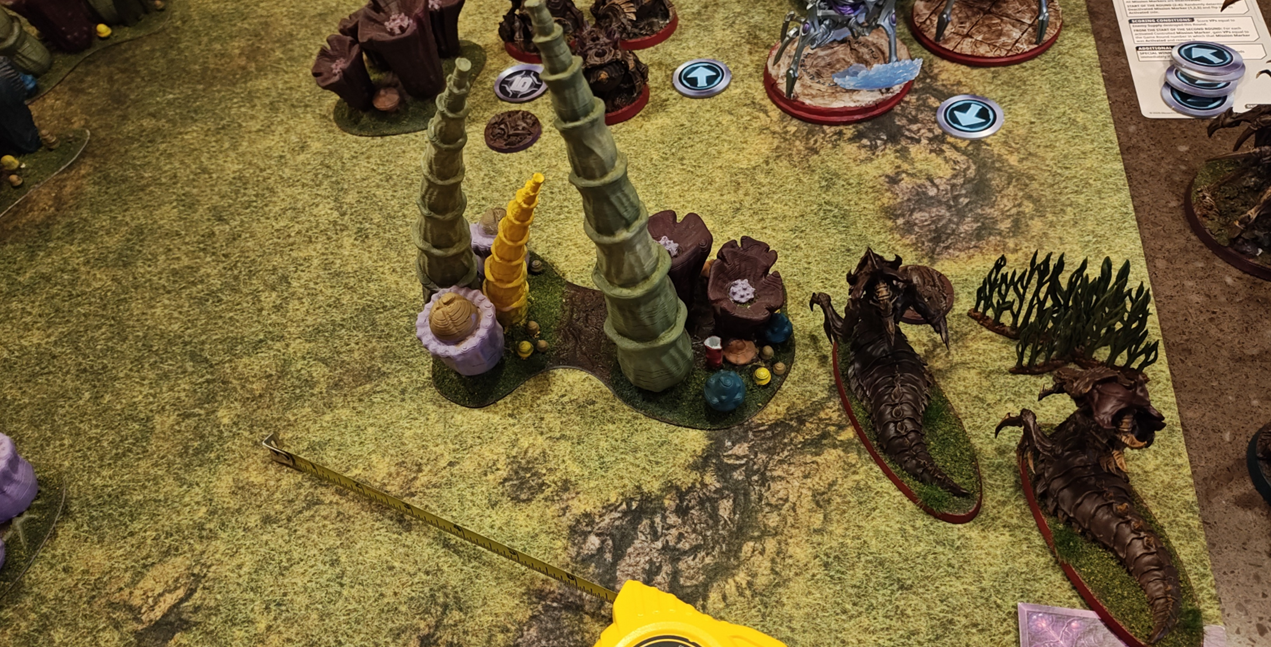
Second, phase activations add to the tension of alternating activations. Each unit activates up to three times each round: first to maneuver, then to charge or perform a ranged attack, and then to perform close combat attacks (if they charged successfully or were charged). And since priority can change in each phase, how and when you choose to stop performing actions in a phase could give you a benefit in the following phase (but may cost you in the following round if you’re out of position, don’t remove enough models in a round, etc.).
This makes for near-constant tactical decisions, asking what is most important right now, not necessarily what will work.
Third, and related to this, the game balances having many activations compared to a few. In most games, having more units activating come with benefits (suppressing the enemy, better chances at gaining initiative, greater board control due to more units maneuvering, etc.), but in Starcraft armies with more units either have to pass for the phase before activating everything to go first in the following phase, or cede initiative for the next phase to the opponent.
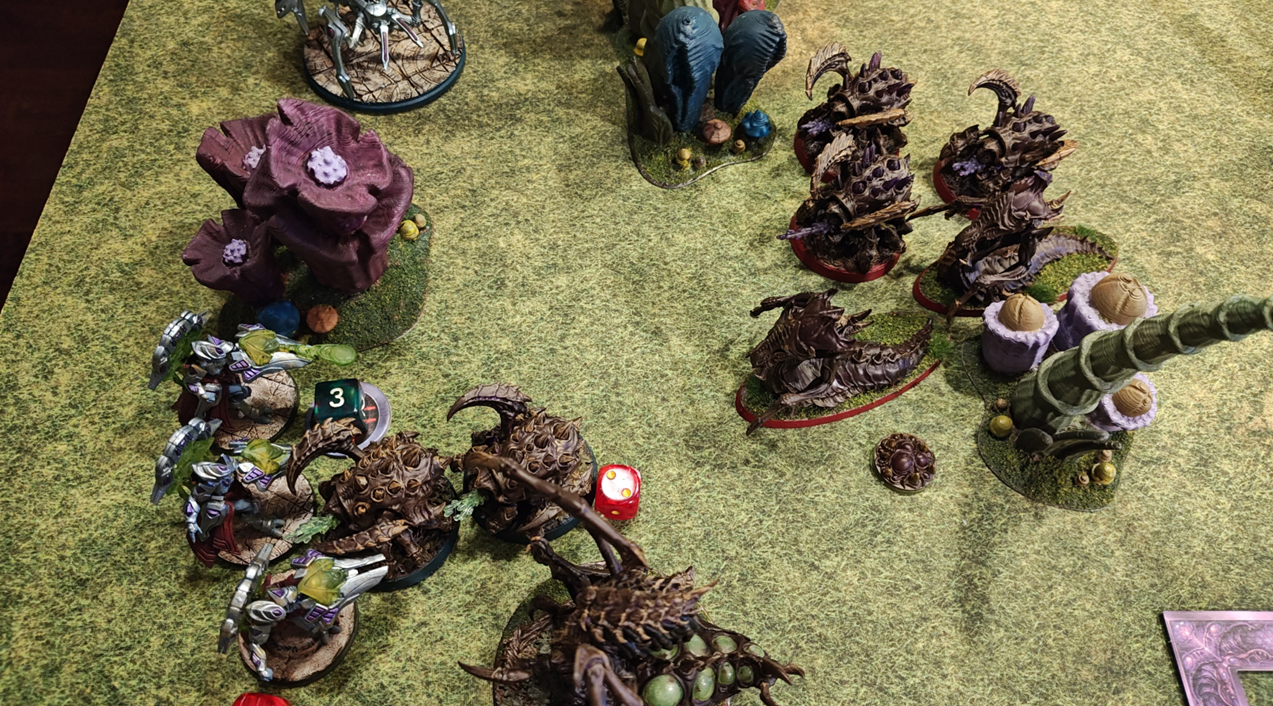
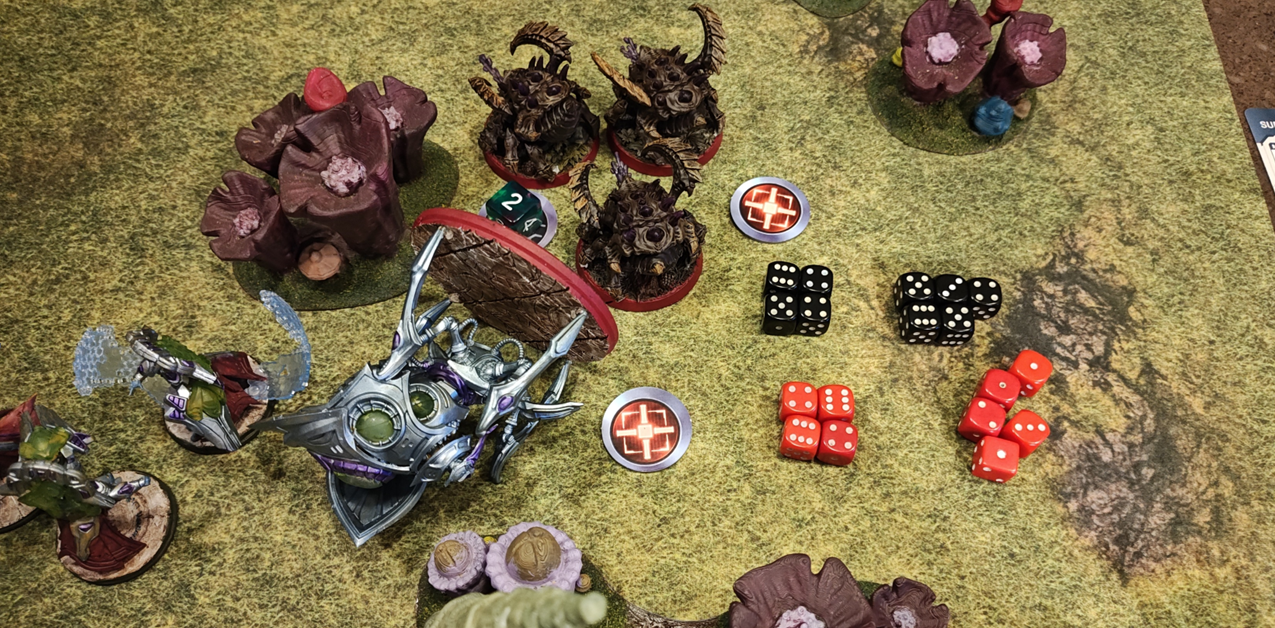
Consider the image above: this is near the start of Round 4 (last round of the game), and I have four units near this objective (two squads of Roaches, a squad of Hydralisks, and a Queen), and he has two (the squad of Nerazim Watchers at the bottom-left, and a unit of Stalkers that just blinked in from the northern part of the board). In most games, I’d have the advantage: plenty of units that can move into scoring range of the objective, plenty of shots, and depending on the game system, possibly a greater chance of going first in the Assault Phase.
But if I activate all of these units, he’ll certainly be finished moving units before I do, will Pass first, and then he’ll get to shoot first (which could remove critical units that I’ll need to finish the job). The result: I passed really early (moving only one unit), allowing me to open fire on his units before he shot at mine. I had less units in range to contest the objective, but the ability to shoot first was worth it to me.
This means that, even when someone is down to only a few units left (which is when most games would effectively be over), the opponent is likely to get initiative in every phase, and thus they can get the best value out of their units. Which makes games far more fun.
And finally (and related to this), there are no Victory Points for removing units (at least inherently). Scenarios score for Supply removed (which each unit generates), and in the case of single-model units that could mean scoring when the unit is removed, but in most cases units can drop to zero Supply while still having models.
This does two things: first, it means there are diminishing returns for finishing off units, so the number of games that end with both sides still having models on the table is common. And that has led to far better play experiences for all players.
But second, and perhaps more interesting, is that tactical choices increase, as those smaller units can still chip away at yours (and possibly remove Supply from you), so the question of whether to devote attacks each turn against something that won’t score for you, but might keep your opponent from scoring, is a very real question.
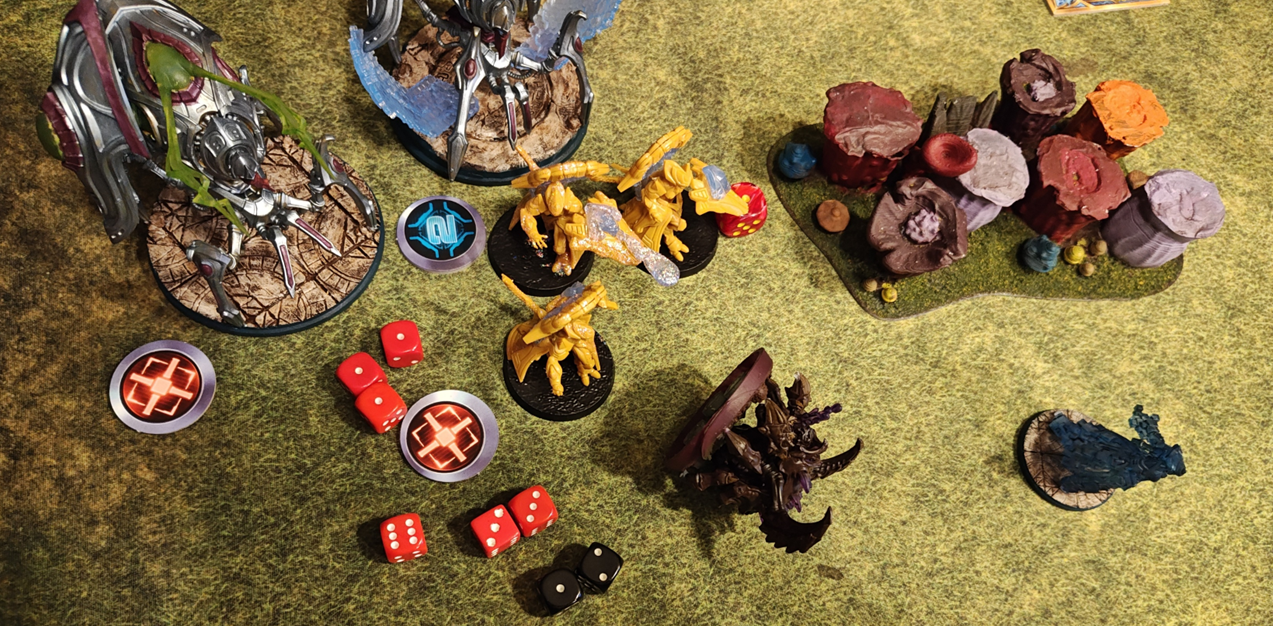
The result: the game is more intense – even though it’s often shorter in length – than other games I play. And all for reasons I love.
If you haven’t played this game yet, you should!
Until next time,
Aaron Kamakawiwoole
Starcraft: @CentaurGaming on YT
Bolt Action: @ZurnCentral on YT