Post Burnout: A tale of two games
by Troy Hill
I wrote about gaming burnout several years ago. Now, I’m mostly out of it. I don’t want to go back into that dark pit of despair.
Losing the urge to game was no fun.
I’m through the worst of it now, and some decisions were made. Some that I regret, others that I’m glad that I decided on.
The best part of dealing with a long period of gaming burnout was that I have emerged with better focus on what I want out of the hobby.
When burnout hit, several real life factors had just kicked me in the arse. I was dealing with the sunset year of my mother (RIP), as well as events in the world stage (nuff said, this isn’t a medical or political page). Coming out of the pandemic, gamers–myself included–wanted to game, game, game! And did we ever do so. Grand Tournaments and conventions surged!
I was helping out the Warlord North American Demo Team as a “Raider” promoting Warlord’s games, including Bolt Action, Blood Red Skies, Victory at Sea, and the American Civil War era miniature.
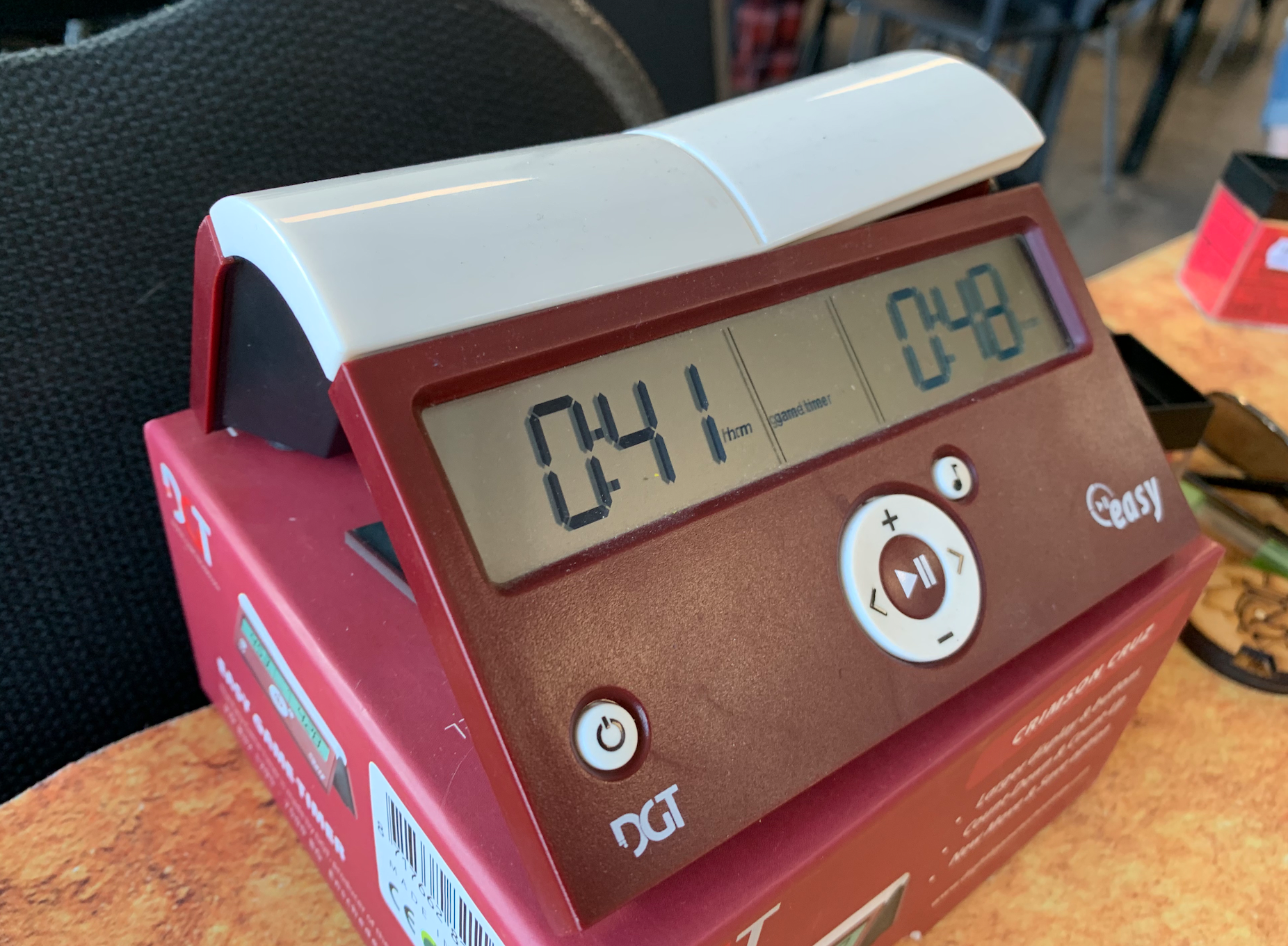
Plus, I had discovered Kings of War at the Michigan GT, where I first met my arch nemesis: the dreaded Chess Clock. Oh, how I loathe you, time-keeper of the games. Ticking away the seconds I have to panic about losing. I need to lose with style and fun. Not lose with panic and dread. That is what you elicit. Bah. Begone from my sight oh clock of doom and woe!
Add in trying to heard the felines that is a gaming blog of volunteer writers for this very publication, and something had to give. Burnout does that.
The Effects of Burnout
So I started selling off games and models. That’s never a pretty thing. Even if we sell at a price to recover initial costs, there is the assembly and painting time we’ve put into the models. But, it is better that the models see the game table in someone else’s world, than be consigned to the dark dungeon of deep storage in my basement.
I stepped away from demo-team activities, going on in-active reserve status for the Raiders.
The at-large gaming community and the hobby were fun, but I was overloaded. Too much on my plate. Something had to give. I tried dropping some stuff, but not all. What I really needed was time away from it all. A reset. But I tried trimming it little by little.
I ramped up the idea of getting my dreams of a model railroad going. But that stalls due to a lack of community. There is one for model railroading, but I wasn’t the type to go to a train show just to look at other people’s trains running around a modular layout.
So I built the benchwork, and started laying track, but stalled out. I missed the monthly gatherings of the game days.
Gaming bring the social aspects, model railroading can bring the hobby side of building and terrain-scaping.
A resurgence?
When my mother passed at the end of 2024, I thought I might be able to get back into gaming… By then I knew that the chess clock would keep me from participating in KOW tourneys. The KOW tournament community loves their chess clock to keep the game fairly divided and stop slow play.
Unfortunately, the tournaments are built with enough time for good tournament players to get the job done. New players, well, we face the added pressure of knowing that we’re going to clock out. Dice down. No more play. Be quiet and take whatever your opponent–who knows their army inside and out–wants to do to your force.
Being in burnout, that was even more pressure than I want to face in that game. I don’t want that ticking pressure at a tourney. there are other games to play without the clock of doom staring at me. Forcing me to stop thinking as panic move models. Going to clock out!
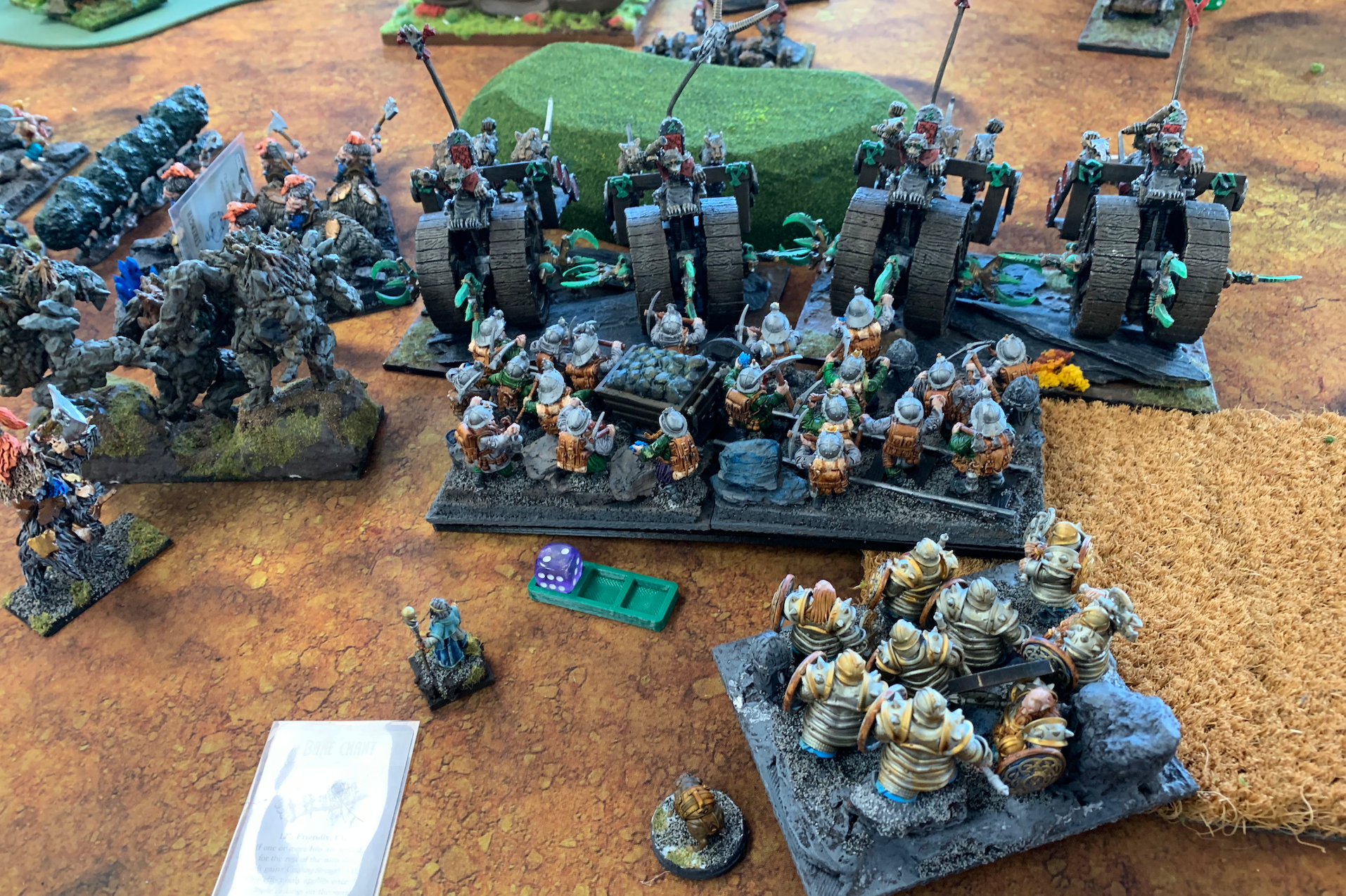
Don’t get me wrong: the KOW is great in all respects, except one. Great game (originally designed by, and the new revamp 4th ed by Alessio Cavatore), great company behind it. Great community of players. But too many chess clock ticking away the seconds of a panicked game.
When I asked the KOW community that tourneys try to build in ways for new players and low skill players to participate without the clock pressure, the community pushed back HARD. You might have thought I was drowning kittens based on their reaction. (For the record, I love kittens and would never drown them).
That d*mn chess clock however, needs to meet David Letterman’s steam roller!
So I walked away from the game. Love the community, couldn’t play in the tournament scene. Still won’t. Every time I signed up for a tourney, that chess clock spectre, and the pressure of knowing I was going to lose worse, because I had its telltale heart beating, thumping, hammering away under the floorboards of the gaming center! ARRRGH
Burnout is a cruel mistress. The littlest annoyance becomes unbearable.
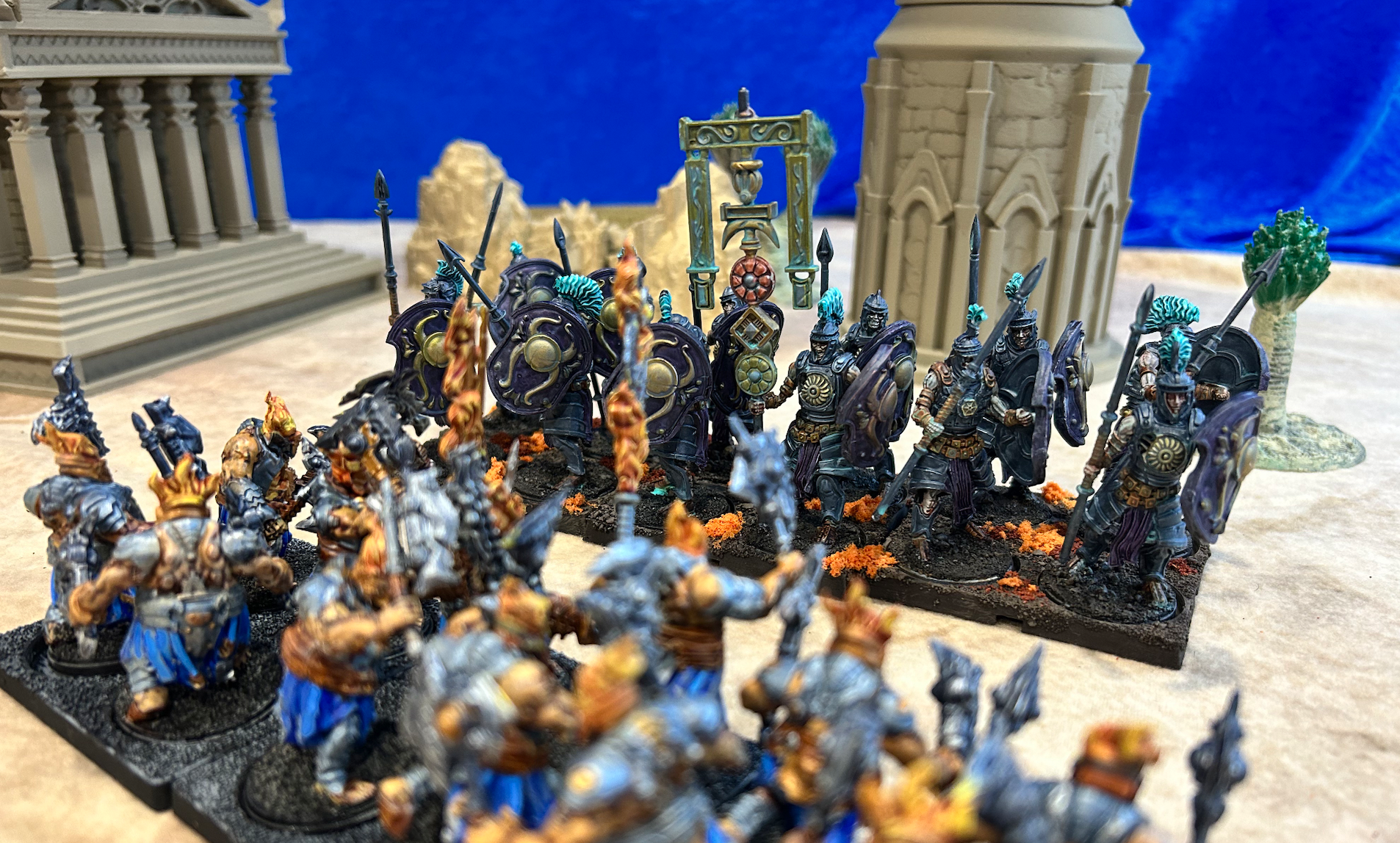
So I turned to the other rank-n-flank game. In 2025 I wanted to play. To experience the local gaming scene. Since I don’t want to engage with the old ways of the games produced by the empire that rhymes with Lames Merkshop – I can’t afford a second mortgage to keep up with their models. Instead, I turned to Conquest: The Last Argument of Kings.
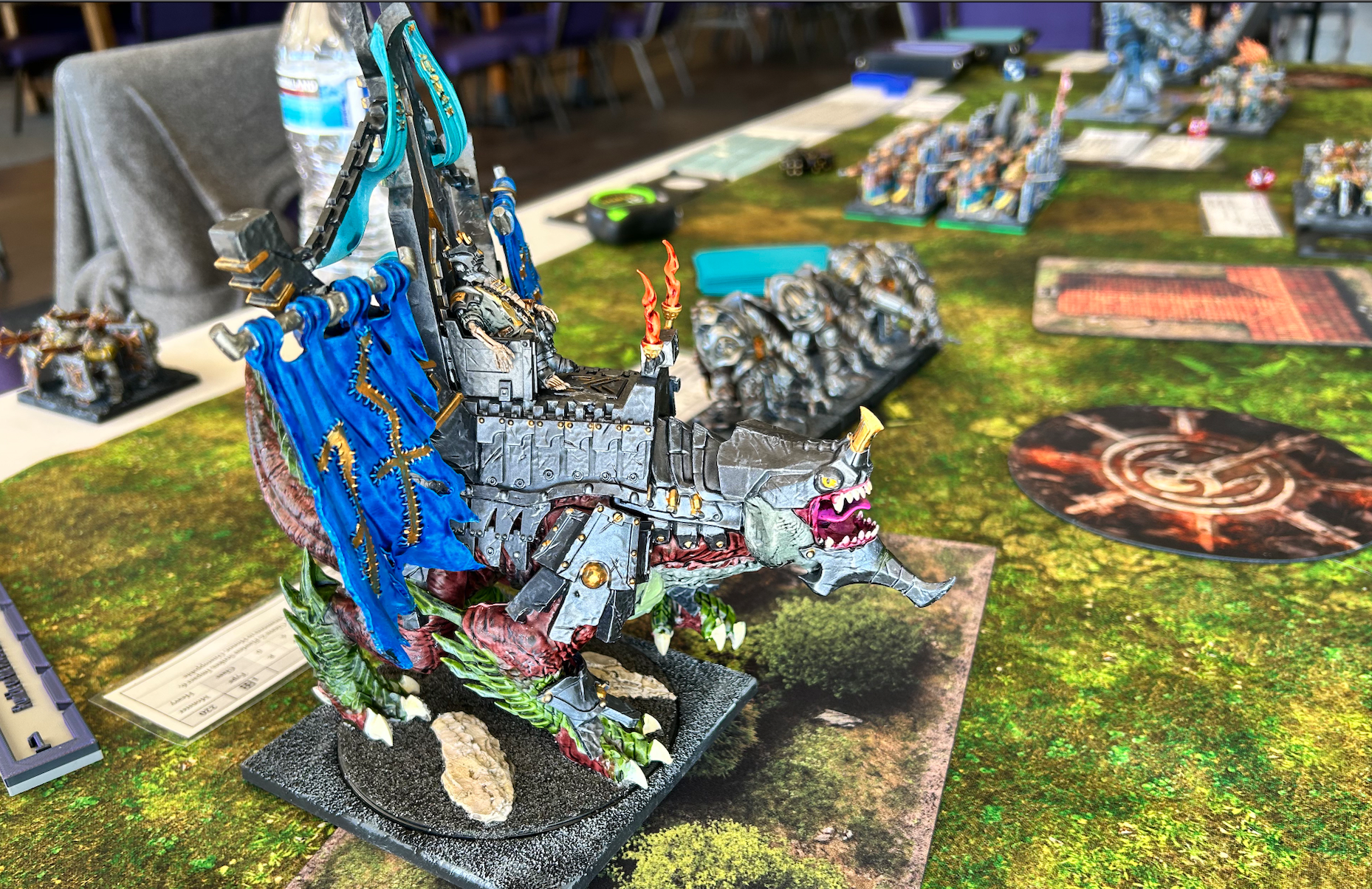
Another great game designed by Alessio Cavatore. And with alternating activations, I didn’t have to face the ever-increasing tension of the beating of the chess clock. Just build your command deck in the order you think the turn needs to go in. You go, I go, alternating drawing a card to activate a unit. By the time we get to the end of turn, all units have gone with no need for a clock.
With the help of a few other players who had purchased models, but never played, we got a small group of half-a-dozen players gathering twice a month at Round Table Games in Fort Wayne Indiana.
But all was not well.
Comparing the two Alessio games: Kings of War is a simple game that is difficult to master. The armies are very similar with minor nuance. Synergies are mostly baked into the army lists and are easy for even my brain to decipher. The game is more of deployment and movement/positioning than building a good meta list, though that does help.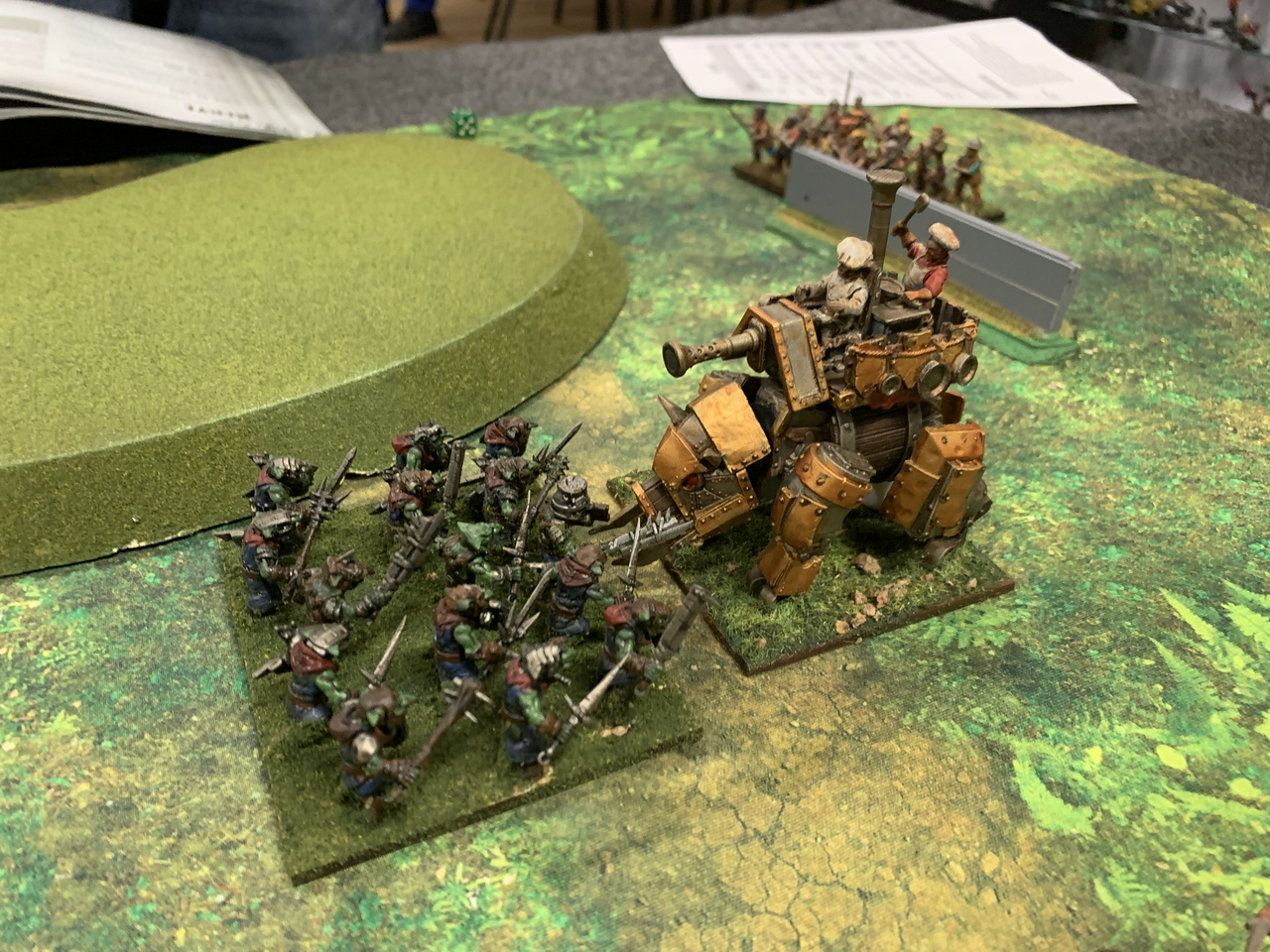
Conquest, on the other hand, in 2025 had a deeper set of synergies across the armies. Alessio only designed the initial iteration of the game. It’s now a living ruleset in it’s official 2nd edition, but feels like a 2.5 version. The game has a lot synergistic depth in most of the factions. But some factions were left behind until their turn for a total rework came. And that’s when I got lost.
My burnout brain just wanted to roll dice, and move models, in a game I could pretend that I might have a chance of winning. Didn’t matter if I won. I just needed the fun of believing I might. Like playing the lottery, or putting money on the roulette table. The joy is believing you might win, until the ball drops. Realistically, I know I’m not even a mid-tier player. Gamers just wanna roll dice and move models, dreaming that we won’t get tabled.
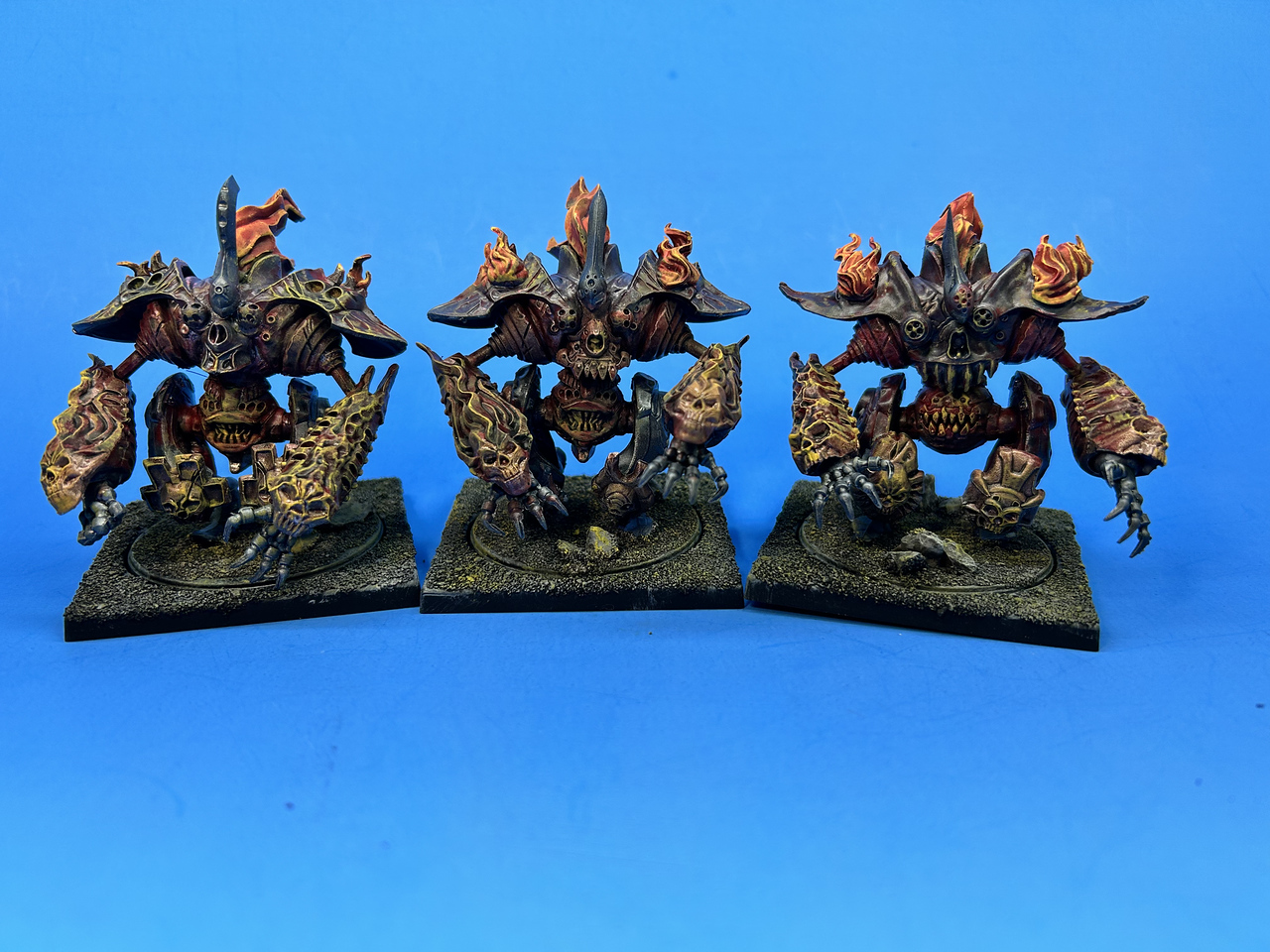
So when the Dweghom, the easy faction in Conquest, got their rework, my brain broke trying to understand the synergies. I had given up trying to understand the synergies of the W’adrhun, and of the 100 Kingdoms. Both armies that I thoroughly enjoyed painting. But trying to wrap my burnout brain around their synergies was too much. I sold my models, swore off the tournament scene, and went into gaming lockdown.
Burnout part 2
I had not dumped enough responsibility.
Trying to organize a local group, run a Conquest tournament at a local convention, edit the blog for NDNG, and deal with life when I hadn’t fully recovered was too much. I also sit on the board of HMGS Great Lakes. That was a minor time commitment, but too many conventions and tournaments happen in September and October in our region. Including HMGS-GL’s Advance the Colors, in Springfield Ohio.
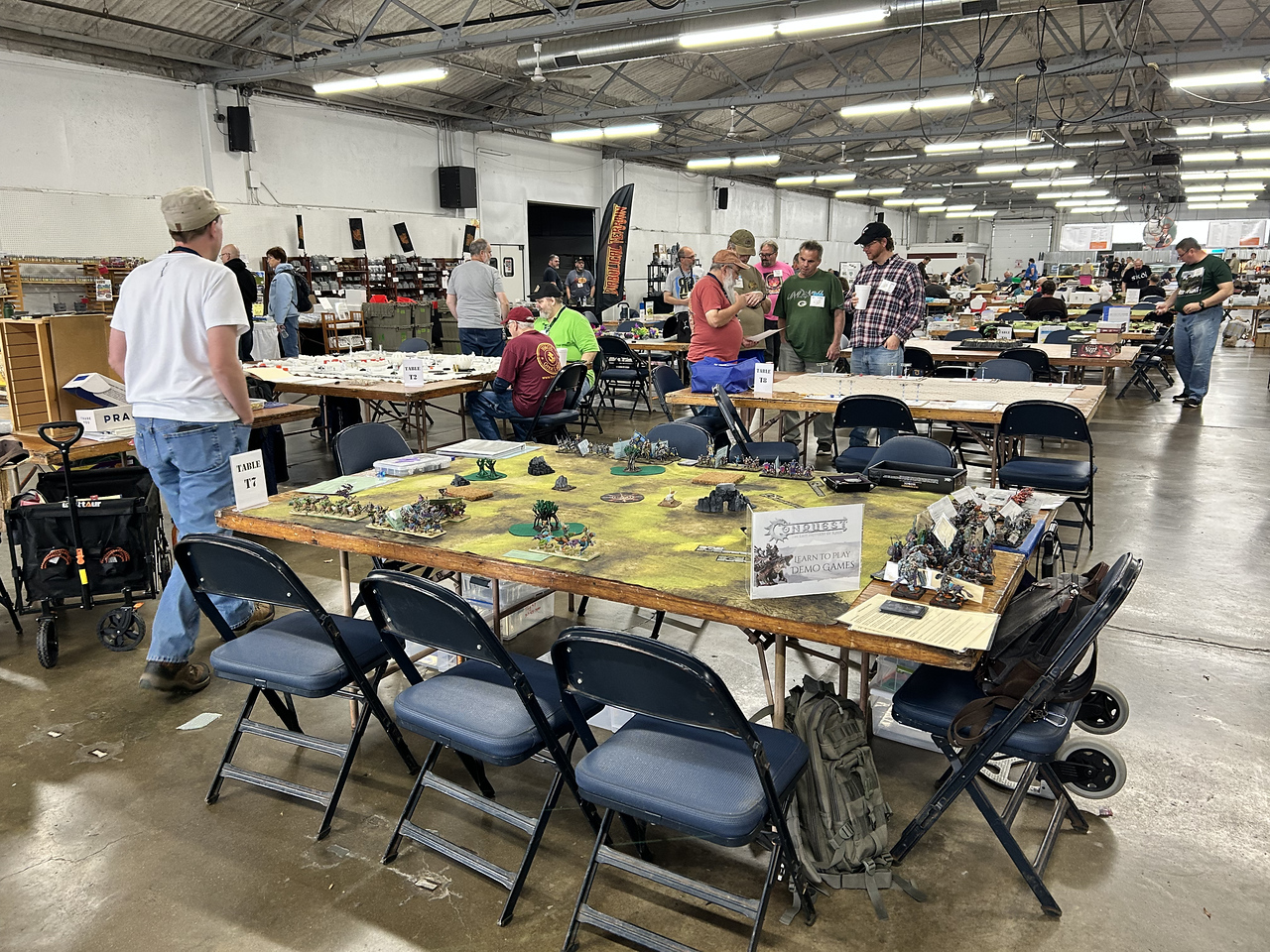
My last gaming event was running Conquest demos at that convention. I suspended my participation in the Conquest Vanguards program in late 2025, stepped back from the editor position here in 2025.
That helped. I had room to breath. The chess clock was dead and buried. I had my model railroad. and a pile of shame ready to be painted if I wanted to play games again.
Kings of War 4th Ed
Then Kings of War 4th Edition dropped.
I overspent on buying armies. We had a local pathfinder so I didn’t have to be the organizing force.
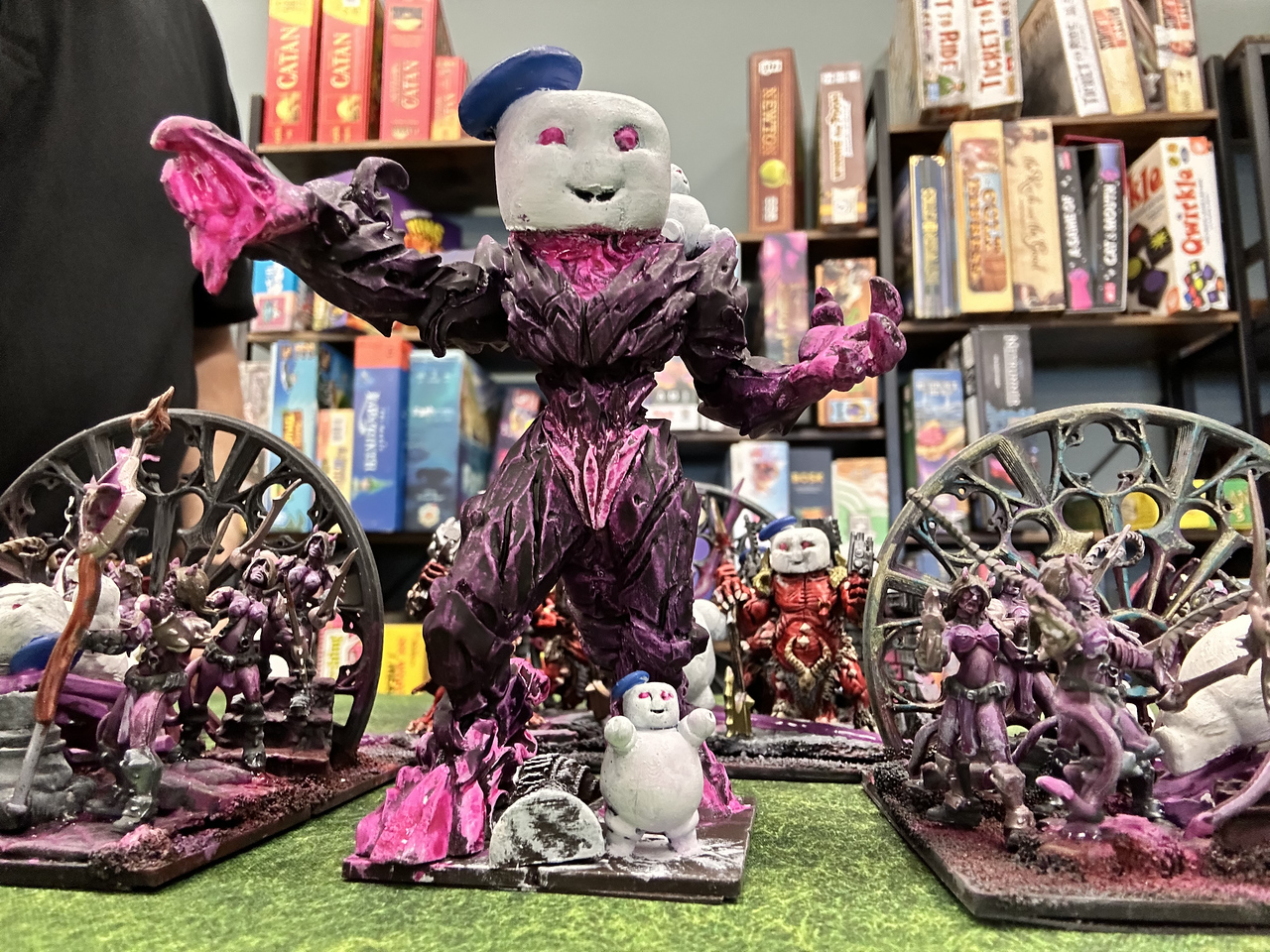
I painted a new army. Have I mentioned how much I enjoy theming an army for Kings of War? What happens if the demons from the Abyss get hold of Proton Packs? Yep. Ghost Busters meet Abysals.
Our local pathfinder had to take some time off and away. I tried to organize the local scene. But the shadow of burnout was still there. I didn’t have the energy for it. As for the online KOW community… it split. There are those who hate the new edition. They don’t like the army building rules. They don’t like the new rules. They don’t like the new army or the refreshed version. That really put a damper on my desire to rejoin the community.
But the chess clock was still there. Tick… Tick…. Tick. No tourneys, and thus community for me in KOW. I hate that damn clock.
Back to Conquest?
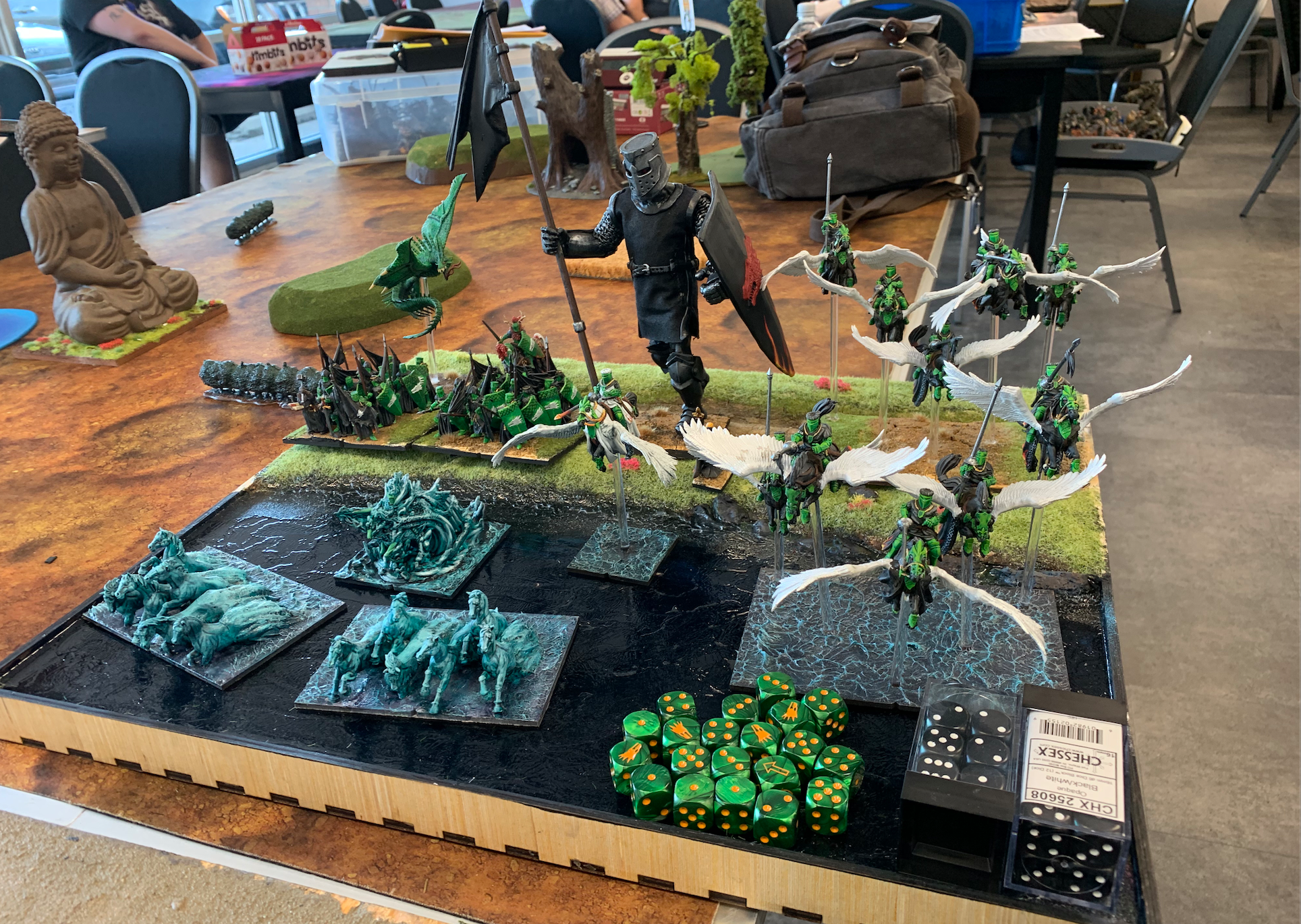
Fortunately, ParaBellum has brought in new game designers and they have made some changes to the armies and the game. Nothing major, but they’ve reeled back the excesses of the synergies. From the outside, this appears to be an attempt to balance the game with the factions, and the factions with game. The character and flavor of each faction hasn’t changed (much), As I read the ParaBellum discord and socials, it looks like players are mostly pleased with the game balance right now. The grumps are more in the tweaking of each faction. And those grumps are minor compared to the noise in the KOW space.
Is Burnout Over?
I don’t know.
Diving into a leadership role would be a bad thing for me. I have no desire to take on responsibility for organizing, demos, or tourneys. I keep thinking that I might. But then I remember the last few years, selling off models I had spent weeks building and painting.
I’ve set some rules.
- Major Games like Conquest: Three factions maximum
- Medium interest games like KOW: Two factions maximum.
- Minor interest games like Bolt Action: one or two factions maximum
Don’t overwhelm myself. Keep the pile of shame in reasonable levels. Don’t take on leadership roles. If I feel the need to do so, like run a local tournament, then make sure I don’t have other commitments such as another convention or another tourney to attend in the month prior or after.
Limit the overwhelm, and creep slowly back into the social and hobby aspects.
Cut out the non-enjoyable parts. Don’t like game’s tourney scene, because the players are too focused on the competitive? Don’t play in that game’s tourney scene. Stick to the ones without the pressure (I’m look at you, ticking chess clock of doom). Lose on my own terms, don’t sacrifice the fun of the experience for the dread, or the poor attitude of the hyper competitive community.
Do what I love, and love what I’m doing
We all know this philosophy, but acting on it can be tough when dealing with overwhelm or burnout.
There is little point to building and painting armies if they rarely get played. Like building a model railroad. The goal, for me, is to build scenes to run the trains through. Or to run trains though scenes you’ve built.
Some modelers just want to run the trains around plywood Pacific layouts (no or little scenery). They never want to weather their models. They never want to construct buildings, to lay flock or static grass. To carefully position human and animal figures to bring their scenes to life.
Just like in the gaming hobby. Some folks just want to compete. Three color minimum on models? Black primer, space marine blue sprayed on armor, quick metallic on weapons. Maybe a drybrush of grey on the basing sand. If they took the time to add sand to the base.
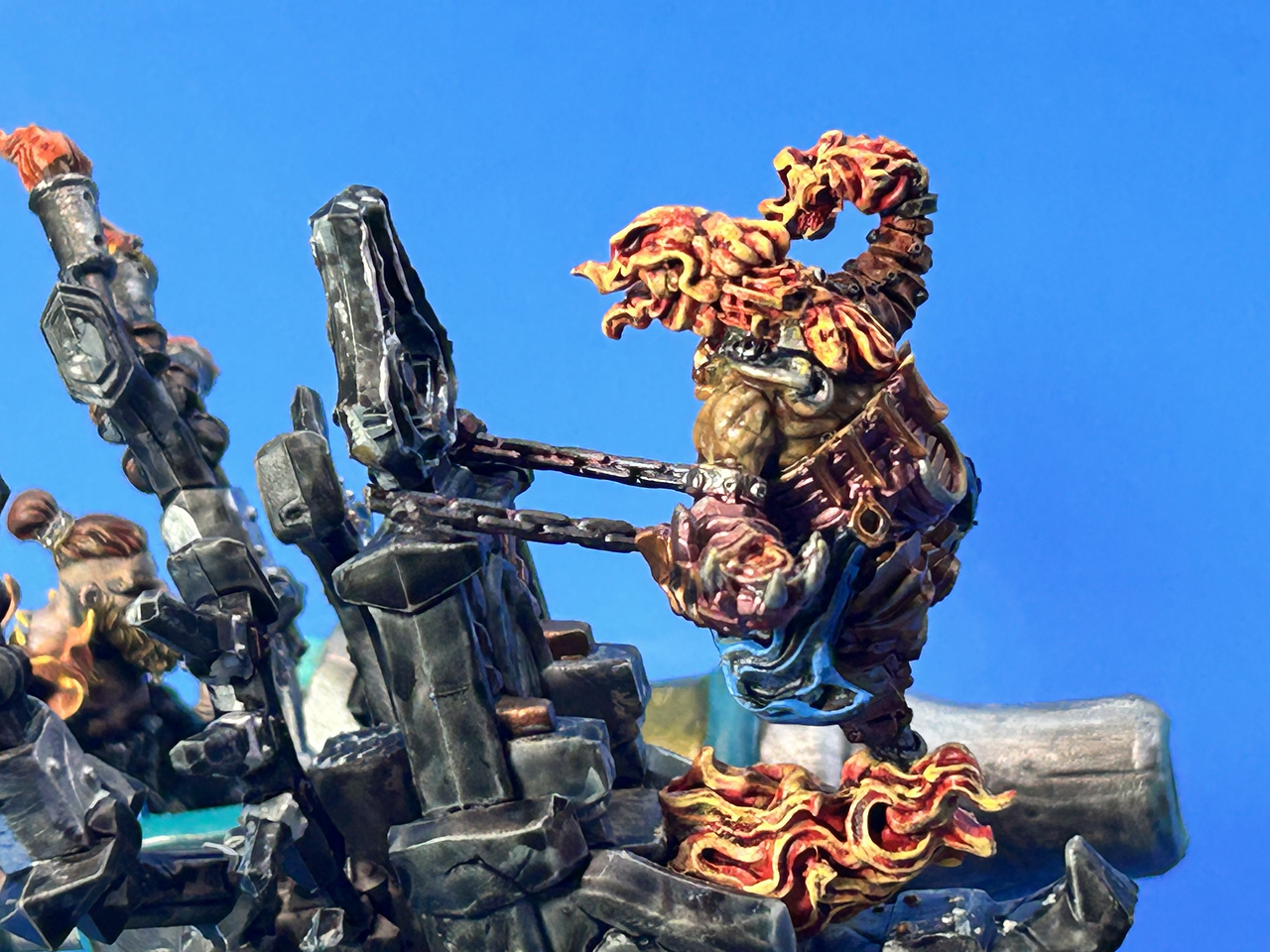
Others, we love to paint our models. To theme our models. To make the army look good to great on the table. We want to play that army. Hopefully against another painted and themed army. We want to laugh. To roll dice. To curse the dice gods when the dice go astray and doom our nicely painted figures to their doom. We want to laugh and tell stories of our forces victories or demise.
Don’t over commit.
Don’t buy what you don’t need. Unless it’s on sale.
Even then, think about what you can sell it for in a year or two.
Play for fun.
Play so your opponent is having fun.
Play so your opponent wants to play you again, no matter what force you bring, or how well painted your force is.
We’re in this hobby to have fun.
Don’t let the desire to win, or the need to be the organizer take over your life. You will burn out.
Trust me on that.
Paint minis, roll dice, laugh.
That’s what this hobby is about.
Glad to hear you’re having fun gaming again. We still miss you in L.A.!