
Bolt Action Tournament Best Painted Awards: Part Two of Two
By Kreighton Long
In this article we will continue our exploration of how various Tournament Organizers (TO) from around the country approach the Best Painted awards of their Bolt Action tournaments. In the previous article we looked at TOs from Utah, Wisconsin, Illinois, Texas, Ohio, Virginia, and California. This round I spoke with TOs from Illinois, Washington, Pennsylvania, Georgia, Virginia, and Maryland.
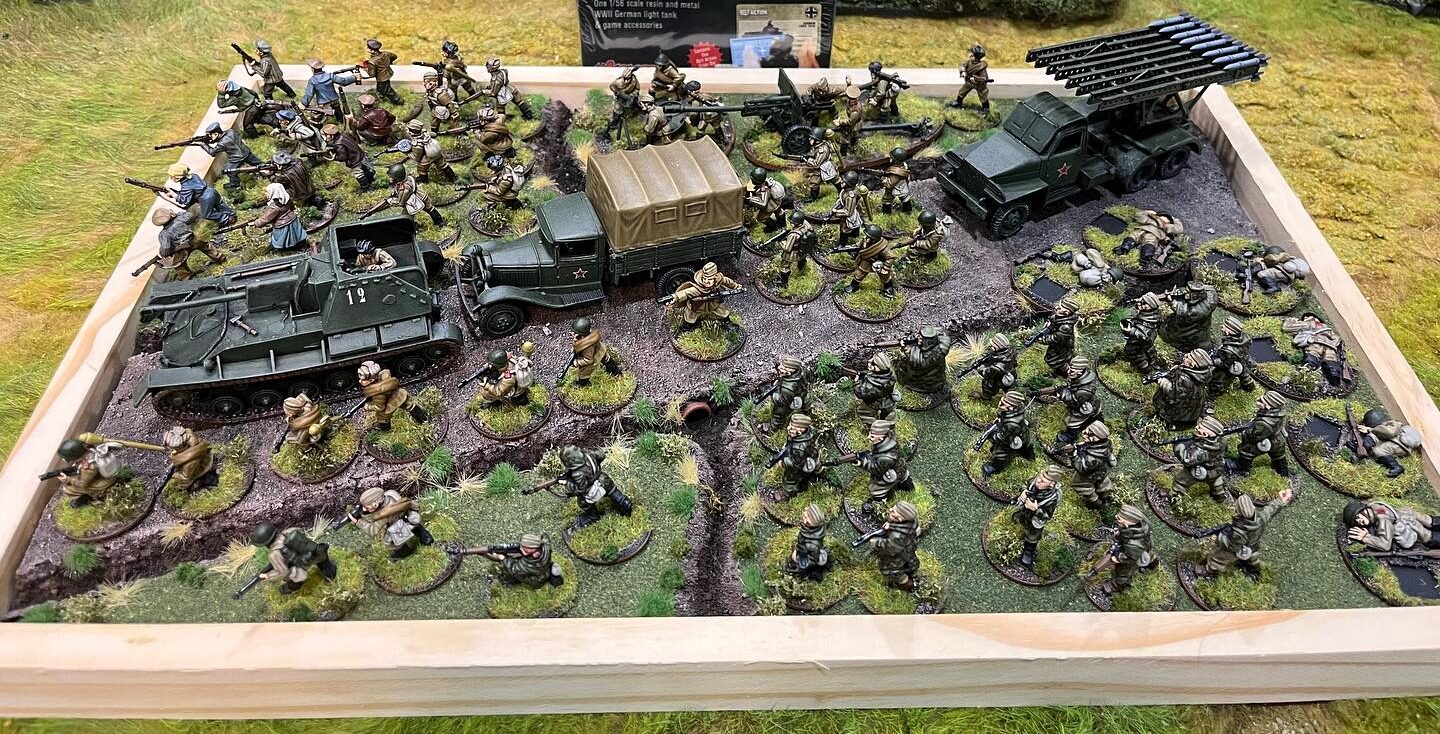
Up next is another returning guest — Andrew Verticchio from Illinois who includes players’ paint scores as part of their overall score for the tournament. “Painting is a core aspect of the events I run.” Players can earn up to 60 points across three games and the Paint score can add another 15 on top of that and are well aware that paint will be included in their overall score.
The TO is responsible for scoring the presented armies using a rubric which Andrew was generous enough to share. The rubric itself is as objective as it can be within the context of an art competition and is easy to assess with simple yes or no style questions. If there are multiple armies that finish with the highest score then the TOs compare them to each other to determine who wins the Best Painted award.
In Andrew’s experience, it’s all about the execution. Following the aforementioned rubric will get a painter into the running for Best Painted. “We want to see players do something special, something unique.” Once an army finds itself towards the top, that something special starts to pay off.
With display boards featured on the rubric, players chasing the Best Painted award will want to have one. While painters without a display board have won in the past, it is not a common occurrence. “Tournaments and events are a time to show off. To showcase all aspects of the hobby, and what better way than to bring a display board and set up your army?” Display boards are highly encouraged.
When asked about other painters contributing to a player’s army, Andrew stated that such choices need to be disclosed to the TO and that even if the army in question earns a 15/15, it would not win Best Painted. “And how could they? They did not paint the army.” Fair enough.
In addition to Best Painted, Andrew has a Player’s Choice award as well. Player’s Choice is determined by popular vote with each player getting one vote for their favorite army. “It may not be the best painted. It could be the one that has the coolest display board or the most interesting theme. Or it’s simply the army they like the best.”
Andrew added that the Best Painted and Player’s Choice are rarely the same army. “Just last weekend we had a player who brought US Rangers but used Cowboy minis to make them all Texas Rangers. That army received Player’s Choice votes because it’s awesome. But it was not in contention for Best Painted.” What a rad idea!
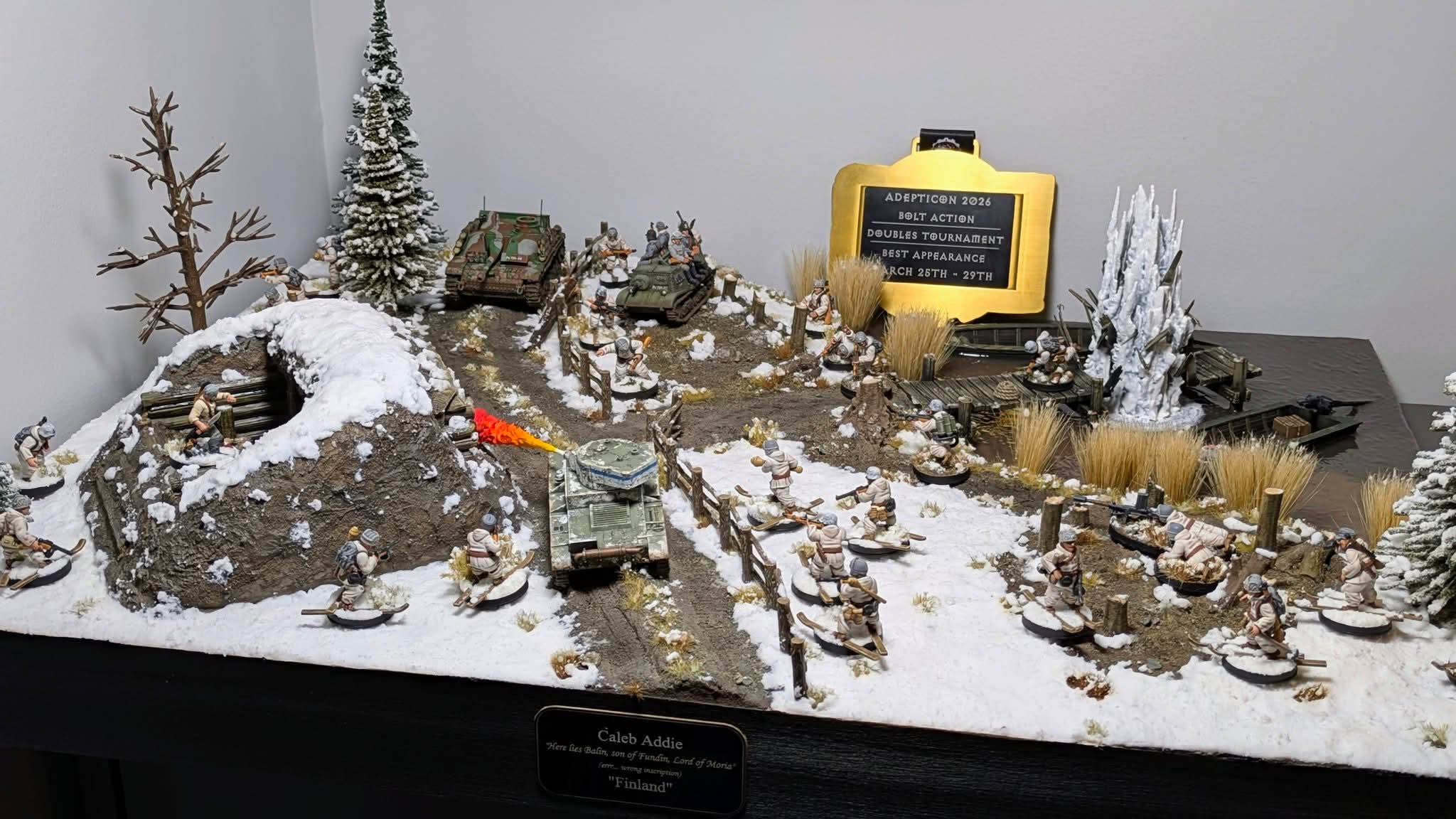
Hailing from Washington is John Flemming with four Bolt Action and Konflikt ’47 tournaments under his belt. In his initial few events, the painting competition was more of an afterthought but that has evolved over time. Going forward, John is making special trophies for that aspect of the event.
Historically, John allowed the players to vote for the Best Painted army. That is also changing as the players will vote for a small award while the TOs will judge for the main award. The judging is done by observation rather than a set rubric.
John downplays the importance of display boards referencing the value of cohesive basing and the prevalence of magnetic trays in his area. “More people are using magnets these days and I don’t want to penalize people with transport issues.”
When asked about other painters contributing to a player’s army, John held the line that the painting award must to to the person who painted the army.
John is helping to organize the Pacific Northwest Cup at Enfilade which will be held 28-30 May 2027 in Tacoma, Washington. For more information you can email John at john.thorrikk.flemming@gmail.com.
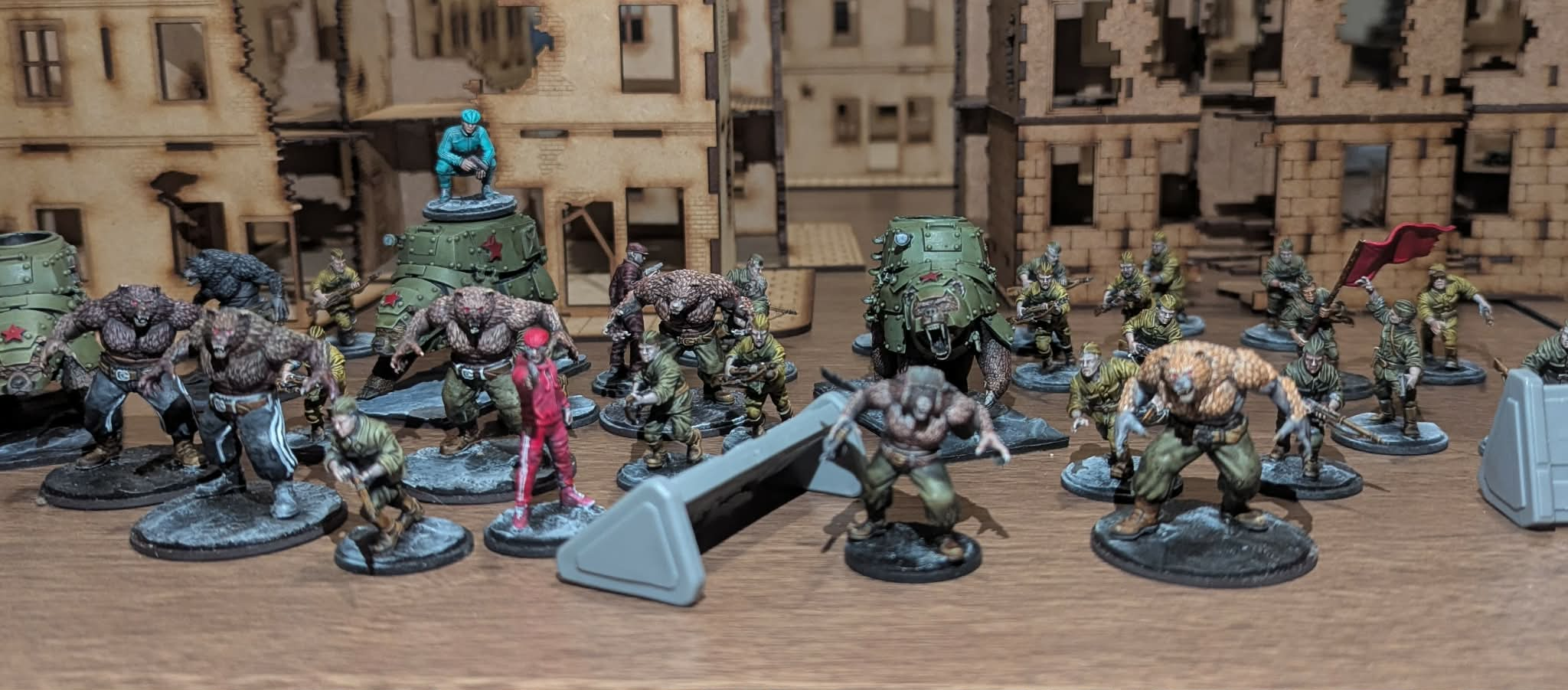
Representing Pennsylvania is Charles Sherrange — another returning contributor. For Charles, the painting competition is more of an afterthought with the main event taking a clear precedent. The painting competition is decided by the tournament attendees who vote for the winner purely on their subjective, individual preferences. Any tie breaking is done by the TO.
In Charles’ experience, a nicely based army is more likely to win. “Nice, themed basing seems to ‘push’ a model above one that’s painted a little better.” For judges walking the circuit and quickly glancing at armies, a quality, themed basing scheme will help to draw the judges’ eyes.
In the past, Charles has had individuals “recuse” themselves if someone else painted their army. “But if someone else painted them, and they say nothing, I have no idea.” The majority of Charles’ painting awards have gone to North East Miniatures.
Charles has two Tanksgiving events later this year. The first will be in Erie, PA on 14 November and the second will be in Pittsburgh, PA on 22 November.
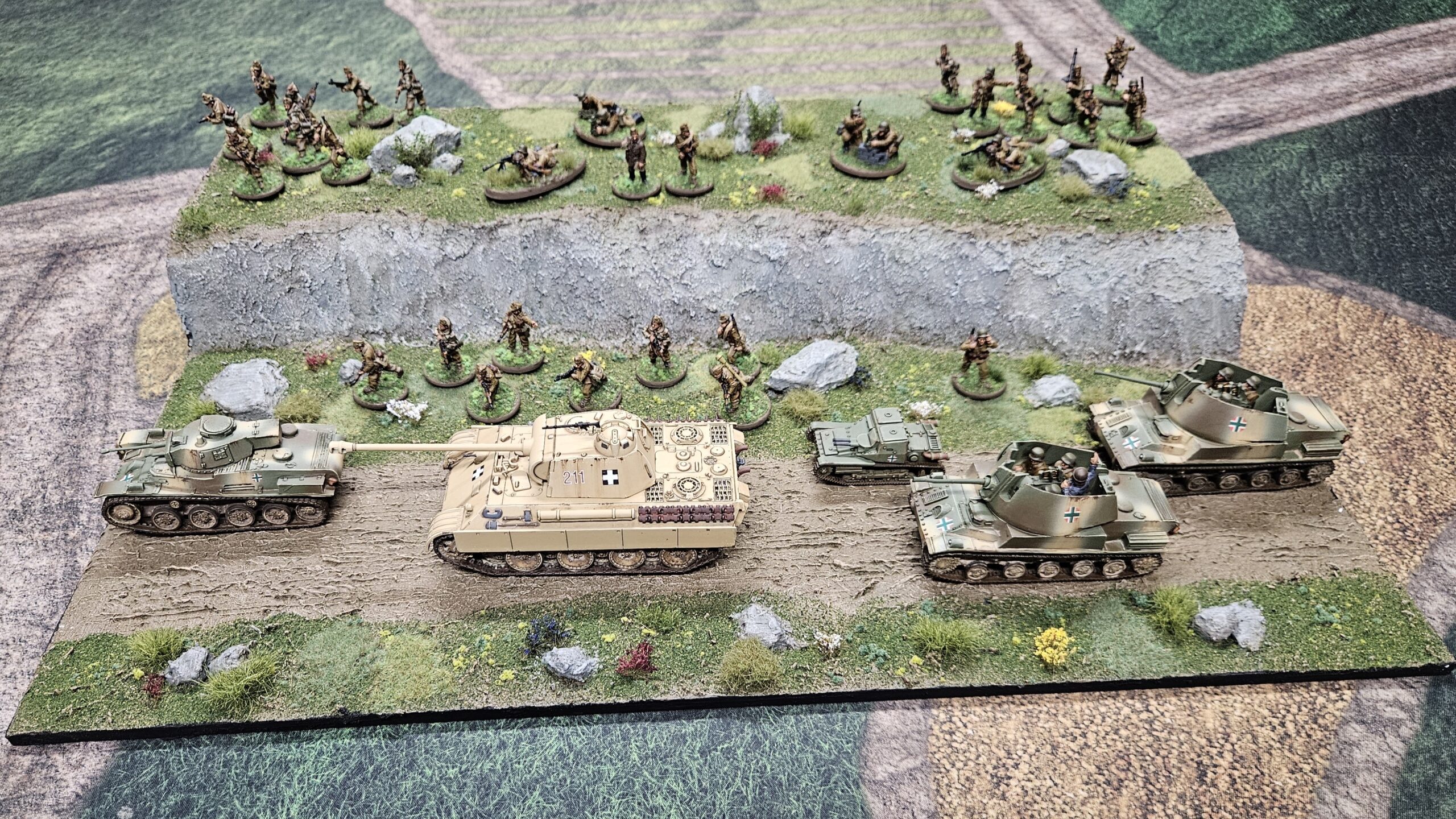
A new contributor to the gang is Kalissa Skibicki who runs tournaments in Virginia and Georgia. Kalissa lists the painting award in the tournament pack and encourages players to leave their armies out over the lunch break but admits to not putting a major emphasis on this aspect of her events.
Kalissa recruits third party individuals to serve as judges. “I usually ask people who I know are skilled painters themselves.” At Kalissa’s previous event, she had the players vote. That was the one and only time it happened. It sounds like Kalissa will be relying on third party judges moving forward.
She does not utilize rubrics, instead leaving the judges to use their own experience to choose. “It is purely subjective. Although, my third party judges are usually people who have won awards themselves and/or commission painters.” Experience trumps all.
In Kalissa’s experience, consistency is key for winning. “If a majority of your units have additional details, weathering, etc, but one doesn’t, it will get knocked down for someone who has gone the extra mile for all units.”
On the topic of display boards, Kalissa downplayed their significance in decision making. She went on to stress that the decision comes down to the actual units, rather than the display board.
Players competing in the painting competition with models painted by someone else has not been an issue at Kalissa’s events — that she knows of. To her knowledge, everyone who has won best painted has actually painted their own armies. She has had players request that their armies not be considered for the award due to including a commission job.
Kalissa will run the Bolt Action tournament at Call to Arms in Williamsburg, VA on 10 October.
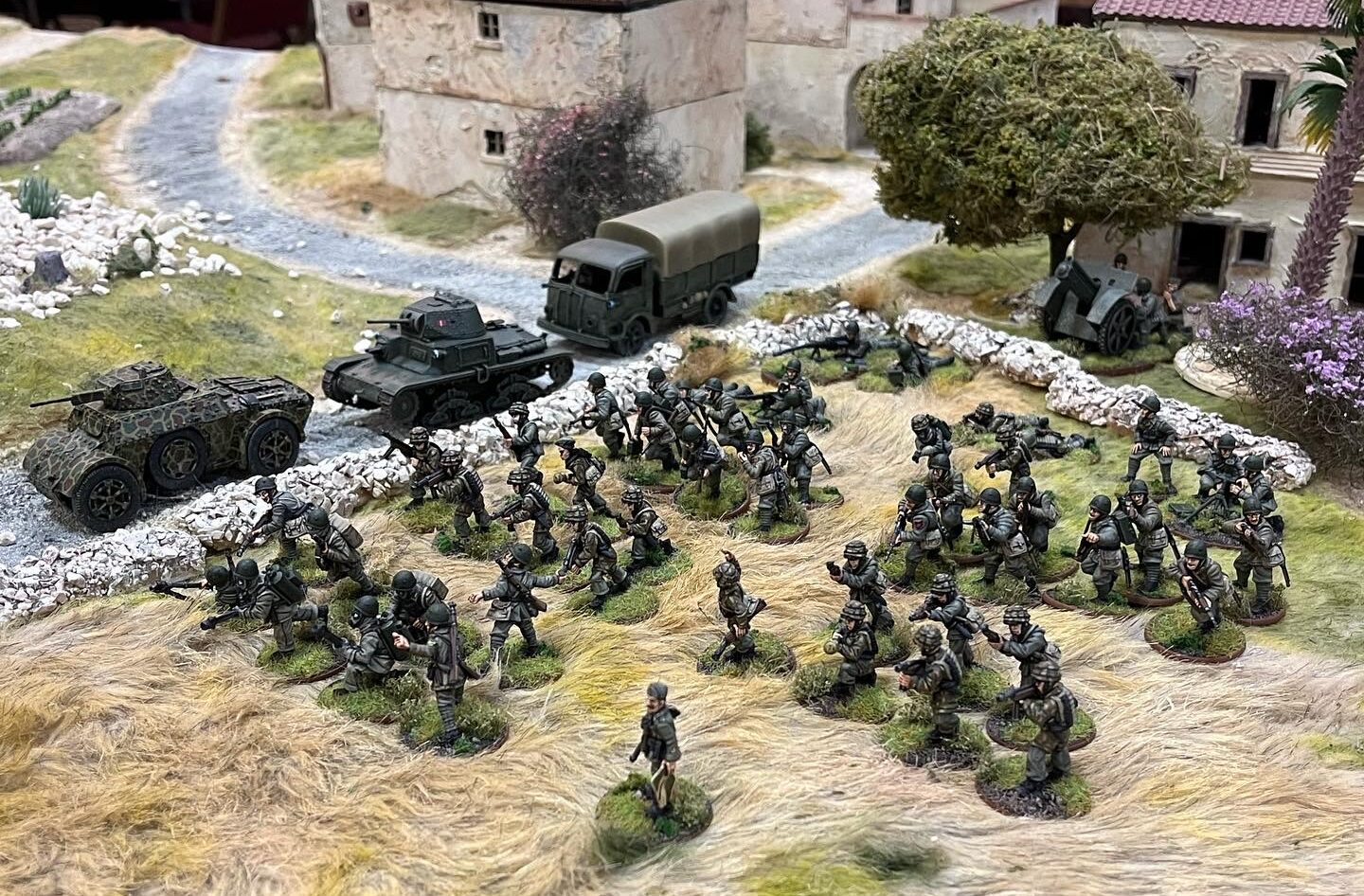
Mike Kehs from Maryland tends to not emphasize the painting competition too much. In order to not accidentally obstruct new players from attending his events, Mike does not require painted models for participation. Despite this, players tend to have fully painted armies that exceed the tabletop standard of a three color minimum. “Because of this I want to reward players who go above and beyond which is why I have a best painted prize at my tournaments.”
Mike leans on his assistant TOs, and occasionally the store owner if they are available, to judge. Mike’s assistant TOs are experienced painting judges and have seen numerous armies so are good at picking out the details that may be needed in the event of a close race.
At this point in time, Mike’s judging is subjective. In the beginning of his TO journey, Mike did utilize a rubric. Unfortunately, he found that too many people ended up with the same score and an “independent” judge needed to be called in to select an overall winner. Removing the rubrics ended up saving time as they did not do enough to point to a winner on their own.
For players pursuing best painted army awards, Mike recommends balancing making every effort to go above and beyond with the details of an army with taking great care to not distract from the overall appearance of the army. “If you aren’t good at freehand, you are better served using a decal. I appreciate the effort, but sometimes the impact can be negative and outweigh the intent.”
Display boards will certainly help your chances of winning. “A well painted army with bases that match a display board and/or have a cohesive theme can put you over the top.” Ultimately, your army is what is being judged. “A nice display board with average painted models has less of a chance than an extremely well painted army on a cookie sheet.” Mike’s events pull extremely good painters who typically have some sort of display board. “So if you are looking to get that best painted trophy, you may need to have one as well.”
Another consequence of Mike’s success as a TO is the variety of competitors traveling from outside the local area. This makes it harder to control if a player who uses commissioned miniatures ends up winning the award. “I would like to think that if someone is using a commission, they would pull themselves from the competition.” Sadly, that hasn’t always been the case.
Mike’s final thoughts centered around whether a three color minimum should be a requirement or not. “Bolt Action is still a growing community and new players may not have had the opportunity to paint their armies. The flip side of that is a three color minimum can prevent seasoned players from buying and assembling the newest “META” army to try to take the win.”
Mike is still planning his next event but look for news to dop in July or August regarding an October tournament.
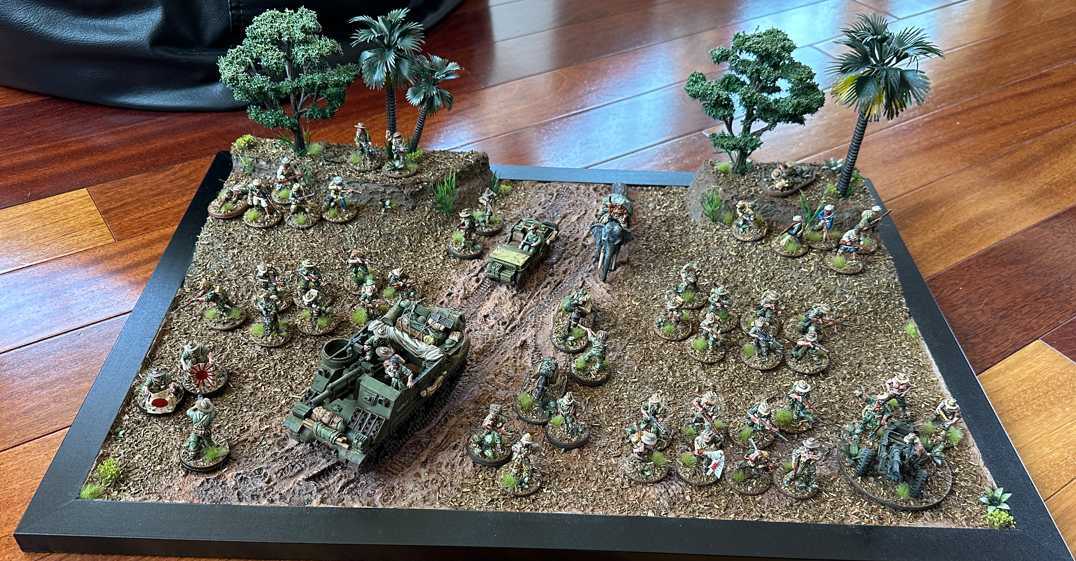
In summary: painting competitions were incorporated by all nine of the TOs I spoke with. Painting tiny toy soldiers is a staple of the hobby and no matter how competitive the event is there is always time and motivation to recognize the efforts put forth by the players.
Who is responsible for judging varies from event to event and ranges from the TO themselves, popular vote, and third-party judges. The use of third-party judges helps to keep the decision making more neutral and allows TOs to delegate the time-consuming responsibility of judging all the entered armies to others and also allows TOs to leverage the skills and experience of their chosen judges.
Rubrics tend to be rare. Instead, judges rely on their own experience and opinions to weigh paint jobs against the other competitors. An advantage to this is that it speeds up judging and gives judges more freedom to evaluate the entries. A disadvantage is that competitors are completely at the mercy of the judges and their whims. The recommendations from TOs for what to do focused on the importance of quality bases for the army, being consistent with the entire army, balancing goals with capabilities, and incorporating something special to help your army stand out.
Display boards tended to be best practice for winning a best painted army award. While multiple judges claimed that display boards were not a “need to have”, their impact on bringing an army together in a thematic and aesthetic manner cannot be understated. I for one will be building display boards to help present my own submissions at events, admittedly at a more basic level than some of the inspiring display boards included in these articles.
Generally speaking, TOs do not support competitors winning a best painted award while incorporating work from another artist. However, there seemed no real way to enforce this other than trusting competitors to excuse themselves from the painting competition ahead of time. In my experience, I’ve never seen been asked (verbally or in writing when registering) if everything I presented was my own work. I’ve also seen, in my own experience, participants earn a best painted award while using commissioned work. This left a bad taste in my mouth for the TO as well as the event. Admittedly, there is no surefire way of ensuring all participants are acting with integrity. I do wonder if a question, either during registration or before putting out their armies, asking competitors to recuse themselves if any presented painted elements (miniatures or display board) were commissioned or gifted.
Happy painting!