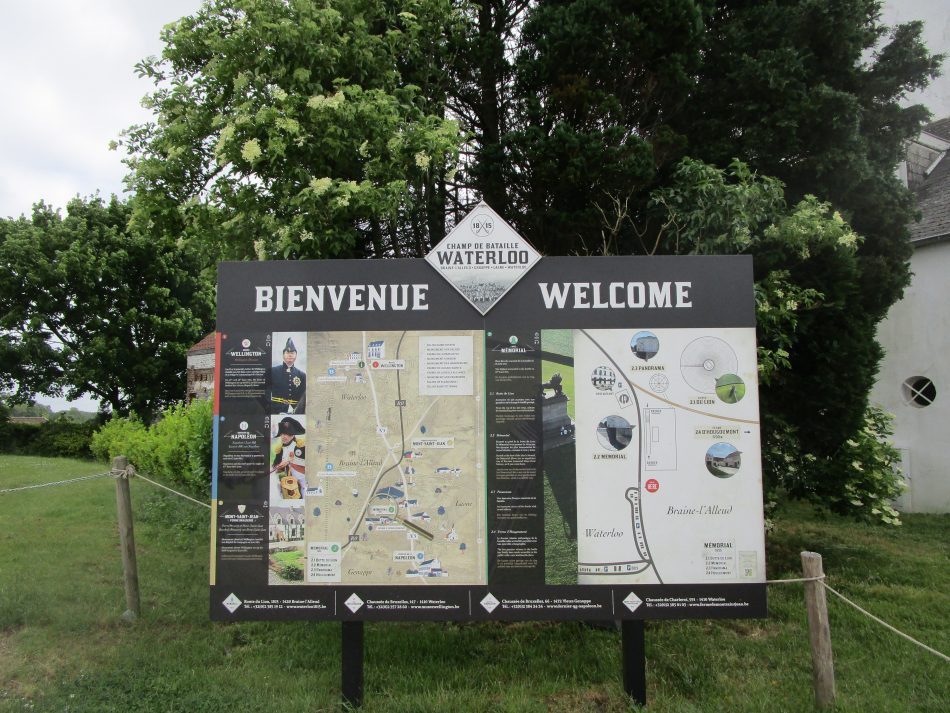
Waterloo Battlefield

By Robert Kelly

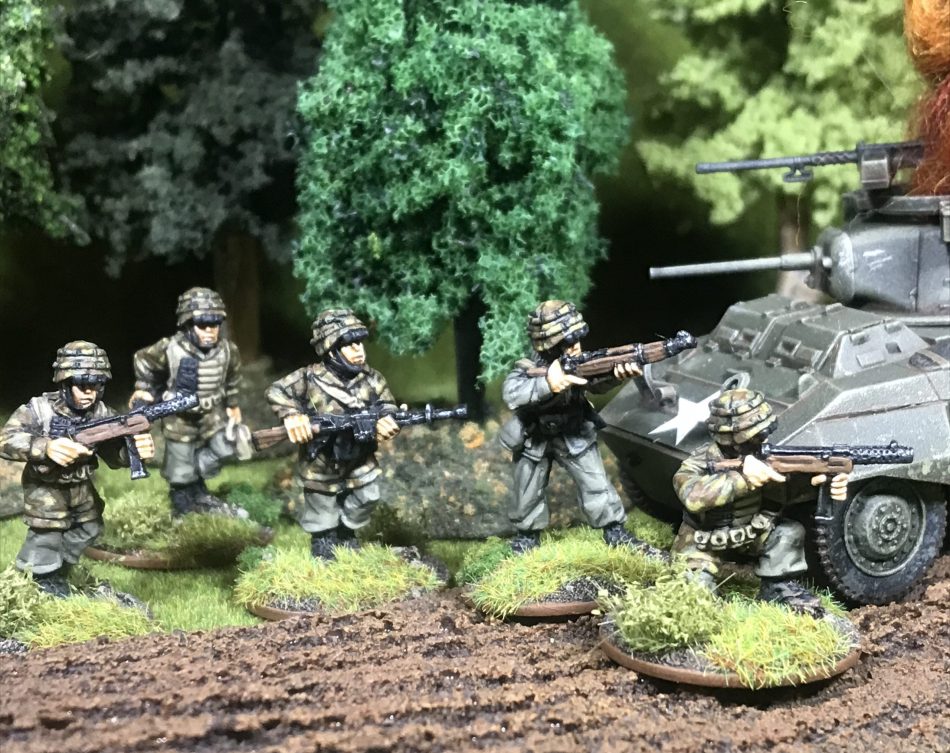
Part 3 of our Grand Tour of Europe brought us to Brussels. Every other week we would check for cheap Ryanair fares from our Forward Operating Base in Aarhus, Denmark.  Once we found a destination that looked interesting, we would also check for reasonably priced hotels.  Late May brought us to Brussels, a city I hadn’t visited since I was little. We happened to be there during Ascension Day (Kristihimmelfartsdag in Danish – my favourite sounding Danish holiday), which is a holiday in most European countries. With most places being closed, a trip to the Waterloo battlefield was the perfect outing. 

Retrospective of E.T. the Extra-Terrestrial the Game

“Couldn’t you just do something like Pac-Man?” ~ Steven Spielberg

By Patrick S. Baker

On the multitude of lists of worst video games of all time Superman 64 and E.T., The Extra-Terrestrial are in a constant struggle to claim the top (or is it the bottom?) spot.

In retrospect, E.T. the game looked like a sure world-class video game. The game was based on one of the most critically acclaimed and highest-grossing movies of all time. It was developed by Howard Scott Warshaw, the developer of the highly praised and best-selling Yars’ Revenge and The Raiders of the Lost Ark games. Also, it was going to be released in time for the 1982 Christmas season, when video game and video system sales generally spiked.

E.T. the Extra-Terrestrial the Movie was released in June 1982 and within a month was so hugely successful that Steve Ross, CEO of Warner Communications, Atari’s parent company, started talks with Universal Studios, the film’s distributor, and Steven Spielberg, the film’s co-producer and director, to obtain the rights to create a video game based on the movie. By the end of July, the main parties had signed a deal that cost Warner Communications between $20 to $25 million dollars ($60 to $70 million adjusted for inflation). This was a ridiculously high amount for video game licensing at the time.

If It Flies It Dies – WARSAW PACT AIR DEFENSE OPTIONS IN TEAM YANKEE

By Jim Naughton

Introduction

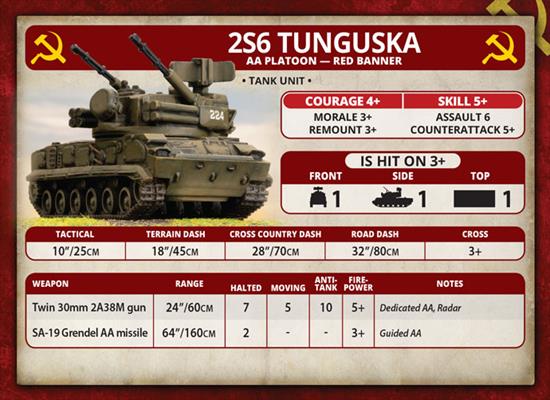
A frequently asked question on Team Yankee (TY) forums is what ADA systems are best.  This article tries to answer that question for the Warsaw Pact.

The release of World War III: Warsaw PACT https://www.flamesofwar.com/hobby.aspx?art_id=7455 added the M53/59 Praga anti-aircraft vehicle to the Czech army and corrected the omission of SA-8 Gecko from Volksarmee.

Getting Started in Warlord Games Epic Battles American Civil War


By Howard West

Background

When Warlord Games brought out the Epic American Civil War line, several of the people in our group wanted to purchase some of the starter sets and add-on box sets.  I was up for playing a Civil Wars miniatures game again. Since the late 70s our group has played the following Civil War Miniatures rule sets: Rally Around the Flag, Stars and Bars, Blue Light Manual, Fire and Fury, Johnny Reb, and Onto Richmond. I probably have forgotten others.

The problem for me getting into any new rules set was remounting the figures to the required basing and in my case that is a lot of figures. I have eight boxes of figures like the picture below that will need to be remounted, I painted these figures in the late 70s thru the 80s and ’90s.

Retrospective of Superman: The New Superman Adventures (AKA Superman 64)

“This tedious, boring, bland game is joyless and barren of any entertainment value.” ― Unknown

By Patrick S. Baker

No one starts out to fail.  Everyone that has ever begun a project, be it to fix a squeaky door, build a building, or develop a world-class video game, has done so with the expectation that they will succeed.

They expect that the door won’t make noise, the building will not collapse, and the video game will not be Superman: The New Superman Adventures better known as Superman 64.

In 1996, Warner Brothers Animation Studio was developing Superman: The Animated Series for the WB TV network. Eric Caen, co-founder of French game development company, Titus Interactive, heard about the forth coming TV series while visiting Titus’s Los Angeles office and went hard for the game development license.

Only the Enemy in Front: Late-War British Reconnaissance in FOW

By Richard Steer

Bulge: British is the final book covering Late-War British forces for Flames of War 4th Edition. Combined with D-Day: British, these books are Flames of War’s representation of the British, Canadian, and Polish forces in Northwest Europe from D-Day through until VE Day.

Supporting each book is a deck of Command Cards. These cards add additional formations, units, and upgraded weapons, that are not included in the core books. Amongst the cards for the British books there are a number of options for different reconnaissance units. This article looks at the historical units, and how they have been represented in the lists.

Viva Cuba!

By Jim Naughton

The newest Soviet Ally to join the Team Yankee tabletop is the Fuerzas Armadas Revolucionarias (FAR); or Revolutionary Armed Forces of Cuba.

The troops represented in Red Dawn belong solely to the Tropas Terrestes with the exception of the MI-24 Hind, the other services are not represented. Which is a shame because the Cubans had their own parachute battalions, marines, and special operations forces, as well as a variety of aircraft.  Cuba didn’t use SU-17/22/25 so in the game, they must rely on Soviet aircraft.

The Great Chase- Air Crash Investigation in a card game, a novel approach

By Troy A. Hill

An author friend of mine, M. L. “Matt” Buchman, connected with me over a year ago at a writer’s convention in Florida. Matt was excited to show off a beta model of his new card game. One that plays like a board game, and is tied into his best-selling Miranda Chase series of political thrillers.

Well, in the midst of the pandemic, supply chain issues, and other issues kept the game from hitting our shores until earlier this year.

Fortunately, I was able to catch up with Matt a year after our first meeting and get a rundown of the game. It’s quick, plays easily, and is a cooperative game, or one fit for solo play. I caught up with him a few weeks later, when he sent a promo copy of the game my way. Read our conversation below.

A series of short video tutorials are available here from Librarium Games and Alexander Massar, the designer of the game.


Retrospective of Civilization II

“How do you make a sequel to a game that covered all of human history?” ~ Brian Reynolds

By Patrick S. Baker

The thunderous success of the original Sid Meier’s Civilization (Civ I) in 1991, today would demand a sequel, and quickly, but back in the dark days of the early 1990s that just wasn’t so. In fact, the game that would become Sid Meier’s Civilization II (Civ II) was the first direct sequel that MicroProse would develop and market.

MicroProse management assigned the sequel development task to Brian Reynolds. Reynolds was no newbie to the game design and development business. He went to work for MicroProse in 1991, developing adventure games like Return of the Phantom. He had also previously collaborated with Sid Meier on Sid Meier’s Colonization. But none of his experience answered the basic question to which he needed a good response: “How do you make a sequel to a game that covered all of human history?”

Reynolds went to the source first, Meier himself. Reynolds later said: “We (he and Meier) sat down and brainstormed about it and hashed out ideas…” but Meier had little else to do with the game which would still bear his name.