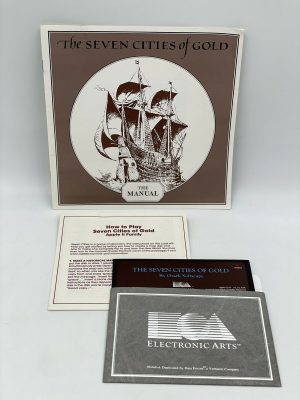
Retrospective of The Seven Cities of Gold Video Game

“We came to serve God, and to get rich.” ― Conquistador Bernal Díaz del Castillo
By Patrick S. Baker

1984’s The Seven Cities of Gold (henceforth Seven Cities) is generally acknowledged as one of the most successful and influential early “open-world” video games.

In an open-world video game, the player can wander freely through the virtual world and has significant freedom in choosing how and when to approach the game objectives. In the game a player takes on the character of a 15th-century conquistador, sailing across the Atlantic to the New World to explore, obtain gold and make the Spanish court happy.

The name of the game comes from the legend of the seven cities of gold variously called Cibola, Quivira, or El Dorado. The mythical cities were fabulously wealthy and supposedly located somewhere in what is now the American Southwest.

To the Victor, the Plunder: Tournaments with Firelock Games

By Tyler

There’s been a bit of a Firelock Games ‘drought’ here on No Dice lately. In that time, the gang from Miami has kicked out the ‘Fire on the Frontier’ expansion, nearly finished their Kickstarter, launched a new game out of nowhere, and teased one more in the works. We haven’t been quite as busy as all that, but we haven’t been idle this whole time either. The Tales-men have jumped out of the digital space and started running tournaments of our own. Captain ‘Chairborne’ will be along to talk about his experience at our most recent event, but today I’d like to share with you how we’ve been doing… well, what we’re doing.

Blood & Plunder battles in North America?! Must be ‘Fire on the Frontier’!

Grabbing a Venue

Choosing a venue is the first step to any event, unless you’re running at a Con. It would been simple enough for us to pick one of the excellent local gaming stores in the area to host us. However, if you can find a venue that stocks the game, that’s an advantage.

Some of you might know that Firelock had to pull out of the 2022 Adepticon. They had their reasons, but it was disappointing to have people who wanted to pick up a new force or jump into a new game without anywhere to shop.

That’s why we chose Critical Hit in Abingdon MD for the ‘Easter Island’ tournament. The store has a great Firelock section, so we were able to grow the community and also help them shift some products. Ask not just what your store can do for you, but also, what you can do for your store.

No Dice No Glory Episode 120: Tales of the Sail Episode #26 – The Aftermath


The Tails-men are back, the only podcast dedicated to all of the fun from Firelock Games! Join Glenn, Tom and Tyler as they chat about their “Plunder of Easter Island” Tournament in Maryland from this past month. Trivia is also back, so join in for a chance at some sweet free prizes!

A Rock and a Hard Place: Making Foxhole Markers for FOW

By Richard Steer

Tokens play an important role in Flames of War by marking the status of your units. The tokens in the Battlefront Gaming Sets are nice, but they do detract from the visual appeal of the game, particularly after the lengths we go to painting our miniatures in historical colors and creating realistic terrain for them to fight over.

The FOW token sets include four Foxholes markers, with the intention being that one marker is used per dug in unit. At times it is beneficial to have foxhole markers for each team, particularly when teams consolidate during the Assault step, so I am making myself a bunch of them.

Adepticon 2022 Retrospective

By Mike Rafferty

This past March, Adepticon returned after a two-year hiatus (caused by “nothing in particular).

The convention once again returned to Schaumburg, IL. This was a different convention from years past, and not just because of the wait between conventions.

While Keyforge was held offsite in 2019, this year historical games were at the Hyatt giving Adepticon its first true offsite venue.

I volunteered to run this offsite venue and historicals to ensure that historical players, of which I am one, received a great convention experience. My long-term goal is that we can use this space to grow historicals at Adepticon and establish our own identity to stand along with the Games Workshop and Star Wars players at Adepticon.

Flames of War The Return of the Experimentals

By Chris Masucci

Having been out of the Flames of War scene for about ten years now, I was disappointed to find that many of the figures that I remember from years past have long disappeared from Battlefront’s catalog. Being a big fan of the Dieselpunk, alternate WW2, and “Weird War” styles, one of the biggest casualties for me was Battlefront’s collection of what were dubbed “Mid War Monsters”.

This series introduced several experimental or obscure vehicles to Flames of War in its mid-war theaters. The mid-war monsters included everything from little-used but produced vehicles such as the Boarhound and Italian P40, to things that never left the drawing board.

Writing the Game: An interview with Mark Barber

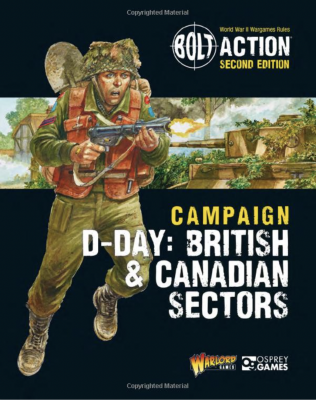
D-DayBy Troy Hill

Prolific wargaming and historical author Mark Barber recently sat down via email with me to discuss the ins and outs of writing books for the gaming community. If you’re not sure who Mark is, here’s the blurb from his Amazon Author page:

Mark Barber writes in the military history and wargaming genres. He has written several military aviation titles for Osprey Publishing and spent several years working with Gaijin Entertainment’s record-breaking ‘War Thunder’ software package, acting as a historical consultant, in-game content writer, and article writer. He has also written several titles for Warlord Games’ Bolt Action tabletop game and has written fiction for the Kings of War and Gates of Antares franchises.

Mark has written several of the popular campaign books for Bolt Action, including several of the D-Day series.

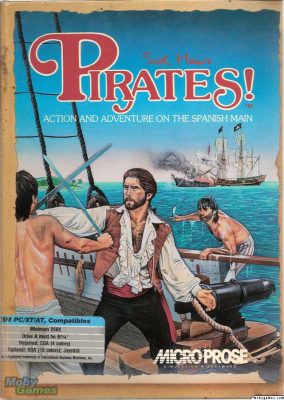
Retrospective of Sid Meier’s Pirates!

By Patrick S. Baker

Yo ho, yo ho, a pirate’s life for me

We pillage, we plunder, we rifle, and loot

Drink up, me ‘earties, yo ho

We kidnap and ravage and don’t give a hoot

Drink up me ‘earties, yo ho

–From Yo Ho (A Pirate’s Life for Me), by George Bruns

In 1982 Sid Meier and Bill Stealey founded MicroProse and by 1986 the video game company was highly successful by largely focusing on military and vehicle simulations such as Chopper Rescue, Spitfire Ace, and Silent Service. But Meier, MicroProse’s chief designer and programmer, had grown bored with the hyper-realistic games and wanted to do something different.

In a meeting with Arnold Hendricks, a MicroProse programmer, Meier heard the pitch for a pirate game. The game was pitched as an “Age of Sail” ship-to-ship combat game, much like Avalon Hill’s Clear for Action. Meier liked the idea but wanted it to be an open-world adventure game, not just a combat simulation. Meier later wrote: “Pirates didn’t spend all day fighting one another. Pirates had adventures.”

Death or Glory: Reconfiguring the FOW Crusader Squadron Boxed Set

By Richard Steer

The Flames of War army boxes are a great value. They are big boxes packed full of plastic sprues and are the ideal way to either start a new army or reinforce an existing one, at a significant price discount. The new British Crusader Armoured Squadron boxed set for North Africa is no exception. Containing 21 sprues and retailing for US$110, it compares very well to the usual price for a normal unit box.

While the Crusader Armoured Squadron box contains a lot of plastic for your money and a wide variety of models, a closer look at its contents reveals that it is an awkward combination of units. The default army list that is provided with the box is a legal force totaling 93 points, but game-wise it is not a great list.