Painting and Modelling – Canadians in WW3 Team Yankee


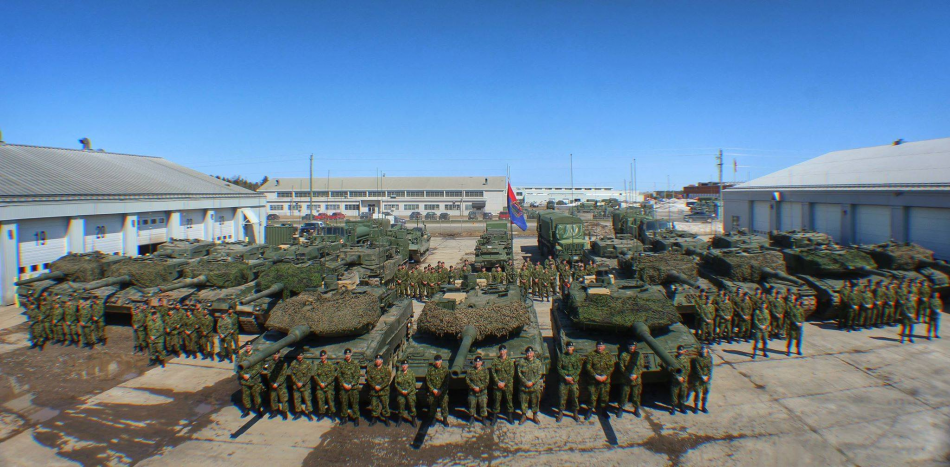
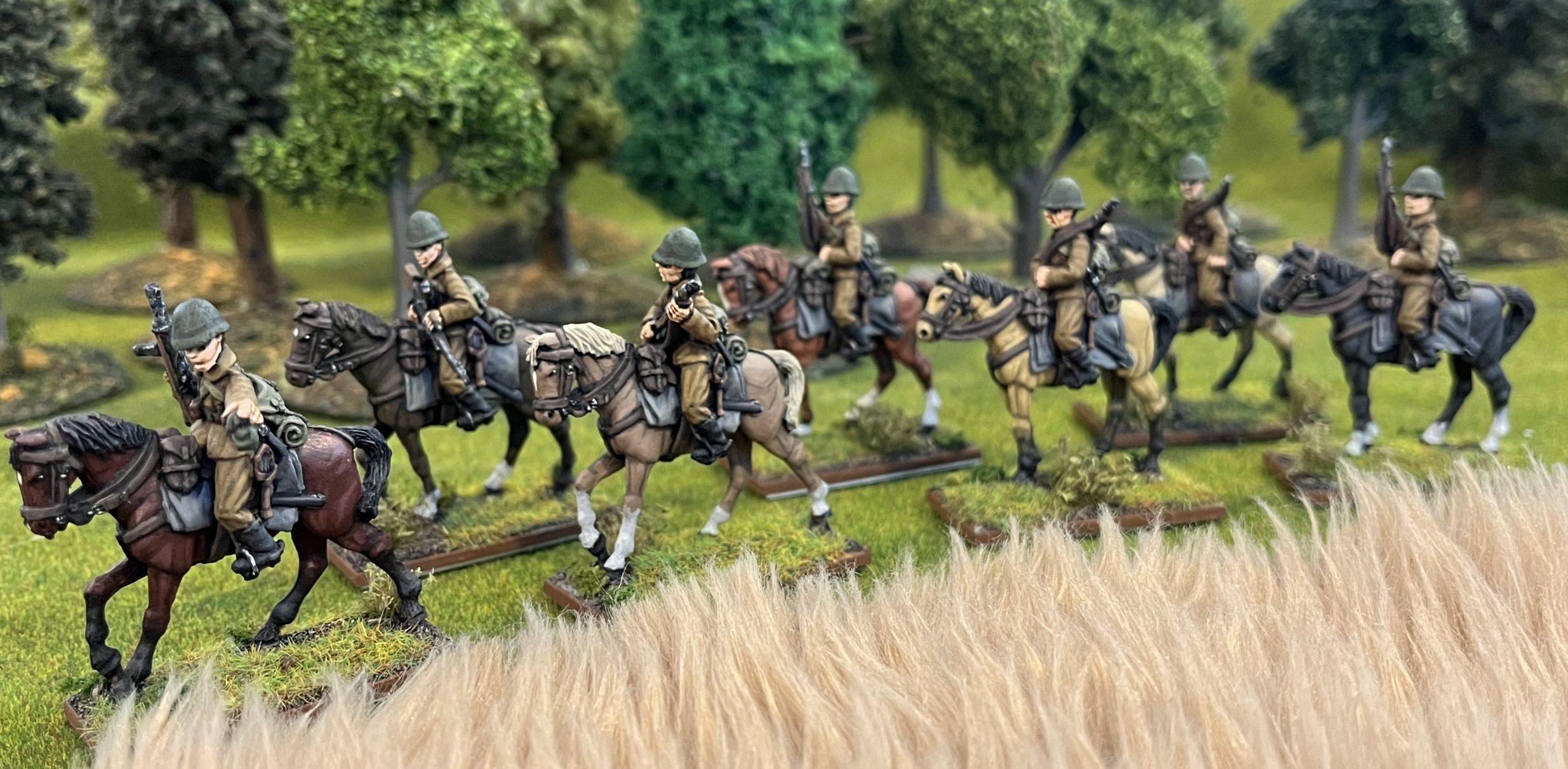
Royal Canadian Dragoons photos


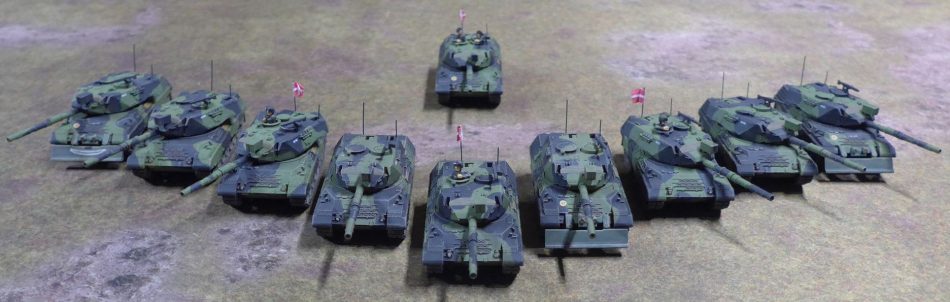
In my previous article WWIII Team Yankee – NATO Forces Book – The Canadians – No Dice No Glory  I discussed the new lists for Canadians in Team Yankee. The possibilities for Canadians in Team Yankee are now so exciting that many people are considering doing up a Canadian army. Battlefront has done a good job of showing Canadian camouflage patterns, but not such a good job of getting the colours right and some different ways of painting vehicles.

I realize that Battlefront wanted to come up with a common camouflage pattern for Canadian vehicles, but it’s not that easy. During the Cold War and beyond, Canadian vehicles had different paint schemes depending on the vehicle and when it was in service. The options were German Gelboliv, Canadian three-colour, NATO three-colour, or plain NATO green.  I will discuss my recipes and recommendations for the different colours from the late 1970s onwards. Then I will discuss which colours and patterns to use on each individual vehicle.

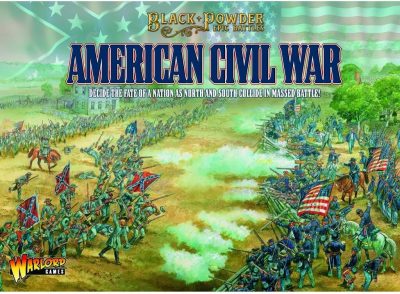
My Return to Painting with Warlord’s Epic Black Powder

By Mitch Reed

I have been hiding a secret from many of you, over the last three years I have not been painting. I have mentioned this on podcasts numerous times and if you ran into me at an LGS or a convention, I probably told you bluntly, “I have not painted in years.” I have no idea what caused this, perhaps from playing too many board games? Could it be that I have all the painted models I need to play the games I love?

No matter the cause, the passion was gone, however recently my passion returned, and the flame was relit.

Call to Arms Bolt Action Tournament – 7 October 2023

By Kreighton Long

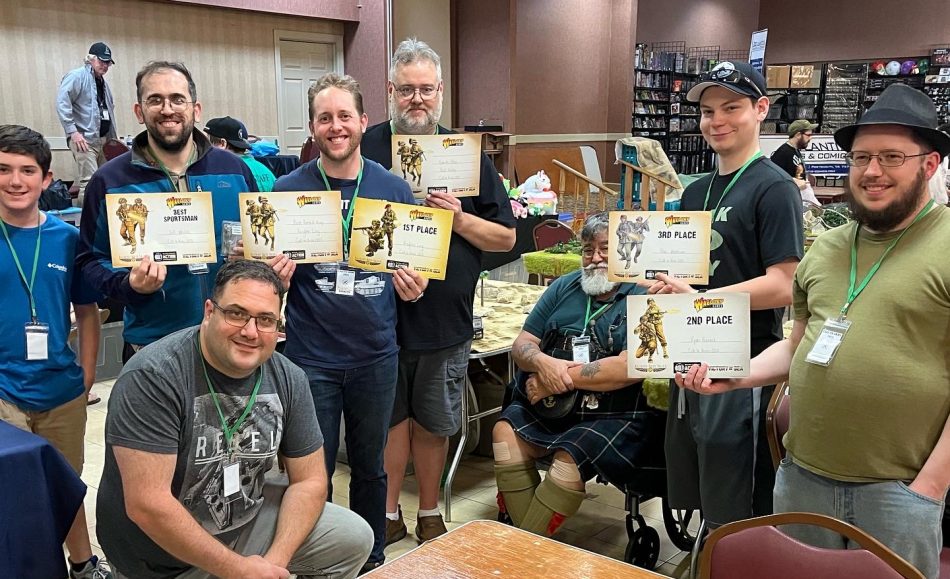
On October 7 I had the opportunity to compete in the Bolt Action tournament at the Call to Arms convention in Williamsburg, Virginia put together by veteran Tournament Organizer Kalissa Skibicki.  Eight players competed throughout the day in three rounds of games using the Heartbreak Ridge, No Man’s Land, and Key Positions scenarios.

As always, the tables were a true treat to play on, drawing in many passersby, and creating gorgeous photo opportunities.  The atmosphere was relaxed and friendly. Kalissa’s tournament highlights echoed this remarking on the friendly and good nature of all players, an overall feeling of relaxation, and overhearing several suggestions between players giving opponents better cover advantages and better placement of objectives.

Painting Waffen SS Oak Leaf Camouflage

By Kreighton Long

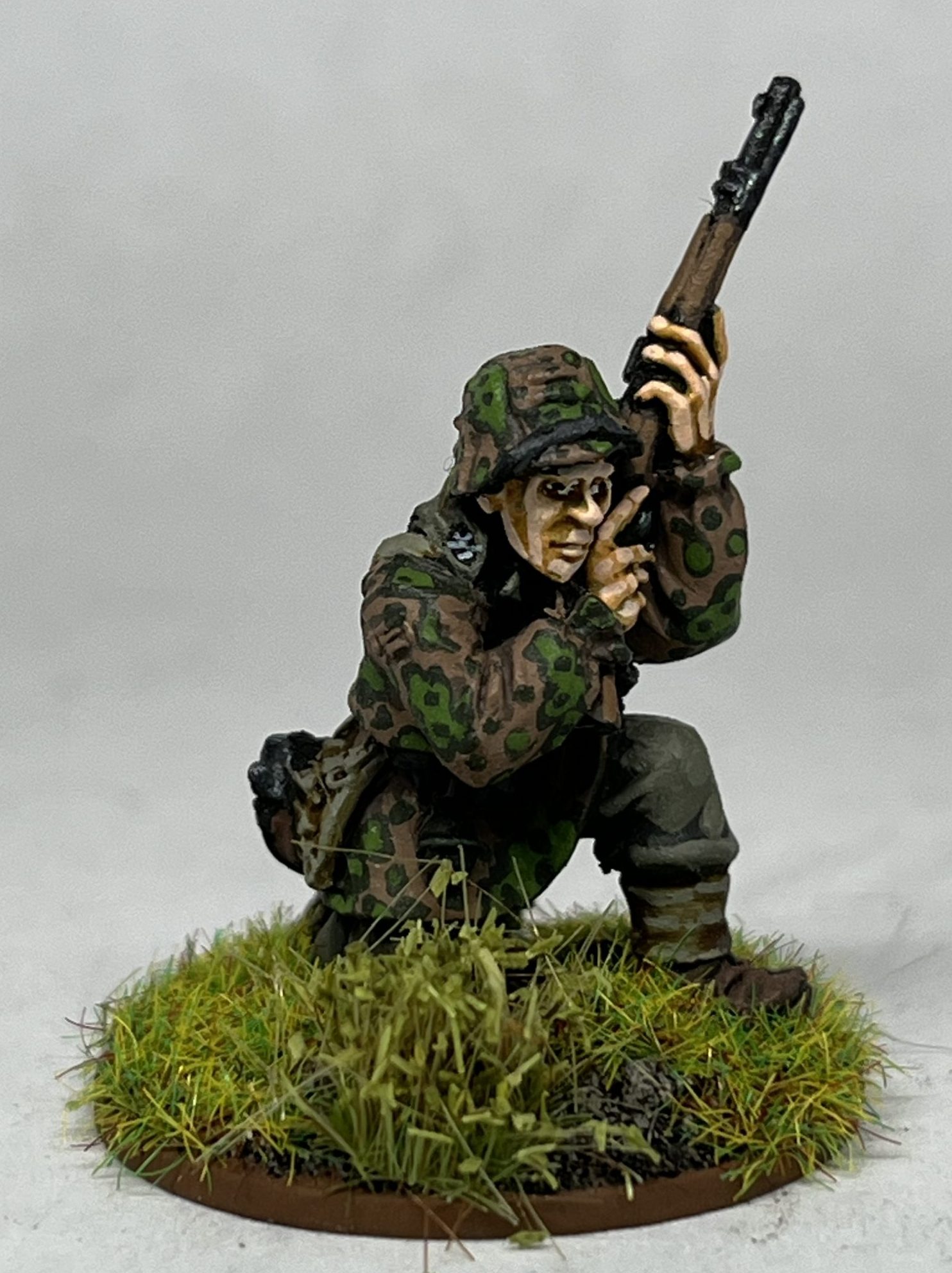
The German Eichenlaubmuster, also known as Oak Leaf, camouflage pattern began being issued in 1941 and was used by the Waffen SS until the end of the war.  Below are the steps I take when I paint Oak Leaf camouflage.  The paints I used are Vallejo’s German Cam. Pale Brown (825), German Cam. Black Brown (822), German Cam. Dark Green (979), and German Cam. Bright Green (833).

A BMP FOR ALL SEASONS

By Jim Naughton

A BMP for ALL SEASONS – the BMP-1P

EG BMP-1P in Prince William County, VA, USA


Nordic Forces had a pequena sorpressa [little surprise] when I first read it. The first faction in the book is the Finns, and after shaking my head about a Finnish 1985 tank with KONTAKT-1 ERA I found the ‘Finnish’ version of the BMP-1. No missile, but upgradeable to the 9K111 Fagot (gotta love Soviet names; it means BASSOON) or in Western parlance, AT-4 SPIGOT. The picture was spot on. BMP-1P.

Painting Sidewalk Terrain Casts

By Kreighton Long

In my previous article, I described my first foray into mold making.  In this article, I’ll share how I took the cured casts and painted them to look like generic cobblestone sidewalks.  I spent some time looking at different cobblestone sidewalks on Google Images to try to find out how to paint mine.  In the end, I decided to go with a basic grey color as a safe neutral to fit most settings.

Creating Sidewalk Terrain Molds

By Kreighton Long

Over the years I’ve slowly been building up my collection of urban terrain and as my tables experience urbanization I’ve come to realize that the next step is to include sidewalks. Adding sidewalks to my terrain collection will help to fill in some void space in my town, and will help the town become a more aesthetically pleasing, lived-in, setting.

At first, I looked for simpler options such as printing cobblestones onto card stock or buying mousepad cobblestone rolls and cutting to size but none of those gave me the modeler look I desired.  Eventually, I rolled up my sleeves and declared, “Fine.  I’ll do it myself”, with my best Thanos impression.

Basing Artillery in Bolt Action

By Kreighton Long

What is a Bolt Action army project without some big guns?  Even partisans have access to lighter howitzers and anti-tank guns.  There’s probably at least one army that can’t take artillery options but I can’t think of one on my own.  As fun and good-looking as the big guns can be it can be challenging to paint and base the finicky things.  Speaking for myself, I struggled for a while on how best to turn these pieces of pewter, plastic, and resin into gaming pieces that were as aesthetically pleasing on the table as they were influential on the outcome of the game.

Painting World War Two Italian Camouflage

photo by Kreighton Long

By Kreighton Long

A sample of M1929 telo mimetico provided by fellow geek and co-conspirator of the author, Mr. Jeffrey Whitlock.

The Italian Army, or Regio Esercito, was the first military in the world to mass-produce camouflage equipment for their soldiers. The M1929 telo mimetico was utilized by Italian soldiers and paratroopers as well as by Italy’s German ally during the course of World War Two.

For my Italian paratrooper army project I knew I needed to commit hard to the camouflage pattern and after a few trial runs incorporating feedback I reached a scheme that was close to accurate while still being doable.

New on Kickstarter: Hellenistic Judeans Models in 28mm

By Richard Steer

I’ve recently been thinking a lot about the impact of 3D printing on the historical wargaming hobby. My primary concern has been the threat that printing poses to the local shops and manufacturers who rely on selling products for their livelihoods, and what this means for the future of the hobby as we know it.

Into the middle of one of these periods of reflection, a new kickstarter landed that has reminded me of the huge potential that 3D printing has for growing the hobby: Potbelly Miniatures’ campaign launching a range of 28mm Hellenistic Judeans.