Late-War Leviathans: Flames of War Looks Beyond Berlin

By Richard Steer

Late-War Leviathans are coming to Flames of War. Battlefront is releasing a free PDF on 2nd May that allows the models from their new 1948 alt-history game Clash of Steel to be used in the Late-War era of FOW. These new tanks, the Leviathans, are a mix of vehicles that entered service shortly after WW2, and experimental prototypes that never entered production.

Late-War Conversations: Views on a Local FOW Meta

By Richard Steer

The Late-War period of Flames of War was completed last year with the release of the Berlin books. With no new releases over the last 12 months, the meta of the competitive scene is probably the most stable it has ever been.

A meta can be defined as “the game around the game”. In Flames of War this includes all of the things that go on up until you start deployment, such as the options that go into list building and your choice of Battle Plan. There’s always been a meta: those lists that appear, dominate the competitive scene for a while, become super popular, and then fade as players work out how to counter them and new books create new competitive opportunities.

Local metas are often created by the way that the most successful players in a particular region or gaming group approach the game. To find out more about the Late-War meta in our local region of Wellington, New Zealand, I recently spoke with four players who have for many years been among the top FOW players in New Zealand: Bede, Chris, and Simon from Wellington, and Sofia from Auckland, to hear their views of the state of the Late-War game in our corner of the world.

Flames of War: Mid-War Dynamic Points for 2024

By Richard Steer

The latest round of “Dynamic Points” for Flames of War has been finalized. If you are not familiar with the term, a Dynamic Points document is an update that Battlefront publishes that adjusts the cost of units in the game without needing to re-release the books. If you are playing a game using Dynamic Points, treat any units in the document as costing what they are listed there, while any units not in the update continue to use the points given in the books.

So far this concept has only been applied to the Mid-War era, with the 2024 version being the second round of adjustments for the era. The update can be downloaded for free from the FOW website, and have also been applied to the Forces of War list builder.

Mike Target – An Exercise in List Building for Flames of War

By Richard Steer

“Does anyone have any Wespes that I can borrow?” The request was posted by a friend on one of our local group chats ahead of a Late-War Flames of War tournament last year. Once the accusations of “meta chasing” died down, it led to a conversation about the role and effectiveness of artillery in the game.

As someone who primarily plays British forces, my contribution to the discussion was that while the Late-War British lists have a lot of artillery options, only mortars and AVREs offer good value. The British towed artillery piece, the 25pdr, is only Firepower 4+ and is expensive due to being Fearless Veteran. Where the Germans and Americans have cost-effective three-gun units of self-propelled artillery, the British Priest and Sexton troops are units of four, again being Fearless Veteran.

To cap it off, it’s not easy to make use of that Veteran skill because most British Formation Commanders are only rated as Trained. Almost everything that the 25pdr should be able to do in the game can be done more effectively by Crocodiles.

The 25pdr field gun played an immense role in British and Commonwealth actions throughout the war, and it’s a shame that they don’t see the table more often. To do my bit to help correct this, I challenged myself to build a British list that goes all-in on artillery.

The 25pdr Field Gun

Berlin: Flames Of War Soviets Reach The Reichstag

By Richard Steer

The Late-War era of Flames of War V4 is rapidly drawing to a close with the upcoming release of Berlin: Soviet. This book picks up where the Bagration series left off and represents the Red Army in its campaigns in Europe in 1945 leading to the final destruction of Nazi Germany.

The pattern that V4 has followed has been to support each book with the release of new plastic kits. Berlin is no exception, with the main new plastic kit being the lend-lease M4A2 Sherman.

Only the Enemy in Front: Late-War British Reconnaissance in FOW

By Richard Steer

Bulge: British is the final book covering Late-War British forces for Flames of War 4th Edition. Combined with D-Day: British, these books are Flames of War’s representation of the British, Canadian, and Polish forces in Northwest Europe from D-Day through until VE Day.

Supporting each book is a deck of Command Cards. These cards add additional formations, units, and upgraded weapons, that are not included in the core books. Amongst the cards for the British books there are a number of options for different reconnaissance units. This article looks at the historical units, and how they have been represented in the lists.

The Infantry of Bulge: British

By Richard Steer

Bulge: British is the latest release for the Late-War era of Flames of War. This book covers the British, Canadian, and Polish forces in Western Europe from August 1944 through to the end of the war in Europe.

It’s a book that many of us have been looking forward to for a long time. The arrival of the Comet is a large part of that anticipation, but there are several infantry formations in the book that also deserve a close look.

Kangaroo Rifle Company

Bulge: British takes the standard Rifle Company from the previous books and upgrades it. The overall structure of the formation is identical to those earlier iterations, but the Company HQ and Rifle Platoons now have the option of including Ram Kangaroo transports.

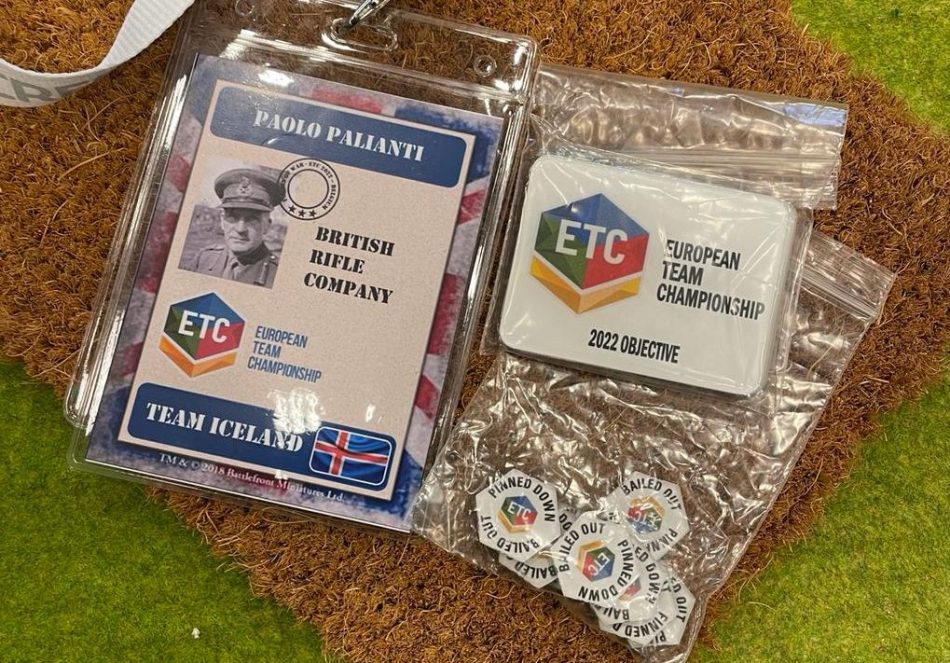
ETC 2022, 5 games to remember (and one to learn from)!

By Paolo Paglianti

ETC is probably the biggest and most important Flames of War tournament in the WorldI already reported about it here. It was an amazing experience, and I hope to come back in following years. After the above article about the tournament, time to talk about my games with a full report of my six battles with the Iceland Team.

Playing ETC is deeply different than playing a normal, single-player FOW tournament. You are part of a team of six players, and the Captains of the two opposing teams try to find the best pairing for their players. For example, if the opposing team has a US Tank destroyer army, the opposing Captain will try to counter it with Recce Company full of nimble scouts relying on being hidden and to hit the weak side armor of the M10s. The Captains also need to choose which of their players will attack, maneuver, and defend, as they have two “cards” for each stance – ie, you can’t attack with all six players. A lot of strategy even before the game starts!

North Africa: Support For Your FOW Desert Germans

By Richard Steer

A lot of the focus on the upcoming North Africa release for Flames of War has been on the new units that have been added, and the historical units that haven’t been. This is understandable because as gamers we love having new toys to play with. One area that I haven’t seen much discussion about is the force charts in the book and the way that the source material for the compilation has been combined. In particular, the German support options have some subtle structural changes that are worth taking a closer look at.

North Africa: Revisiting the British Lists for Mid-War Flames of War

By Richard Steer

The North African campaign has always been the theatre of World War II that I have been most interested in, and specifically the British perspective of the conflict. This interest carried over into , with British forces in the Mediterranean has been my primary focus in the game.

To be honest, I was pretty disappointed with the first releases for FOW V4. Desert Rats and felt very lightweight compared to the previous lists for the African Campaign that we had been playing with, being the original North Africa compilation from 2009. That’s not to say that the V4 lists were bad. On the contrary, with the exception of the 17/25pdr anti-tank gun, Desert Rats was a reasonably historical representation of the most common British armored formations in Egypt and Libya in the middle of 1942. The British lists from Desert Rats were later expanded and re-released as Armoured Fist, which filled in many of the gaps, but the fact remained that the army lists had taken a step backward in detail and completeness under V4.